
About Eugène Marais
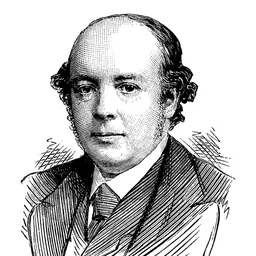
Lived 1871 – 1936 (aged 65). Eugène Marais was a South African poet, writer, naturalist, journalist, entomologist and jurist.
Eugène Nielen Marais (; 9 January 1871 – 29 March 1936) was a South African lawyer, naturalist, writer and poète maudit in the Second Language Movement of Afrikaans literature. Since his death by his own hand, Marais has been widely hailed as a literary and scientific genius and a cultural hero of the Afrikaner people.
His early years, before and during the Boer War Marais was born in Pretoria, the thirteenth and last child of Jan Christiaan Nielen Marais and Catharina Helena Cornelia van Niekerk. He attended school in Pretoria, Boshof and Paarl, and much of his early education was in English, as were his earliest poems. He matriculated at the age of sixteen.
His family fluently spoke Afrikaans, Dutch, and English. In Marais's early teens, he started writing English poetry and greedily devoured the verse of William Shakespeare, John Milton, Robert Burns, the Lake poets, and the English Romantics.
After leaving school, he worked in Pretoria as a legal clerk and then as a journalist before becoming owner (1891, at the age of twenty) of a newspaper called Land en Volk (Country and (the Afrikaner) People). He involved himself deeply in local politics. In his role as a journalist and newspaper editor, Marais became a vocal critic of Paul Kruger, the widely revered President of the Republic of Transvaal, which made Marais a very unpopular figure.
He began taking opiates at an early age and graduated to morphine (then considered to be non-habit forming and safe) very soon thereafter. He became addicted, and his drug addiction ruled his affairs and actions to a greater or lesser extent throughout his life. When asked why he took drugs, he variously pleaded ill health, insomnia and, later, the death of his young wife as a result of the birth of his only child. Much later, he blamed accidental addiction while ill with malaria in Mozambique. Some claim his use of drugs was experimental and influenced by the philosophy of Thomas De Quincey.
Marais married Aletta "Lettie" Beyers (1871–1895), about whom he wrote in a letter to a friend: "She is just about the most perfect female in body and mind that God ever planted in South Africa." Shortly after the birth of a son, and eleven months into the marriage, she died from puerperal fever, purportedly caused by the inebriated doctor who attended the birth. The child, Eugène Charles Gerard Marais (1895–1977) was Marais's only child. The death devastated Marais and caused him to sink further into morphine addiction.
In 1897 – still in his mid-twenties – Marais went to London to read medicine. However, under pressure from his friends, he entered the Inner Temple to study law. in what has been called "a classic example of academic plagiarism" by University of London's professor of biology, David Bignell.
Marais accused Maeterlinck of having used his concept of the "organic unity" of the termitary in his book. Marais had published his ideas on the termitary in the South African Afrikaans-language press, both in Die Burger in January 1923 and in Huisgenoot, which featured a series of articles on termites under the title "Die Siel van die Mier" (The Soul of the (White) Ant) from 1925 to 1926. Maeterlinck's book, with almost identical content, It was common at the time for worthy articles published in Afrikaans to be reproduced in Flemish and Dutch magazines and journals.
Marais sent a letter to Dr. Winifred de Kock in London about Maeterlinck, in which he wrote that The famous author had paid me the left-handed compliment of cribbing the most important part of my work... He clearly desired his readers to infer that he had arrived at certain of my theories (the result of ten years of hard labour in the veld) by his own unaided reason, although he admits that he never saw a termite in his life. You must understand that it was not merely plagiarism of the spirit of a thing, so to speak. He has copied page after page verbally.
Several years before his death, the Rev. A. J. Louw, an Afrikaner Calvinist dominee known as "The Pope of the Highveld", confronted Marais during a haus bezoek, or ministerial visitation, for believing in Darwinian evolution. Marais replied, "Don't pick on me, Dominee. It's a matter between you and the Almighty. I really had nothing to do with the creation of the Universe."
One of Marais's last poems, Diep Rivier ("Deep River"), is an ode to the drug morphine and was written ten years before its author's death by his own hand.
Marais took his own life on the farm Pelindaba, which belonged to his friend Gustav Preller. For those who are familiar with the dark moods of certain of Marais's poems, there is a black irony there; in Zulu language, phelile indaba means "end of discussion" or "we will not talk about this anymore".
Robert Ardrey, an admirer of Eugène Marais's, attributed Marais's suicide to the theft of his intellectual property by Maeterlinck. Ardrey said in his introduction to The Soul of the Ape, published in 1969, that "s a scientist he was unique, supreme in his time, yet a worker in a science unborn." He also refers to Marais's work at length in his book African Genesis.
Eugéne Marais and his wife Aletta lie buried in the Heroes' Acre, Pretoria.
Legacy Marais's work as a naturalist, although by no means trivial (he was one of the first scientists to practise ethology and was repeatedly acknowledged as such by Robert Ardrey and others), gained less public attention and appreciation than his literary work. He discovered the Waterberg Cycad, which was named after him (Encephalartos eugene-maraisii). He was the first person to study the behaviour of wild primates, and his observations continue to be cited in contemporary evolutionary biology. He is among the greatest of the Afrikaner poets and remains one of the most popular, although his output was not large. Opperman described him as the first professional poet in Afrikaans; Marais believed that craft was as important as inspiration for poetry. Along with J. H. H. de Waal and G. S. Preller, he was a leading light in the Second Afrikaans Language Movement in the period immediately after the Second Boer War, which ended in 1902. Some of his finest poems deal with the wonders of life and nature, but he also wrote about his own inexorable death. Marais was isolated due to some of his beliefs. He was a self-confessed pantheist and claimed that the only time he entered a church was for weddings. An assessment of Marais's status as an Afrikaner hero was published by historian Sandra Swart.
Marais was also fascinated by the folklore, cultures, and traditions of the Bantu peoples of the rural Transvaal; this is often seen in poems such as "Die Dans van die Reën" (The Dance of the Rain).
Since his death, Eugène Marais has been cited as the prototype of the many dissident Afrikaans-speaking poets, writers, and intellectuals in South Africa under apartheid (1948–1994). At the beginning of his 1982 book, The Adversary Within: Dissident Writers in Afrikaans, Jack Cope explained that the famous confrontation between Eugène Marais and Rev. A. J. Louw is symptomatic of a much wider dispute in Afrikaner culture.
Many highly important figures in Afrikaans literature during the Apartheid felt similarly, according to André Brink, "torn between attachment to their language, situation, and people on the one hand and their desire to bring about innovations, which are rejected or misunderstood. The writers find themselves too far ahead of their people and may become isolated, aliens in their own land – the fate of Eugène Marais."
Poetry translations Winternag The following translation of Marais's "Winternag" is by J. W. Marchant:
"Winter's Night"
O the small wind is frigid and spareand bright in the dim light and bareas wide as God's merciful boonthe veld lies in starlight and gloomand on the high landsspread through burnt bandsthe grass-seed, astir, is like beckoning hands.O East-wind gives mournful measure to songLike the lilt of a lovelorn lass who's been wrongedIn every grass foldbright dewdrop takes holdand promptly pales to frost in the cold!
While the above translation is generally faithful, and is a fine poem in English, it does not quite capture the terse directness of the Afrikaans language, which makes Afrikaans poetry so bittersweet and evocative, striking straight to the heart and soul. Below follows a translation by Farrell Hope, which may closer reflect the original Afrikaans idiom. Note the above version by J. W. Marchant, as well as the third version below by At de Lange, both translate the Afrikaans word in the poem skade (damage) as if it was skadu (shade). This is a common error in translating the poem and misses the point Marais was making: that the British forces had destroyed the Boer farms.
"Winternight"
O the small wind is frigid and spare and bright in the dim light and bare as wide as God's merciful boon the veld lies in starlight and gloom and on the high lands spread through burnt bands the grass-seed, astir, is like beckoning hands.
O East-wind gives mournful measure to song Like the lilt of a lovelorn lass who's been wronged In every grass fold bright dewdrop takes hold and promptly pales to frost in the cold!
An English translation by At de Lange preserves the musicality of the poem quite well:
"Winter's Night"
O cold is the slight wind, and keen. Bare and bright in dim light is seen, as vast as the graces of God, the veld's starlit and fire-scarred sod. To the high edge of the lands, spread through the scorched sands, new seed-grass is stirring like beckoning hands.
O mournful the tune of the East-wind refrain, like the song of a girl who loved but in vain. One drop of dew glistens on each grass-blade's fold and fast does it pale to frost in the cold!
Die dans van die reën The dance of the rain
O the dance of our Sister! First over the mountaintop she sneaks, and her eyes are ashamed; and she laughs softly. And from afar she calls with one hand; her bracelets shine and her beads sparkle; softly, she calls. She speaks to the winds of the dance and she invites them out, because the wharf is wide and the wedding great.
The big game hurry out the plains, their dam on the hilltop, open wide their nostrils and swallow the wind; and they bend down, to see her delicate footprints in the sand. The little people deep under the ground hear the dragging of her feet, and they crawl closer and sing softly: "Our Sister! Our Sister! You have come! You have come!"
And her beads shake, and her copper rings shine in the setting of the sun. On her forehead is the fire plume of the mountain vulture; her stomp from the heights; she spreads her drab Kaross with both arms out; The breath of the wind taken away. O, the dance of our Sister
The poem is intended to convey a sense of great happiness felt by all inhabitants of the desert, animal and man, when the rain arrives. It follows the idea of the sister (rain/rainy weather) dancing across the desert plains and the effects across the land.
Don’t just read it —
keep it.
Full-length biographies made to live with: read them, listen on the way to work, watch them tonight.
- E-book
- Audio
- Video
Instant download · yours to keep · every purchase keeps this site free
Important facts
People in Eugène Marais's life
Named in this biography and alive at the same time





Related people
Same field, nearest in time

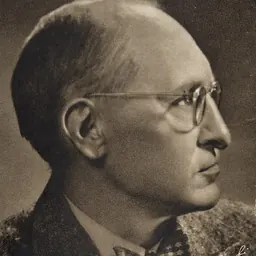
Contemporaries
People whose lives overlapped Eugène Marais's
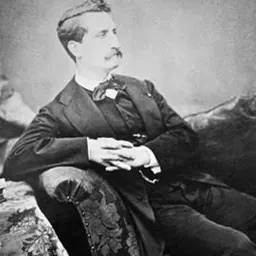


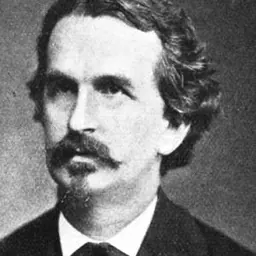
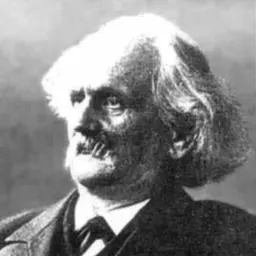
Frequently asked questions
Who was Eugène Marais?
South African lawyer, naturalist, poet and writer (1871–1936)
When was Eugène Marais born?
Eugène Marais was born on 9 January 1871 in Pretoria.
When did Eugène Marais die?
Eugène Marais died on 29 March 1936 in Pelindaba.
What was Eugène Marais's occupation?
Eugène Marais was a poet, writer, naturalist, journalist, entomologist and jurist.
What nationality was Eugène Marais?
Eugène Marais was South African.
Sources & further reading
Cite this page
APA: Biography.guide. (2026). Eugène Marais. https://biography.guide/eugene-marais/
MLA: "Eugène Marais." Biography.guide, https://biography.guide/eugene-marais/.
Chicago: "Eugène Marais." Biography.guide. https://biography.guide/eugene-marais/.
Data last updated: 2026-09-20 · Spot an error? Report a correction.
Page generated 2026-09-27 05:33 UTC