
About Eugene Linden
Lived 1912 – 1983 (aged 70–71). Eugene Linden was an American conductor and conducting.
Eugene Linden was an American conductor. He conducted the first public performance of the Tacoma Philharmonic Orchestra in March 1934 and directed the Seattle Symphony from 1948 to 1950. He is also credited as founder of the now defunct Northwest Grand Opera Company.
Background
Linden was born to a musical family in Chicago in 1912. His father was Harry Linden, concertmaster of the Chicago opera orchestra, and his mother was a violinist who began playing at age twelve and was musical director at Chicago's La Salle Hotel.
Harry's four brothers were also musicians, one of which was Anthony Linden, a flautist for the San Francisco Symphony and radio soloist. According to Hilmar Grondahl of the Portland Spectator, Linden led his first orchestra when he was in grade school and knew then of his desire to be a professional conductor. Eugene attended Jefferson High School in Portland, Oregon, where he was conductor of the band. Under his leadership the ensemble placed first in three state high school contests and placed second in a fourth. In May 1930, he gained attention as conductor when the Jefferson band participated in the national high school band contest in Flint, Michigan. Of the forty-four bands competing, Eugene (then age seventeen) was the only student conductor. He received recognition and recommendation from John Philip Sousa. Eugene graduated from Jefferson High School in 1930. On April 2, 1932 at age twenty, Linden conducted Edvard Grieg's "Peer Gynt" Suite No. 2 for the final concert of PJS' eighth season.
Tacoma Philharmonic In 1933, Linden hitchhiked from Portland to Tacoma, Washington at the age of twenty-one, hoping to establish an orchestra. Three musicians attended the first rehearsal. According to Linden, "No musicians would have been a failure, three was a beginning." Within a few months Linden assembled an ensemble of 65 musicians, with initial rehearsals held at Ted Brown Music Company and the Winthrop Hotel. The basement of the State Armory became the first regular rehearsal space, followed by the Scottish Rite Cathedral. From 1948 to 1950, Linden was also music director of the Seattle Symphony. However, in 1951 the Tacoma Philharmonic's board of directors decided to become a presenting organization.
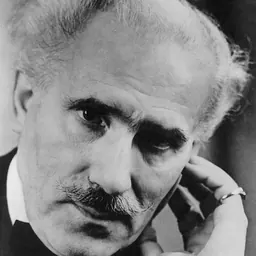
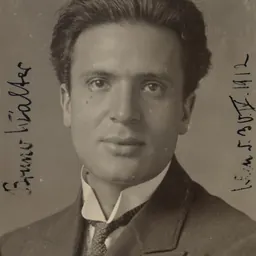
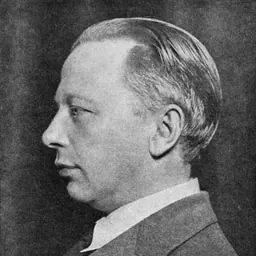
In 1934, Linden was awarded the Universität Mozarteum Salzburg scholarship, allowing him the opportunity to visit Salzburg to study under conductors Bruno Walter, Arturo Toscanini and Felix Weingartner.
When asked about Scandinavian composers, Linden admitted to having an appreciation for Kurt Atterberg for being a "little like the Franck only distinctly Nordic". He also complimented Grieg for being "intensely deep" and for combining "personal warmth with an austere coldness that must be a reflection of the Norse country."
Don’t just read it —
keep it.
Full-length biographies made to live with: read them, listen on the way to work, watch them tonight.
- E-book
- Audio
- Video
Instant download · yours to keep · every purchase keeps this site free
Important facts
People in Eugene Linden's life
Named in this biography and alive at the same time


Related people
Same field, nearest in time


Contemporaries
People whose lives overlapped Eugene Linden's





Frequently asked questions
Who was Eugene Linden?
American conductor
When was Eugene Linden born?
Eugene Linden was born in 1912 in Chicago.
When did Eugene Linden die?
Eugene Linden died in 1983.
What was Eugene Linden's occupation?
Eugene Linden was a conductor and conducting.
What nationality was Eugene Linden?
Eugene Linden was American.
Sources & further reading
· DBpedia: Eugene Linden (conductor)
Cite this page
APA: Biography.guide. (2026). Eugene Linden. https://biography.guide/eugene-linden/
MLA: "Eugene Linden." Biography.guide, https://biography.guide/eugene-linden/.
Chicago: "Eugene Linden." Biography.guide. https://biography.guide/eugene-linden/.
Data last updated: 2026-09-20 · Spot an error? Report a correction.
Page generated 2026-09-27 05:02 UTC