
About Eugene L. Grant
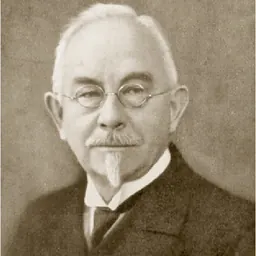
Lived 1897 – 1996 (aged 99). Eugene L. Grant was an American civil engineer and university teacher.
Eugene Lodewick Grant (February 15, 1897 – July 9, 1996), was an American civil engineer and educator. He graduated with a BS from the University of Wisconsin in 1917. He started teaching in 1920 at Montana State University and then in 1930 at the School of Engineering, Stanford University where he taught until 1962. He is known for his work in Engineering Economics with his textbook first published in 1930. Grant was the intellectual heir of work performed by John Charles Lounsbury Fish who published Engineering Economics: First Principles in 1923, providing the critical bridge between Grant and the pioneering effort of Arthur M. Wellington in his engineering economics work of the 1870s.
Grant was awarded many academic and professional honors such as an honorary doctorate in civil engineering at Montana State University; Fellow of the American Statistical Association, American Society for Quality(ASQ) and the American Association for the Advancement of Science as well as membership in the National Academy of Engineering in 1987. He was part of the effort to found the American Society for Quality which awarded Grant its top award, the Shewhart Medal in 1952. In 1967, ASQ created the E.L. Grant Award which is granted annually to the individual who has been deemed to have demonstrated outstanding leadership in the areas of educational programs in quality. Joseph Juran said that Grant was a "quiet doer who didn't receive enough credit for what he did" and did much to advance the field of quality to what it was in the middle of the 20th century.
Early life and career Eugene Lodewick Grant was born on February 15, 1897, in Chicago, Illinois, to Bertrand Eugene and Eva May (Lodewick). In 1923, he married Mildred Brooks Livingston and they had one child, Nancy Livingston. He attended University of Wisconsin and graduated in 1917 with a Bachelor of Science in civil engineering. Grant saw wartime service in the United States Navy and then later served in the Geological Survey. Grant then joined the civil engineering faculty at the University of Montana (Bozeman) in 1920. Grant improved on Fish's work by presenting methods for short-run analyses complementing the long run methods championed by Fish and A. M. Wellington in their earlier works. Initial reviews of his book noted that Grant's work addressed "...the difficulties in reducing costs and income in different periods to a comparable basis-difficulties which are too commonly neglected by economists." Other reviewers noted that his book was very useful for the study of public utilities in its treatment of the "...cost problems of public service industries (such as) the economies of maximum capacity... The most advantageous load, plant, and capacity factors..."
In 1938, Grant published the 2nd edition of his book. He reorganized the book into four parts, Planning Economy Studies to Solve Engineering Problems, Interest—The Time Element in Economy, Techniques for Economy Studies and Getting Results from Economy Studies. Grant noted in his preface to the 2nd edition that his book emphasized two points as its core themes: "It is prospective differences between alternatives which are relevant to their comparison.
Over the next fifty years, six more editions would be printed with the last, the 8th, printed in 1990. In 1982, the Accounting Historians Journal in an article on the historical development of traditional net present value (NPV) method with the equivalent annual cost (EAC) methods noted that the role that Grant's book on engineering economy played in the development of discounted cash flow techniques. Jones, et al. noted that this development intersected the "...fields of engineering, economics, and accounting". Grant looked at interest as an economic sacrifice in order to determine whether or not to make the investment. He noted that accounting systems never included "...interest on the ownership capital as a cost; interest is only a cost when it is paid out." and intended for those persons who weren't professional accountants. Grant argued in the book that accounting should be viewed as a prerequisite for good citizenship. Critical to this process was developing "...a clear definition of the alternatives to be considered." The AIIE Founders Award (1965) Honorary Ph.D. in Civil Engineering from the University of Montana (1973) The IIE Engineering Economy Division's Wellington Award (1979) Membership in the National Academy of Engineering (1987)
Personal life Since 1966, Grant resided in Palo Alto, California. On July 9, 1996, Grant died at Channing House in Palo Alto, California. Grant was 99.
Grant is interred at Sunset Hills Cemetery Memorials in Bozeman, Gallatin County, Montana, USA. At the time, he was professor emeritus of economics of engineering in the department of industrial engineering at Stanford University. He was a recognized leader and pioneer in applying economic analysis to engineering problems. His work on statistical quality control was an integral part of the effort to improve production in industrial plants during World War II. A colleague of Grant's noted that: "(Grant's) book was the first textbook on quality control... It is fascinating, in light of the intense interest in quality control [today], to go back and read [that] book. What one finds is Gene Grant knew in 1946 what most of U.S. industry discovered 40 years later."
Partial bibliography The economic utilization of the waters of the Upper Missouri river (1928) Principles of engineering economy (1930) Principles of engineering economy: problems. New York: The Ronald Press Company. (1938) Statistical quality control (1946) Fundamentals of depreciation (1949) The problem of the isolated lot with Gerald J. Lieberman. (1955) Basic accounting and cost accounting (1956) The Comparison of alternatives with W. Grant Ireson (1970); part of Managerial economics and operations research; a nonmathematical introduction, edited by Mansfield, Edwin.
Don’t just read it —
keep it.
Full-length biographies made to live with: read them, listen on the way to work, watch them tonight.
- E-book
- Audio
- Video
Instant download · yours to keep · every purchase keeps this site free
Important facts
People in Eugene L. Grant's life
Named in this biography and alive at the same time
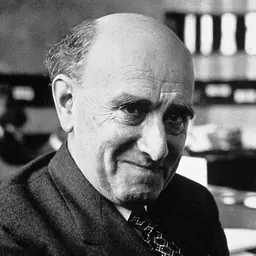




Related people
Same field, nearest in time


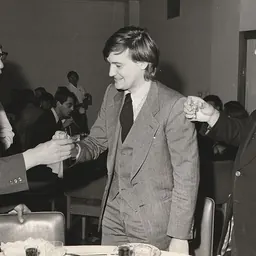
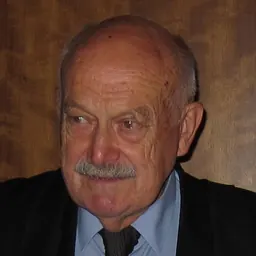
Contemporaries
People whose lives overlapped Eugene L. Grant's

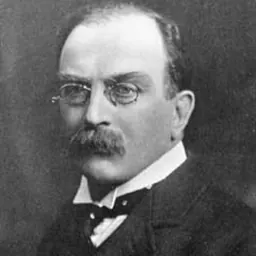



Frequently asked questions
Who was Eugene L. Grant?
American civil engineer
When was Eugene L. Grant born?
Eugene L. Grant was born on 15 February 1897 in Chicago.
When did Eugene L. Grant die?
Eugene L. Grant died on 9 July 1996.
What was Eugene L. Grant's occupation?
Eugene L. Grant was a civil engineer and university teacher.
What nationality was Eugene L. Grant?
Eugene L. Grant was American.
Sources & further reading
Cite this page
APA: Biography.guide. (2026). Eugene L. Grant. https://biography.guide/eugene-l-grant/
MLA: "Eugene L. Grant." Biography.guide, https://biography.guide/eugene-l-grant/.
Chicago: "Eugene L. Grant." Biography.guide. https://biography.guide/eugene-l-grant/.
Data last updated: 2026-09-20 · Spot an error? Report a correction.
Page generated 2026-09-27 05:33 UTC