
About Eugene Haynes
Lived 1927 – 2007 (aged 79–80). Eugene Haynes was an American pianist.
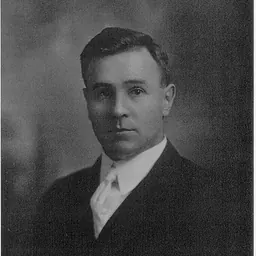
Eugene Haynes (1927– 5 February 2007) was an American classical pianist, composer and music pedagogue. He graduated from Lincoln High School in 1944, where he played piano to classmate Miles Davis' trombone. He studied music at the Juilliard School in New York, and with Nadia Boulanger in Paris from 1951 to 1954. He worked as a radio presenter in East St Louis, Artist-in-residence at Lincoln University, and as leader of Centre for Performing Arts at University at Southern Illinois University. His first and only CD came out in 2004 and his life in Denmark was documented in a temporary exhibition at Museum Amager outside Copenhagen in 2012.
Haynes' time in Europe between 1952 and 1962 is the best documented period of his life and career. In 2000, he published a memoir titled To Soar With Eagles: The European Travels. Remembrances of Isak Dinesen documenting his many stays in Denmark during the 1950s and recounted his friendship with Karen Blixen.
Early life and education Eugene Haynes was born in 1927 in East St Louis, Illinois, USA. He started playing piano at the age of 4. As a teenager he worked in a warehouse and used his lunch breaks to play a piano nearby. His bosses discovered his talent by accident and decided to pay for his musical education. He joined Juilliard School of Music in New York and at the end of his studies he won the Morris Loeb prize for 'overall excellence in graduate studies'. After a brief period of study at Lincoln University in Missouri (a place he would return to) he continued his studies with the music pedagogue Nadia Boulanger in Paris from 1951 to 1954.
In Europe in the 1950s Article about Eugene Haynes in the Danish Billed Bladet, 26 July 1957After his stay in Paris studying with Boulanger, Haynes continued seeking a breakthrough as a pianist. Sponsored by the USA Information Service he went on a concert tour in Europe. The Information service aimed to improve America's image abroad and to counter Eastern European political and cultural influence. The Information Service tried to promote the US as a non-discriminating nation, and with Haynes, aimed to show that African Americans had opportunities in the US, even as classical pianists.
He frequented not only Karen Blixen's home, Rungstedlund, but also hung out with locals like the Dragør-based poet, Jørgen Gustava Brandt, who Haynes described as "a real Casanova" in a letter to his brother. Gustava taught Haynes Danish, a language which he came to speak alongside French. When it came to music, critic Isador Phillip called Haynes "one of the greatest musical talents America has produced." Haynes found Denmark open and hospitable, but he also encountered stereotypes and racism. A university professor from America visiting Blixen referred to "the accent of our nigras" while at the table, and Haynes describes the situation and his discomfort in detail. Blixen had not heard the remark, but detected something was wrong. When she later asked about what happened, she was "enraged" about the guest's behaviour after Haynes had explained.
Haynes wrote in his diary about his first meeting with Blixen: "I have seldom been so curious about anyone." He further writes of Blixen, "She was a lady of La Belle Époque, one of the last of the great femmes du monde ... Had she said she had dined at the Café Procope with Diderot and the Philosophes, I would have believed her". The letters and diary entires reveal the warmness of his friendship with Blixen. In a diary entry titled "First meeting" Haynes writes about a walk with Blixen: "Along the way she talked about the many discussions she and Finch-Hatton had had on music. I asked if she had the gramophone he gave her in Africa. She was happy to show it to me when we returned to the house... As we said good bye, I made a quip about being a 'bit of Africa sent out' to her".
Haynes further quotes Blixen, who told him, "You'll have to be patient while you grow into your grace". Haynes was a young man of around thirty and working to achieve recognition. Recognising their differences, she also grounded them in a shared experience: "In some ways we are both outsiders. I in Denmark, you in the land of your birth." Haynes reflects on his relationship with her: "When Karen Blixen is interested in what you are saying, she can fix you with an almost hypnotic gaze and you are then convinced that you are at that time the most important person she knows, and what you are saying is of great moment. It is her most endearing trait".
Nevertheless, there were many other much more enriching gatherings and conversations, and Haynes' delight in these meetings with Blixen shines through in his recounts. At a dinner in 1961, Blixen suggested a game where each guest is assigned a famous intellectual, writer, or actor/actress. Haynes had given Blixen the French philosopher, Voltaire, and a woman with the name Birthe got Casanova. Haynes reveals fragments of the discussion in the diaries: Casanova had insisted on superstition as necessary, whereas Voltaire had favoured to free men of the "monster of superstition," arguing that liberty and superstition could not go hand in hand".
Later career in the United States In between his stays and concerts in Europe, Haynes also performed in the US. He debuted at Carnegie Hall in 1958 and played there again in 1969. However, Haynes spent most of his career teaching and composing. He was the artist-in-residence from 1958 to 1974 at Lincoln University, where he had briefly studied. In 1974, he won a prize from the National Association of Negro Positions and also returned to St Louis to contribute to the education of young music talents in his childhood neighbourhood. From 1965 to 1973 he hosted a local AM radio show. In 1979 he became leader of a Centre for Performing Arts at Southern Illinois University in East St. Louis. Finally, a CD was released in 2004. He died in 2007 at the age of 80.
Don’t just read it —
keep it.
Full-length biographies made to live with: read them, listen on the way to work, watch them tonight.
- E-book
- Audio
- Video
Instant download · yours to keep · every purchase keeps this site free
Important facts
People in Eugene Haynes's life
Named in this biography and alive at the same time


Related people
Same field, nearest in time


Contemporaries
People whose lives overlapped Eugene Haynes's


Frequently asked questions
Who was Eugene Haynes?
American pianist (1927-2007)
When was Eugene Haynes born?
Eugene Haynes was born in 1927 in East St. Louis.
When did Eugene Haynes die?
Eugene Haynes died on 5 February 2007.
What was Eugene Haynes's occupation?
Eugene Haynes was a pianist.
What nationality was Eugene Haynes?
Eugene Haynes was American.
Sources & further reading
Cite this page
APA: Biography.guide. (2026). Eugene Haynes. https://biography.guide/eugene-haynes/
MLA: "Eugene Haynes." Biography.guide, https://biography.guide/eugene-haynes/.
Chicago: "Eugene Haynes." Biography.guide. https://biography.guide/eugene-haynes/.
Data last updated: 2026-09-20 · Spot an error? Report a correction.
Page generated 2026-09-27 05:22 UTC