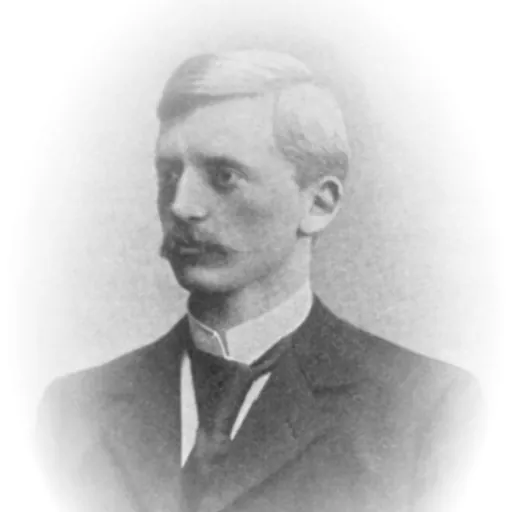
About Eugen Schauman
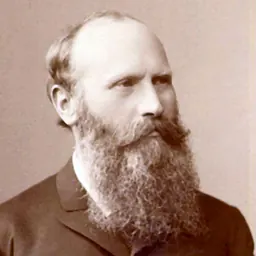
Lived 1875 – 1904 (aged 29). Eugen Schauman was a Finnish politician, known for Governor-General of Finland and Nikolay Bobrikov.
Eugen Waldemar Schauman (; – ) was a Finnish nationalist activist and member of the noble Schauman family. In 1904, Schauman assassinated Nikolai Bobrikov, the Governor-General of Finland.
Early life and family
Eugen Schauman was born in Kharkov, Russia (now Kharkiv, Ukraine) to Swedish-speaking Finnish parents. His mother was Elin Maria Schauman, and his father was Fredrik Waldemar Schauman, a general-lieutenant in the Imperial Russian army, who also served as a privy councillor and senator in the Finnish government. His brother Rafael was born in 1873, and his sister Sigrid in 1877. The family moved often due to Waldemar's work with the government. and sent a letter from Radom, Poland to Finland that contained a single ruble and read: "Please accept this small contribution to the memorial of Jutas. Eugen Schauman, Radom 24 May 1883" Schauman's mother died the following year, in autumn 1884, when he was nine years old.
Schauman attended secondary school in Helsinki, Finland while the rest of the family was living in Poland. He had poor hearing, however, and this had an effect on his studies.
Shooting practice Gradually Schauman, like other students and activists, started to move from passive resistance to active resistance. He organised shipments of weapons from abroad by shipping American rifles to Finland with the help of the Finnish Hunting Association, which were then distributed to students. In addition to this, he organised shooting clubs around the Helsinki area that taught marksmanship to students and other youths. Soon Schauman and other activists started planning an armed revolution. As well as his father's loss of his job, Schauman was angered by the dismissal of his uncle, Colonel Theodor Schauman, from the command of the Finnish Dragoon Regiment, a unit from Lappeenranta, in December 1901, after Nikolai Bobrikov had not been satisfied with his inspection of it.
Kagal After the Cossack riots, Bobrikov became convinced that Finland was undergoing a kramola (or "secret rebellion"). The Tsar awarded Bobrikov dictatorial powers in 1902. As the Russian oppression worsened, the underground passive-resistance organisation, Kagal, decided that it was time to move to stronger acts of defiance, as passive-resistance methods were no longer effective. For example, in 1902 over half of the age class had skipped the draft to the Russian army, which had been made mandatory for Finns. In 1903 the draft strike was no longer as effective, and only 22 percent skipped the draft. "Emergency measures", meaning assassination, was accepted as a new way to act against the strengthening Russification. Many leading Kagal members had already been exiled at this point. At first, the plan was to strike against Finnish politicians agreeing with the Russification, but soon the activists, the Kagal organization, and Schauman decided it was best to strike against the Governor-General Nikolai Bobrikov, who was seen as the leader and main activist of the oppression politics. Schauman died instantly. Two of the bullets that hit Bobrikov ricocheted off his military decorations, but the third bounced back from his buckle and caused severe damage to his stomach. Bobrikov did not die immediately but was taken to the Helsinki Surgical Hospital. Surgeon worked to save his life, but Bobrikov died the following day at 1:10 a.m.
Aftermath
Schauman's body was taken to an unmarked grave in the Malmi cemetery in Helsinki. After the political situation eased up he was reburied in the Schauman family grave in the and a monument was built on the grave.
Schauman's legacy Schauman left a letter in which he stated that he justified his actions as a punishment for Bobrikov's crimes against the people of Finland. He addressed the letter to the Tsar and wanted him to pay attention to the problems in the whole of the Russian empire, especially in Poland and the Baltic Sea region. He claimed he had acted alone and emphasized that his family was not involved in the assassination. Schauman saw himself as a loyal subject of the Tsar rather than a revolutionary.
Schauman became something of an icon for the resistance to Imperial Russia, and many Finns still consider him a hero. His fame can be characterized by his ranking as the 34th greatest Finn of all time in the 2004 Suuret suomalaiset (Greatest Finns) television poll. At the location of the assassination in the hallway of the Council of State, there is a memorial plaque that states Se Pro Patria Dedit ("He Gave Himself for His Country"). Jean Sibelius composed the funeral march In Memoriam in memory of him.
Historical perspective The importance of Schauman in history divides opinions. In the summer of 2004, a hundred years after Bobrikov's murder, Prime Minister Matti Vanhanen condemned the act, calling Schauman a terrorist. According to him, events like the assassination of Bobrikov are not appropriate to celebrate in the era of the war on terror. A discussion arose from the statement, in which Unto Vesa, amanuensis of the Peace and Conflict Research Institute, agreed with Vanhanen.
Don’t just read it —
keep it.
Full-length biographies made to live with: read them, listen on the way to work, watch them tonight.
- E-book
- Audio
- Video
Instant download · yours to keep · every purchase keeps this site free
Important facts
People in Eugen Schauman's life
Named in this biography and alive at the same time


Related people
Same field, nearest in time




Contemporaries
People whose lives overlapped Eugen Schauman's


Frequently asked questions
Who was Eugen Schauman?
Finnish nationalist, assassin of Nikolai Bobrikov (1875-1904)
When was Eugen Schauman born?
Eugen Schauman was born on 10 May 1875 in Kharkiv.
When did Eugen Schauman die?
Eugen Schauman died on 16 June 1904 in Helsinki.
What was Eugen Schauman's occupation?
Eugen Schauman was a politician.
What was Eugen Schauman known for?
Eugen Schauman was known for Governor-General of Finland and Nikolay Bobrikov.
What nationality was Eugen Schauman?
Eugen Schauman was Finnish.
Sources & further reading
Cite this page
APA: Biography.guide. (2026). Eugen Schauman. https://biography.guide/eugen-schauman/
MLA: "Eugen Schauman." Biography.guide, https://biography.guide/eugen-schauman/.
Chicago: "Eugen Schauman." Biography.guide. https://biography.guide/eugen-schauman/.
Data last updated: 2026-09-22 · Spot an error? Report a correction.
Portrait: Wikimedia Commons · author & licence
Page generated 2026-09-27 04:57 UTC