
About Eugen d'Albert
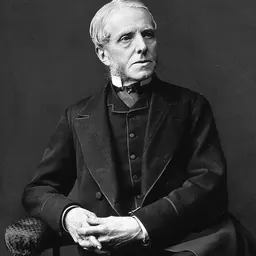
Lived 1864 – 1932 (aged 67). Eugen d'Albert was a German pianist and composer.
Eugen (originally Eugène) Francis Charles d'Albert (10 April 1864 – 3 March 1932) was a Scottish-born pianist and composer who immigrated to Germany and later to Switzerland. Glasgow, Scotland, to an English mother, Annie Rowell, and a German-born father of French and Italian descent, Charles Louis Napoléon d'Albert (1809–1886), whose ancestors included the composers Giuseppe Matteo Alberti and Domenico Alberti. D'Albert's father was a pianist, arranger and a prolific composer of salon music who had been ballet-master at the King's Theatre and at Covent Garden. D'Albert was born when his father was 55 years old. The Musical Times wrote in 1904 that "This, and other circumstances, accounted for a certain loneliness in the boy's home-life and the years of his childhood. He was misunderstood, and 'cribbed, cabined, and confined' to such an extent as to largely prejudice him against the country which gave him birth".
D'Albert was brought up in Glasgow and taught music by his father until he won a scholarship to the new National Training School for Music (forerunner of the Royal College of Music) in London, which he entered in 1876 at the age of 12. Also in 1880, d'Albert arranged the piano reduction for the vocal score of Sullivan's sacred music drama The Martyr of Antioch, to accompany the chorus in rehearsal. He is also credited with writing, under Sullivan's direction, the overture to Gilbert and Sullivan's 1881 opera, Patience.
For many years d'Albert dismissed his training and work during this period as worthless. The Times wrote that he "was born and educated in England, and won his earliest successes in England, although, in a freak of boyish impetuosity, he repudiated some years ago all connexion with this country, where, according to his own account, he was born by mere accident and where he learnt nothing." In later years, however, he modified his views: "The former prejudice which I had against England, which several incidents aroused, has completely vanished since many years." In the same year d'Albert won the Mendelssohn Scholarship, enabling him to study in Vienna, where he met Johannes Brahms, Franz Liszt and other important musicians who influenced his style. D'Albert, retaining his early enthusiasm for German culture and music ("hearing Tristan und Isolde had a greater influence on him than the education he received from his father or ... at the National Training School for Music")
In Germany and Austria d'Albert built a career as a pianist. Liszt called him "the second Tausig", and d'Albert can be heard in an early recording of Liszt works. He played his own piano concerto with the Vienna Philharmonic Orchestra in 1882, the youngest pianist who had appeared with the orchestra. He was praised for his playing of Beethoven's sonatas and J. S. Bach's preludes and fugues, some of which d'Albert transcribed for piano. His most successful opera was his seventh, Tiefland, which premiered in Prague in 1903. When Thomas Beecham introduced the opera to London, The Times observed, "the scoring owes more than a little to the discipline of Sullivan; there is also a curiously English fragrance". Tiefland played in opera houses throughout the world and has retained a place in the standard German and Austrian repertoire, with a production at the Deutsche Oper Berlin, in November 2007. According to biographer Hugh Macdonald, it "provides a link between Italian verismo and German expressionist opera, although the orchestral textures recall a more Wagnerian language." His second wife, from 1892 to 1895, was the Venezuelan pianist, singer and composer Teresa Carreño, who had married several times and was considerably older than d'Albert. D'Albert and Carreño were the subject of a famous joke: "Come quick! Your children and my children are quarrelling again with our children!" The line, however, has also been attributed to others. His later wives were soprano Hermine Finck, who originated the role of the witch in Humperdinck's Hansel and Gretel; actress Ida Fulda; Friederike ("Fritzi") Jauner; and Hilde Fels. His last companion was a mistress, Virginia Zanetti. He died in 1932 at the age of 67 in Riga, Latvia, where he had travelled for a divorce from his sixth wife. In the weeks preceding his death, d'Albert was the subject of attacks by the press in Riga concerning his personal life. D'Albert was buried in the cemetery overlooking Lake Lugano in Morcote, Switzerland.
Works
Operas See List of operas by Eugen d'Albert
Orchestral works Piano Concerto in G minor (1874) Piano Concerto in A major (1881, lost) Piano Concerto No. 1 in B minor, Op. 2 (1884) Symphony in F major, Op. 4 (1886) Esther, Op. 8 (1888) Piano Concerto No. 2 in E major, Op. 12 (1893) Cello Concerto in C major, Op. 20 (1899) Aschenputtel. Suite, Op. 33 (1924) Symphonic Prelude to Tiefland, Op. 34 (1924)
Keyboard Suite in D minor for piano, Op. 1 (1883) Musical score Eight Piano pieces, Op. 5 Waltzes for piano, four hands, Op. 6 Musical score Piano sonata in F-sharp minor, Op. 10 (1893) Klavierstücke, Op. 16
Chamber works String Quartet No. 1 in A minor, Op. 7 (1887) String Quartet No. 2 in E-flat major, Op. 11 (1893)
Vocal music Der Mensch und das Leben, Op. 14 (1893) Seejungfräulein, Op. 15 (1897) Wie wir die Natur erleben, Op. 24 (1903) Mittelalterliche Venushymne, Op. 26 (1904) An den Genius von Deutschland, Op. 30 (1904) d'Albert also wrote total of 58 lieder for voice and piano, published in 10 volumes
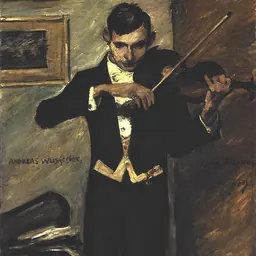
Recordings As pianist, d'Albert did not record extensively, although his recordings represent a wide range of music. They include his own Scherzo, Op. 16; Capriolen, Op. 32; Suite, Op. 1, Gavotte and Minuet; and piano arrangements from his opera Die toten Augen (1916). He made several Beethoven recordings, including the Piano Sonatas Nos. 18 and 21 ("Waldstein"), and the "Spring" Sonata for violin and piano (with Andreas Weißgerber). A selection of Chopin pieces were recorded in the 1910s and 1920s, with études, polonaises and waltzes represented. Perhaps surprisingly, his teacher Liszt is not strongly represented among d'Albert's recordings, though he committed "Au bord d'une source" from Années de pèlerinage (1st year) to disc in 1916. Brahms, Mozart, Schubert and Weber also feature in his discography.
As a composer, d'Albert has been more widely represented on record in recent years than previously. Some modern recordings include: Piano Sonata in F-sharp minor, Op. 10; Klavierstücke, Op. 16; Heft 1 and Heft 2, Serenata and Capriolen Fünf schlichte Klavierstücke Piers Lane Tiefland Éva Marton; René Kollo; Bernd Weikl; Kurt Moll; Münchner Rundfunkorchester/Marek Janowski Margherita Kenney; Waldemar Kmentt; Otto Wiener; Vienna Symphony Orchestra/ F. Charles Adler Lisa Gasteen; Johan Botha; Falk Struckmann; Vienna Radio Symphony Orchestra/ Bertrand de Billy Die Abreise Hermann Prey; Edda Moser; Peter Schreier; Philharmonia Hungarica/János Kulka
Don’t just read it —
keep it.
Full-length biographies made to live with: read them, listen on the way to work, watch them tonight.
- E-book
- Audio
- Video
Instant download · yours to keep · every purchase keeps this site free
Important facts
People in Eugen d'Albert's life
Named in this biography and alive at the same time





Related people
Same field, nearest in time




Contemporaries
People whose lives overlapped Eugen d'Albert's


Frequently asked questions
Who was Eugen d'Albert?
Scottish-born German pianist and composer (1864-1932)
When was Eugen d'Albert born?
Eugen d'Albert was born on 10 April 1864 in Glasgow.
When did Eugen d'Albert die?
Eugen d'Albert died on 3 March 1932 in Riga.
What was Eugen d'Albert's occupation?
Eugen d'Albert was a pianist and composer.
What nationality was Eugen d'Albert?
Eugen d'Albert was German.
Sources & further reading
Cite this page
APA: Biography.guide. (2026). Eugen d'Albert. https://biography.guide/eugen-d-albert/
MLA: "Eugen d'Albert." Biography.guide, https://biography.guide/eugen-d-albert/.
Chicago: "Eugen d'Albert." Biography.guide. https://biography.guide/eugen-d-albert/.
Data last updated: 2026-09-20 · Spot an error? Report a correction.
Page generated 2026-09-27 05:19 UTC