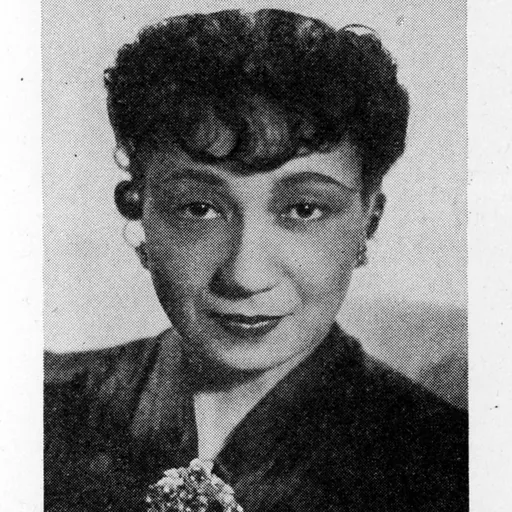
About Etta Moten Barnett
Lived 1901 – 2004 (aged 102). Etta Moten Barnett was an American actor, opera singer, stage actor, film actor, activist and singer.
Etta Moten Barnett (November 5, 1901 – January 2, 2004) was an American actress and contralto vocalist, who was identified with her signature role of "Bess" in Porgy and Bess. She created new roles for African-American women on stage and screen. After her performing career, Barnett was active in Chicago as a major philanthropist and civic activist, raising funds for and supporting cultural, social, and church institutions. She also hosted a radio program in Chicago and represented the United States in several official delegations to nations in Africa.
Life and career
Early years Etta Moten was born in Weimar, Texas, the only child of a Methodist minister, Rev. Freeman F. Moten, and a teacher, his wife, Ida Norman Moten. She then attended Western University, a historically black college (HBCU) in Quindaro, Kansas, where she studied music. To pay her tuition, she joined a quartet on Topeka's WREN radio, performed on the Chautauqua circuit, and spent summers with the Jackson Jubilee Singers. She completed her education at the University of Kansas, where she earned a B.A. in voice and drama in 1931. She became the first student to present a recital in the campus's newly constructed Hoch Auditorium. Moten became a member of Alpha Kappa Alpha sorority.
On January 31, 1934, Moten became the first African American to perform at the White House in the 20th century, the first in over 50 years since Marie Selika Williams performed for President Rutherford B. Hayes and First Lady Lucy Webb Hayes in 1878. Moten performed "The Forgotten Man" from her movie Gold Diggers of 1933 for President Franklin Delano Roosevelt at his birthday celebration. The song echoed Roosevelt's campaign promise that he would remember the "forgotten man".
Moten Barnett crossed over decades before that music-industry phrase existed. Disturbed by subtle but persistent racial discrimination, she persevered, believing she had to be "twice as good to get anywhere at all".
Gershwin discussed her singing the part of Bess in his new work Porgy and Bess, which he had written with her in mind. She was concerned about trying a role above her natural range of contralto. In the 1942 revival, the part of Bess was rewritten. She did accept the role of Bess, but she would not sing the word "nigger", which Ira Gershwin subsequently removed from the libretto. Through her performances on Broadway and with the national touring company until 1945, she captured Bess as her signature role.
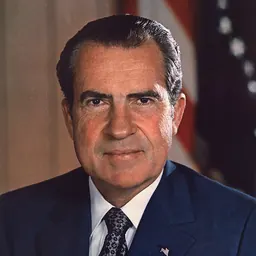
In addition to activities with civic organizations, Moten Barnett served as a board member of both The Links, a service organization for African-American women, and her sorority, Alpha Kappa Alpha. She was also active in International Women's Year activities and events in the 1980s. According to historian Angela Tate, Moten Barnett's program, which covered a wide range of cultural issues, was perhaps the first "Black woman’s radio broadcast created for Black listeners that also had a broader audience." On March 6, 1957, Moten Barnett interviewed Dr. Martin Luther King Jr. in Accra, Ghana] where they were both attending the celebration of Ghana's independence from Great Britain—she as the wife of Claude Barnett, a prominent member of the official U.S. delegation headed by Vice President Richard Nixon, and King, fresh from the Montgomery Bus Boycott, as a man interested in the liberation of oppressed people globally, but with no official place in Ghana's Independence Day festivities. The recording of this conversation, conducted in a Ghanaian radio studio where Moten Barnett was gathering recordings for her Chicago broadcasts, is also available at the Library of Congress and the Schomburg Library.
Personal life About 1918, she married Curtis Brooks, who had been a teacher of hers in high school. They had three daughters: Sue, Gladys, and Etta Vee, but divorced after six years of marriage.
In 1934, while living and working in New York, Moten married a second time, to Claude Albert Barnett, the head of the Associated Negro Press in Chicago. The two were happily married for 33 years, until he died in 1967.
Etta Moten Barnett died of pancreatic cancer at Chicago's Mercy Hospital in 2004, aged 102.
Legacy and honors 1943 – University of Kansas, citation of merit 1958 – National Association of Business and Professional Women, citation for service 1973 – African Center of Atlanta University, citation for contributions to Afro-American music 1974 – WAIT, citation for contributions to the City of Chicago 1979 – Inducted into Black Filmmakers Hall of Fame, noted as: Actress, Concert Artist 1983 – Candace Award from the National Coalition of 100 Black Women 1988 – African American Institute citation for service to Africa 2001 – Inducted into the Emily Taylor Center for Women and Gender Equity, University of Kansas
Honoris causa degrees 1976 – Atlanta University 1983 – Spelman College 1987 – University of Illinois 1989 – Lincoln University (Pennsylvania) 1989 – North Carolina Central University
Work
Stage Fast and Furious, musical revue (1931) Zombie, a play (1932) Porgy and Bess, musical revival (1943) Lysistrata, Aristophanes' comedy, with an all-black cast (1946)
Filmography Ladies They Talk About (1933) as Singing Inmate (voice, uncredited) Gold Diggers of 1933 (1933) as "Remember My Forgotten Man" Singer (uncredited) Bombshell (1933) as Singer (scenes deleted) Flying Down to Rio (1933) as The Colored Singer Professional Sweetheart (1933) (dubbed singing voice for Theresa Harris) Operator 13 (1934) as Slave at Medicine Show (uncredited) The Green Pastures (1936) as Angel (uncredited) A Day at the Races (1937) as Black Singer (uncredited) Born to Sing (1942) as Soloist – "Ballad for Americans" (uncredited) (final film role)
Don’t just read it —
keep it.
Full-length biographies made to live with: read them, listen on the way to work, watch them tonight.
- E-book
- Audio
- Video
Instant download · yours to keep · every purchase keeps this site free
Important facts
Family & relationships
People in Etta Moten Barnett's life
Named in this biography and alive at the same time






Related people
Same field, nearest in time


Contemporaries
People whose lives overlapped Etta Moten Barnett's


Frequently asked questions
Who was Etta Moten Barnett?
American singer, actress, and activist (1901–2004)
When was Etta Moten Barnett born?
Etta Moten Barnett was born on 5 November 1901 in Weimar, San Antonio.
When did Etta Moten Barnett die?
Etta Moten Barnett died on 2 January 2004 in Chicago.
What was Etta Moten Barnett's occupation?
Etta Moten Barnett was an actor, opera singer, stage actor, film actor, activist and singer.
What nationality was Etta Moten Barnett?
Etta Moten Barnett was American.
Sources & further reading
· Wikipedia: Etta Moten Barnett
Cite this page
APA: Biography.guide. (2026). Etta Moten Barnett. https://biography.guide/etta-moten-barnett/
MLA: "Etta Moten Barnett." Biography.guide, https://biography.guide/etta-moten-barnett/.
Chicago: "Etta Moten Barnett." Biography.guide. https://biography.guide/etta-moten-barnett/.
Data last updated: 2026-09-22 · Spot an error? Report a correction.
Portrait: Wikimedia Commons · author & licence
Page generated 2026-09-27 05:03 UTC