
Etta Federn-Kohlhaas
German and French literary critic, writer and translator
About Etta Federn-Kohlhaas
Lived 1883 – 1951 (aged 68). Etta Federn-Kohlhaas was a French and Austrian literary critic, writer, translator, trade unionist and resistance fighter.
Etta Federn-Kohlhaas (April 28, 1883 – May 9, 1951) or Marietta Federn, also published as Etta Federn-Kirmsse and Esperanza, was a writer, translator, educator and important woman of letters in pre-war Germany. In the 1920s and 1930s, she was active in the anarcho-syndicalist movement in Germany and Spain.
Early life and education She born in Vienna, Austria, to a distinguished Jewish family. Her mother, Ernestine Federn, was a member of the women's suffrage movement in Austria. Her father, Salomon Federn, was a prominent doctor and pioneer in the monitoring of blood pressure. Her paternal grandfather Elias Bunzelfedern was a well-known liberal rabbi in Prague.
Her sister Else was a social worker in Vienna, active in the Settlement Movement. A park in Vienna was named for her in 2013.
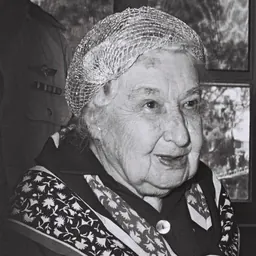
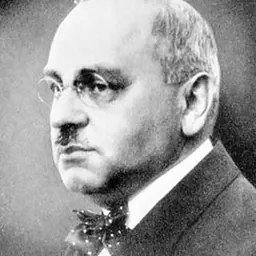
Her brother Paul was a psychoanalyst and, with colleague Alfred Adler a follower of Sigmund Freud. An expert on ego psychology and the treatment of psychosis, he served as vice president of the Vienna Psychoanalytic Society.
In Vienna and Berlin, Etta Federn studied literary history, German philology and Ancient Greek. Following the book’s publication, Federn became the target of Nazi death threats. She contributed to various anarchist newspapers and journals related to the Free Workers' Union of Germany.
In 1927, her book Goethe's Faust received a favorable review in the New York Times, again by Gabriele Reuter. who wrote that the "simple, objectively written little book is to be recommended particularly to foreigners and young people," demystifying Faust by viewing it as Goethe's "spiritual and intellectual autobiography."
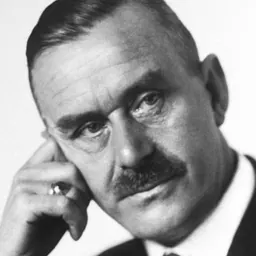
In Berlin, Federn also met and translated several Polish-born Jewish poets who wrote in Yiddish. In 1931, her translation of the Yiddish poetry collection Fischerdorf (Fishing Village) by Abraham Nahum Stencl was published. Thomas Mann gave the book a favorable review, admiring Stencl's "passionate poetic emotion." (The work would soon be destroyed in the Nazi book burnings).
In 1932, Federn left Berlin, realizing that under the Nazis she would no longer be able to publish her writing. She moved with her sons to Barcelona, Spain, where she joined the anarchist movement Mujeres Libres (Free Women), which provided such services as maternity centers, daycare centers, and literacy training to women. She learned Spanish and became director of four progressive schools in the city of Blanes, educating both teachers and children in secular values and antimilitarism.
Starting in 1936, she published articles in the movement's women-run anarcha-feminist magazine, also called Mujeres Libres. All issues of the magazine, known for its passionate writing and sophisticated design, can be viewed at La revista Mujeres Libres.
Like many anarchist women, Etta Federn believed in the importance of literacy for women, in birth control and sexual freedom, and in the power of educated women to be good mothers. She wrote: "Educated mothers relate their own experiences and sufferings to their children; they intuitively understand their feelings and expressions. They are good educators, as they are also friends of the children they educate."
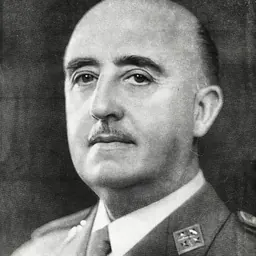
In 1938, toward the end of the Spanish Civil War, as Francisco Franco's fascists bombed Barcelona and defeated the Republicans, she fled to France. There, hunted by the Gestapo as a Jew and member of the French Resistance, she survived World War II in hiding in Lyon, at times in a monastery, and did translation work for the French Resistance.
Personal life and death Etta Federn's first husband was Max Bruno Kirmsse, who taught children with mental disabilities. Her second husband was Peter Paul Kohlhaas, an illustrator. She had two sons, Hans and Michael, one from each marriage. Her older son, known as Capitaine Jean in the French Resistance, was murdered by French collaborators in 1944.
She spent her final years in Paris, supported in part by her relatives in the USA and doing palm readings based on her psychological insights. Because her son was killed as a Resistance fighter, she was awarded French citizenship. Dagerman was one of Sweden's leading authors at that time. The play he based loosely on Federn was first performed at the Royal Dramatic Theatre in Stockholm, and has since been performed in many countries, including Ireland, the Netherlands, Cyprus, and France. Marty's Shadow was first performed in New York in 2017, by the August Strindberg Repertory Theatre.
Selected books by Etta Federn
Reissued in German as Etta Federn: Revolutionär auf ihre Art, von Angelica Balabanoff bis Madame Roland, 12 Skizzen unkonventioneller Frauen (Etta Federn: Revolutionary in her Way: From Angelica Balabanoff to Madame Roland, 12 Sketches of Unconventional Women), edited and translated by Marianne Kröger, 1997.
Translations H.C. Andersens Märchen, Tales of Hans Christian Andersen, translated from the Danish, 1923. Reissued 1952. Shakespeare-Lieder, Sonnets of William Shakespeare, translated from the English, 1925. Wege der liebe : drei Erzählungen (The Ways of Love: Three Stories), by Alexandra Kollontai, translated from the Russian, 1925. Reissued 1982. Gesichte, Poems of Samuel Lewin, translated from the Yiddish, 1928. Fischerdorf (Fishing Village), Poems of A. N. Stencl, translated from the Yiddish, 1931. Sturm der Revolution (The Storm of Revolution), Poems of Saumyendranath Tagore, translated from the Bengali, 1931. Anakreon, Poems of Anacreon, translated from the Ancient Greek, 1935.
Don’t just read it —
keep it.
Full-length biographies made to live with: read them, listen on the way to work, watch them tonight.
- E-book
- Audio
- Video
Instant download · yours to keep · every purchase keeps this site free
Important facts
People in Etta Federn-Kohlhaas's life
Named in this biography and alive at the same time

Related people
Same field, nearest in time


Contemporaries
People whose lives overlapped Etta Federn-Kohlhaas's



Frequently asked questions
Who was Etta Federn-Kohlhaas?
German and French literary critic, writer and translator (1883-1951)
When was Etta Federn-Kohlhaas born?
Etta Federn-Kohlhaas was born on 28 April 1883 in Vienna.
When did Etta Federn-Kohlhaas die?
Etta Federn-Kohlhaas died on 9 May 1951 in Paris.
What was Etta Federn-Kohlhaas's occupation?
Etta Federn-Kohlhaas was a literary critic, writer, translator, trade unionist and resistance fighter.
What nationality was Etta Federn-Kohlhaas?
Etta Federn-Kohlhaas was French and Austrian.
Sources & further reading
· Wikipedia: Etta Federn-Kohlhaas
Cite this page
APA: Biography.guide. (2026). Etta Federn-Kohlhaas. https://biography.guide/etta-federn-kohlhaas/
MLA: "Etta Federn-Kohlhaas." Biography.guide, https://biography.guide/etta-federn-kohlhaas/.
Chicago: "Etta Federn-Kohlhaas." Biography.guide. https://biography.guide/etta-federn-kohlhaas/.
Data last updated: 2026-09-20 · Spot an error? Report a correction.
Page generated 2026-09-27 05:22 UTC