
About Étienne Lenoir
Lived 1822 – 1900 (aged 78). Étienne Lenoir was a Belgian and Luxembourgish inventor, technician, automotive engineer, marine architect and merchant, known for Internal combustion engine, Lenoir cycle and Repeating circle.
Jean Joseph Étienne Lenoir, also known as Jean J. Lenoir (12 January 1822 – 4 August 1900 ), was a Belgian-French engineer who invented the internal combustion engine in 1858. Prior designs for such engines were patented as early as 1807 (De Rivaz engine) and 1854 (Barsanti–Matteucci engine).
He was born in Mussy-la-Ville (then in Luxembourg, part of the Belgian Province of Luxembourg since 1839). In 1838, he immigrated to France, taking up residence in Paris, where he developed an interest in electroplating. His interest in the subject led him to make several electrical inventions, including an improved electric telegraph. with a capitalization of two million francs and a factory in the Rue de la Roquette, to develop the engine, and a three-wheeled carriage constructed to use it. Although it ran reasonably well, the engine was fuel inefficient, extremely noisy, tended to overheat, and, if sufficient cooling water was not applied, seize up. German engineer H. Boetius describes in an 1861 essay that the Lenoir engine's fuel consumption was falsely advertised. Instead of the promised , the fuel consumption (in a Kuhn-built Lenoir engine) was rather in the range.
Nevertheless, Scientific American reported in September 1860 that the Parisian newspaper Cosmos had pronounced the steam age over. It successfully covered the 11 km (7 mi) from Paris to Joinville-le-Pont and back in about ninety minutes each way, an average speed less than that of a walking man (though doubtless there were breakdowns). This succeeded in attracting the attention of Tsar Alexander II, and one was sent to Russia, where it vanished; Lenoir was not pleased. In 1863, he sold his patents to Compagnie parisienne de gaz and turned to motorboats instead, building the first naptha-fueled four-cycle, fueled by ligroin (heavy naptha), in 1888. Jules Verne wrote in his 1863 novel Paris in the Twentieth Century of boulevards crowded with horseless carriages, "the Lenoir machine applied to locomotion."
Stationary engines Most applications of the Lenoir engine were as a stationary power plant powering printing presses, water pumps, and machine tools. They "proved to be rough and noisy after prolonged use", however. Other engineers, especially Nicolaus Otto, began making improvements to internal combustion technology, which soon rendered the Lenoir design obsolete. Fewer than 500 Lenoir engines of 6-20 hp were built, including some under license in Germany.
Electrical engineering
In 1865, Lenoir returned to electrical engineering. He developed a new type of automatic telegraph device that could send information in written form. This device was of great value during the Franco-Prussian War. He also installed an improved version of his engine in a 12-meter-long boat for a Mr. Dalloz, who used it on the Seine for two years.
French citizenship Lenoir was granted French citizenship in 1870 for assistance during the Franco-Prussian War, and awarded the Légion d'honneur for developments in telegraphy in 1881. Lenoir was impoverished in later years despite his engine's relative success.
Honors On 16 July 1900, not long before his death, Lenoir received an award from the ACF (Automobile Club de France), which was a vermeil plate with the inscription, "In recognition of his great merits as an inventor of the gas engine and builder of the first car in the world."
Lenoir Rock in Antarctica is not named after the engineer, but after a scientific instrument maker also named Étienne Lenoir.
Lenoir died in La Varenne-Sainte-Hilaire on 4 August 1900.
Don’t just read it —
keep it.
Full-length biographies made to live with: read them, listen on the way to work, watch them tonight.
- E-book
- Audio
- Video
Instant download · yours to keep · every purchase keeps this site free
Important facts
People in Étienne Lenoir's life
Named in this biography and alive at the same time


Related people
Same field, nearest in time
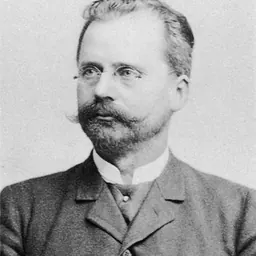

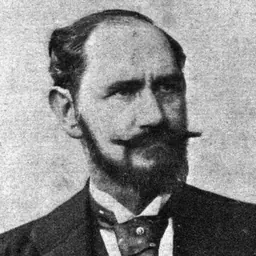
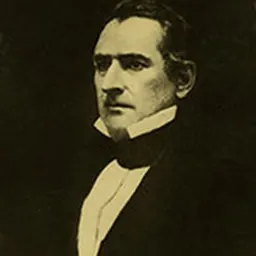

Contemporaries
People whose lives overlapped Étienne Lenoir's





Frequently asked questions
Who was Étienne Lenoir?
Belgian engineer (1822-1900)
When was Étienne Lenoir born?
Étienne Lenoir was born on 12 January 1822 in Mussy-la-Ville.
When did Étienne Lenoir die?
Étienne Lenoir died on 4 August 1900 in La Varenne-Saint-Hilaire.
What was Étienne Lenoir's occupation?
Étienne Lenoir was an inventor, technician, automotive engineer, marine architect and merchant.
What was Étienne Lenoir known for?
Étienne Lenoir was known for Internal combustion engine, Lenoir cycle, Repeating circle and Spark plug.
What nationality was Étienne Lenoir?
Étienne Lenoir was Belgian and Luxembourgish.
Sources & further reading
Cite this page
APA: Biography.guide. (2026). Étienne Lenoir. https://biography.guide/etienne-lenoir-inventor/
MLA: "Étienne Lenoir." Biography.guide, https://biography.guide/etienne-lenoir-inventor/.
Chicago: "Étienne Lenoir." Biography.guide. https://biography.guide/etienne-lenoir-inventor/.
Data last updated: 2026-09-20 · Spot an error? Report a correction.
Page generated 2026-09-27 05:33 UTC