
About Étienne Colaud
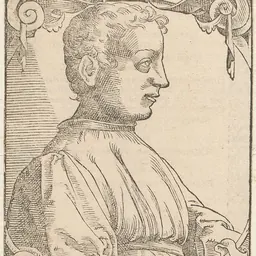
Lived 1450 – 1540 (aged 89–90). Étienne Colaud was a French illuminator, bookseller, painter, calligrapher and miniaturist.
Étienne Colaud (also Étienne Collault) was a French illuminator and book dealer, active in Paris between 1512 and 1540. A number of surviving archives indicate that he was based on the Île de la Cité, close to the cathedral of Notre-Dame, and that other family members also worked in the book trade. His clientele came from leading families of the time, including great land owners, top prelates, and even the king himself. Using a Book of hours that carries his name, scholars have attributed approximately twenty manuscripts to him by analysing the techniques and style applied. There are also a number of religious books, translations into French from Latin or Italian, chivalric narratives and illuminated texts. Étienne Colaud's style is strongly influenced by his near contemporary, the Parisian illuminator Jean Pichore, but his work indicates that he was also networked with virtually every other Paris book-artist of the period.
His parallel business as a book entrepreneur involved the various stages of book production from authorship and bookbinding to the issuing of commissions to copyists and decorators. He had a network of regular and occasional miniaturist artists who provided appropriate illustrations. Their names remain unknown, but they are identified through a series of standard soubriquets such as "exécutant principal des Statuts", "Maître d'Anne de Graville" or "Maître des Puys de Rouen". But it was not till 1889 that Paul Durrieu attributed a complete set of works to Colaud. The works in question were a set of statutes of the Order of Saint Michael, dating from the time of Francis I. Durrieu continued with his studies, and identified more of Colaud's work in 1911. But he also identified a great heterogeneity of styles, which caused him to think that Colaud must have been not merely an illustrator, but also a book seller, and that certain of the miniatures must have been outsourced. Jules Guiffrey completed and published a biographical sketch in 1915 after unearthing further documents in the archives. For most of the rest of the twentieth century art historians paid no further attention to Étienne Colaud. Then in 1997 Myra Orth attributed another manuscript, the "Panégyrique de François Ier", to him. (The attribution to Colaud has subsequently been contested.) A piece of preliminary university-level research by Marie-Blanche Cousseau returned to the "Statutes of the Order of Saint Michael" concluded in 1999 that there had been a "Colaud Group" of illuminators producing the miniatures included in the manuscript. During the first decade of the twenty-first century various further works were attributed to the "Colaud Group". Marie-Blanche Cousseau completed and defended her doctoral dissertation in 2009. In it she identified a significantly greater body of work attributable to the "Colaud Group" than had hitherto been possible. She also, for the first time, differentiated clearly the work of the master from that of his collaborators. A certain amount is known about Martial Vaillant: in 1523 he assumed the position of governor with the Fraternity of St. John the Evangelist which was a business association for members of the books trade. At least one Book of hours in the collection of King Francis I is attributed to Vaillant.
He also bases some of his illustrations on miniatures by the Flemish artist Noël Bellemare, with whom, he collaborated on the "Roman de Lérian et Lauréolle". He was active in Paris between 1520 and 1540. His style is characterised by exaggeratedly square-jawed figures, firm outlines and voluminous architectural framing. In addition to the works he produced for Colaud, several other significant manuscripts are attributed to him, including an Evangelion for the Duprat family, a Book of Hours which recently appeared on the London art market through a dealer called Sam Fogg, This master's style differs from that of Colaud himself most clearly by the application of softer brush strokes, a less firm approach to outlines and the reduced scale of the people in the images. Myra Orth believed that in addition to his work with Colaud, he also produced a miniature included in a Pontifical Liturgy manuscript for Philippe de Lévis
Don’t just read it —
keep it.
Full-length biographies made to live with: read them, listen on the way to work, watch them tonight.
- E-book
- Audio
- Video
Instant download · yours to keep · every purchase keeps this site free
Important facts
Related people
Same field, nearest in time





Contemporaries
People whose lives overlapped Étienne Colaud's


Frequently asked questions
Who was Étienne Colaud?
French illuminator and bookseller
When was Étienne Colaud born?
Étienne Colaud was born in 1450.
When did Étienne Colaud die?
Étienne Colaud died in 1540.
What was Étienne Colaud's occupation?
Étienne Colaud was an illuminator, bookseller, painter, calligrapher and miniaturist.
What nationality was Étienne Colaud?
Étienne Colaud was French.
Sources & further reading
Cite this page
APA: Biography.guide. (2026). Étienne Colaud. https://biography.guide/etienne-colaud/
MLA: "Étienne Colaud." Biography.guide, https://biography.guide/etienne-colaud/.
Chicago: "Étienne Colaud." Biography.guide. https://biography.guide/etienne-colaud/.
Data last updated: 2026-09-20 · Spot an error? Report a correction.
Page generated 2026-09-27 05:00 UTC