
About Étienne Azambre
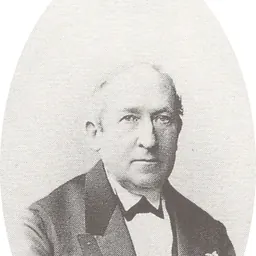
Lived 1859 – 1933 (aged 73–74). Étienne Azambre was a French painter.
Étienne Azambre (2 February 1859, Paris -21 June 1933, Paris) was a French painter, best known for his religious and genre scenes, done in a subdued manner.
Life & work His father was a lawyer. After attending the Collège Stanislas de Paris, he decided to become an artist. From 1879 to 1882, he was enrolled at the Académie Julian, then attended the École Nationale des Beaux-Arts until 1885, where he studied with William Bouguereau and Tony Robert-Fleury. During his military duty in Orléans, he made lifelong friends with the painters Lucien Simon and Georges Desvallières.
Between 1883 and 1904, he exhibited regularly at the Salon des Artistes français In 1889, he participated in the annual exhibition held by the Friends of Art of the Département of Seine-et-Oise, which was held at the Château de Versailles. In 1893, he had a showing at the .
His religious works could also be seen at several artistic exhibitions organized by the Rosicrucians. Their largest was held in 1893, at the , which was demolished in 1988. Many of his works were reproduced as illustrations in magazines such as Le Monde Illustré, La Famille and La France Illustrée.
In 1895, he was one of the artists chosen to decorate the Church of Sainte Marie-Madeleine of Équennes-Éramecourt in Somme. He created frescoes that adorn the cupola, representing the Coronation of the Virgin in the presence of a large assembly of angels. Later, he became a member of the , where he participated in their exhibitions, held the office of Vice-President for a short time and contributed numerous articles to their magazine, Notes d'Art et d'Archéologie. This helped him establish a relationship with the publisher, , which specialized in religious items. He eventually provided hundreds of pious images, many for postcards, reproduced by lithography, rotogravure and chromolithography. He focused entirely on scenes from the New Testament.
Between 1916 and 1919, he devoted himself almost exclusively to producing four large frescoes, representing the Nativity and the Assumption, at the in Yonne, a village near his family estate. Following his death, in 1933, he was interred in a nearby cemetery.
Don’t just read it —
keep it.
Full-length biographies made to live with: read them, listen on the way to work, watch them tonight.
- E-book
- Audio
- Video
Instant download · yours to keep · every purchase keeps this site free
Important facts
People in Étienne Azambre's life
Named in this biography and alive at the same time
Related people
Same field, nearest in time


Contemporaries
People whose lives overlapped Étienne Azambre's



Frequently asked questions
Who was Étienne Azambre?
French painter (1859-1933)
When was Étienne Azambre born?
Étienne Azambre was born on 2 February 1859 in Paris.
When did Étienne Azambre die?
Étienne Azambre died in 1933 in 6th arrondissement of Paris.
What was Étienne Azambre's occupation?
Étienne Azambre was a painter.
What nationality was Étienne Azambre?
Étienne Azambre was French.
Sources & further reading
Cite this page
APA: Biography.guide. (2026). Étienne Azambre. https://biography.guide/etienne-azambre/
MLA: "Étienne Azambre." Biography.guide, https://biography.guide/etienne-azambre/.
Chicago: "Étienne Azambre." Biography.guide. https://biography.guide/etienne-azambre/.
Data last updated: 2026-09-20 · Spot an error? Report a correction.
Page generated 2026-09-27 05:19 UTC