
Etheldred Benett
English geologist and paleontologist
About Etheldred Benett
Lived 1777 – 1845 (aged 67). Etheldred Benett was a British paleontologist, geologist, fossil collector and fossil.
Etheldred Anna Maria Benett (22 July 1776 – 11 January 1845) was an early English geologist who devoted much of her life to collecting and studying fossils that she discovered in South West England. She worked closely with many principal geologists and her fossil collection, considered one of the largest at the time, played a part in the development of geology as a field of science.
Early life Etheldred Anna Maria Benett was born in 1776 (or 1775) (Sources differ on her birth year, e.g.) the Oxford Dictionary of National Biography (2004) other recent sources state 1775, Encyclopædia Britannica (1911) and more recent sources state 1776. into a wealthy family as the second daughter of Thomas Benett (1729–1797) of Wiltshire and Catherine née Darell (d. 1790). Her maternal great-grandfather was William Wake, Archbishop of Canterbury. Her elder brother John was member of Parliament for Wiltshire and later South Wiltshire from 1819 to 1852; his daughter married Lord Charles Spencer-Churchill.
From 1802 she lived at Norton House in Norton Bavant, near Warminster, Wiltshire where she lived with her sister Anna Maria. Very little is known about Benett's home life, beyond her contributions to geology, and there is no known portrait of her, although a silhouette was published in H. B. Woodard's History of Geology (1911).
Fossil collection
From at least 1809 until her death, she devoted herself to collecting and studying the fossils of her native county, beginning with the Warminister area. Benett was knowledgeable in stratigraphy, which aided her searches, and her wealth enabled her to hire collectors and purchase prepared specimens.
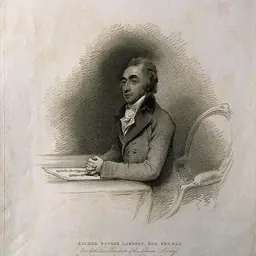
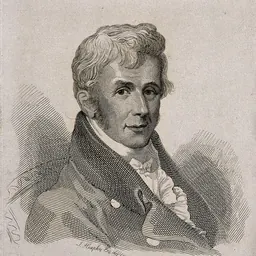
Her interest in geology was encouraged by her sister in-law's half brother, the botanist Aylmer Bourke Lambert. Lambert was an avid fossil collector who contributed to James Sowerby’s Mineral Conchology; he was a founding member of the Linnean Society, a member of the Royal Society, and an early member of the Geological Society. It was through him that Benett developed her love of fossils and relationships with many leading geologists of the time, and it is only through works by these men that most references to her work were made. For example, she contributed to Gideon Mantell's work on stratigraphy, and also worked with Sowerby. Benett was unmarried and financially independent, and so was able to dedicate much of her life to the developing field of geology through the collection and study of fossils, especially fossil sponges.
Benett had contact with many authors of works on fossils including the Sowerbys. Forty-one of her specimens were included in Sowerby's Mineral Conchology, a major fossil reference work, in which she had the second-highest number of contributions. In response to her honorary doctorate, Benett noted that "scientific people, in general, have a very low opinion of the abilities of my sex." Another particularly fascinating section of her collection was that they contained microfossils, she would have been one of the first geologists to sieve for specimens such as these, and today these are primarily used as an indication for oil deposits.
Benett's entire collection was assumed lost in the early 20th century, as specific specimens could not be located. However, the Philadelphia Academy's revived interest in early English fossil collections, and particularly Benett's collection, led to formal recognition again. This ultimately led to the discussion of her two publications, the elaboration of her taxonomic names, and the photographic illustration of many vital pieces of her collection.
Benett also took an interest in conchology and spent time collecting and detailing shells, many of which were new records. In a letter to Mantell in 1817, she claimed her shell collecting had left her with no time to look at his fossils. This mistake occurred when the Imperial Natural History Society of Moscow awarded membership to her under the name of Master Etheldredus Benett in 1836. German geologists who cited her in their works referred to her as "Miss Benett".
Bennett lived at a time when many phenomena were explained by religion, including the existence of fossils. During her lifetime, many thought fossils were the result of great catastrophes related to religion, such as Noah's flood. Furthermore, several well-known scientists were members of the clergy.
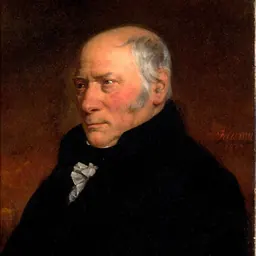
She met William Smith, the "father" of English geology, and presented him with a Tisbury coral sample. He mentioned her in his letters to others, such as when he wrote about "ladies in Wiltshire" who had "distinguished themselves in their collections".
Benett was chosen as the emblem for the conference "The role of women in the history of Geology" held in 2005 at the Geological Society of London.
A memorial board commemorating her achievements as 'The First Lady Geologist', is in the churchyard of All Saints' Parish Church, Norton Bavant.
Contribution to geology and palaeontology
Benett contributed to the early development of Wiltshire geology by corresponding extensively with fellow geologists such as George Bellas Greenough (the first president of the Geological Society), Gideon Mantell, William Buckland, and Samuel Woodward. She gave items from her fossil collection to causes such as museums, sending one to St. Petersburg. Through exchanging numerous fossils with Mantell, a thorough understanding of the Lower Cretaceous sedimentary rocks of Southern England was reached.
Works A catalogue of the organic remains of the county of Wiltshire, 1831. Via Internet Archive. A brief enquiry into the antiquity, honour and estate of the name and family of Wake, 1833 (written by her great grandfather William Wake, Archbishop of Canterbury, but prepared for publication and footnoted by Etheldred Benett)
Don’t just read it —
keep it.
Full-length biographies made to live with: read them, listen on the way to work, watch them tonight.
- E-book
- Audio
- Video
Instant download · yours to keep · every purchase keeps this site free
Important facts
People in Etheldred Benett's life
Named in this biography and alive at the same time

Related people
Same field, nearest in time




Contemporaries
People whose lives overlapped Etheldred Benett's


Frequently asked questions
Who was Etheldred Benett?
English geologist and paleontologist (1776-1845)
When was Etheldred Benett born?
Etheldred Benett was born on 22 July 1777 in Tisbury.
When did Etheldred Benett die?
Etheldred Benett died on 11 January 1845 in Norton Bavant.
What was Etheldred Benett's occupation?
Etheldred Benett was a paleontologist, geologist, fossil collector and fossil.
What nationality was Etheldred Benett?
Etheldred Benett was British.
Sources & further reading
Cite this page
APA: Biography.guide. (2026). Etheldred Benett. https://biography.guide/etheldred-benett/
MLA: "Etheldred Benett." Biography.guide, https://biography.guide/etheldred-benett/.
Chicago: "Etheldred Benett." Biography.guide. https://biography.guide/etheldred-benett/.
Data last updated: 2026-09-25 · Spot an error? Report a correction.
Page generated 2026-09-27 05:12 UTC