
About Ethel Browne Harvey
Lived 1885 – 1965 (aged 79). Ethel Browne Harvey was an American biologist, zoologist and cell biologist.
Ethel (Nicholson) Browne Harvey (December 14, 1885 in Baltimore, Maryland – September 2, 1965 in Falmouth, Massachusetts) was an American embryologist, known for her critical findings about cell division, using the embryology of sea urchins, and for early work studying embryonic cell cleavage.
Biography and education Ethel Nicholson Browne was born December 14, 1885, in Baltimore, Maryland, to Bennett Barnard Browne and Jennifer Nicholson Browne. She was one of five children; three of her siblings became doctors, including two of her sisters (Jennie Nicholson Browne and Mary Nicholson Browne), and one of her brothers became a metallurgist.
Browne's parents sent their three daughters to the Bryn Mawr School, which was the first solely preparatory girls' school in the United States. Browne graduated there in 1902, and then attended Goucher College (then known as the Woman's College of Baltimore).
In 1915, she married fellow scientist, E. Newton Harvey, a physiologist known for work on bioluminescence. Browne, adopting her husband's surname, had two children with him; Edmund Newton Harvey, Jr. (born 1916, later a chemist) and Richard Bennet Harvey (born 1922, later a physician). She was supported during this time by several fellowships aimed at assisting women in science, including a Sarah Berliner Research Fellowship from the Society for the Promotion of University Education for Women. This work, done in 1909, preceded experiments in 1924 by Hans Spemann and Hilde Mangold, that are credited with discovering the "organizer" — this work was the basis of a Nobel Prize given to Spemann.
In the 1930s, she demonstrated a method of parthenogenetic cleavage, inducing unfertilized sea urchin eggs to cleave and ultimately to hatch. Browne used centrifugal force to remove the nuclei of these eggs. This work received popular attention as "creation of life without parents". Browne's experiments were especially noteworthy in that she demonstrated that chromosomes were not necessary to create life. Her experiments showed that cytoplasm was capable of developing life without the need for the nucleus. She termed this method of creating life as "parthenogenic merogony" in which "a portion of the egg without the nucleus is fertilized". In 1950, Ethel Browne Harvey was elected to be the second woman on the Marine Biological Laboratory board of trustees.
Browne worked for many years at the Marine Biological Laboratory at Woods Hole, Massachusetts. She taught at a variety of institutions, including the Bennett School for Girls in Millbrook, New York, the Dana Hall School in Wellesley, Massachusetts; Washington Square College at NYU. She conducted scientific research in a variety of positions including Princeton University and Cornell Medical College. She was associated with the American Women's Table in Naples, an organization established by Ida Henrietta Hyde and other women scientists.
Don’t just read it —
keep it.
Full-length biographies made to live with: read them, listen on the way to work, watch them tonight.
- E-book
- Audio
- Video
Instant download · yours to keep · every purchase keeps this site free
Important facts
People in Ethel Browne Harvey's life
Named in this biography and alive at the same time


Related people
Same field, nearest in time
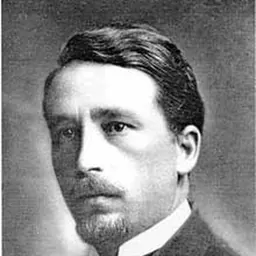




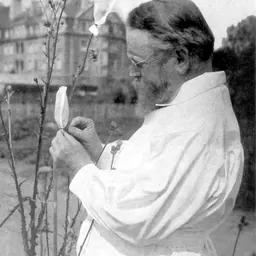
Contemporaries
People whose lives overlapped Ethel Browne Harvey's

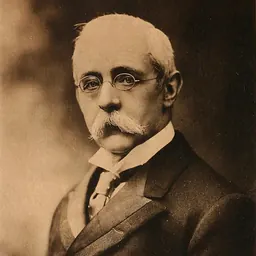
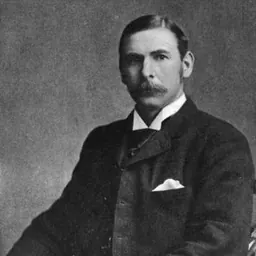

Frequently asked questions
Who was Ethel Browne Harvey?
American embryologist (1885-1965)
When was Ethel Browne Harvey born?
Ethel Browne Harvey was born on 14 December 1885 in Baltimore.
When did Ethel Browne Harvey die?
Ethel Browne Harvey died on 2 September 1965.
What was Ethel Browne Harvey's occupation?
Ethel Browne Harvey was a biologist, zoologist and cell biologist.
What nationality was Ethel Browne Harvey?
Ethel Browne Harvey was American.
Sources & further reading
· Wikipedia: Ethel Browne Harvey
· DBpedia: Ethel Browne Harvey
Cite this page
APA: Biography.guide. (2026). Ethel Browne Harvey. https://biography.guide/ethel-browne-harvey/
MLA: "Ethel Browne Harvey." Biography.guide, https://biography.guide/ethel-browne-harvey/.
Chicago: "Ethel Browne Harvey." Biography.guide. https://biography.guide/ethel-browne-harvey/.
Data last updated: 2026-09-20 · Spot an error? Report a correction.
Page generated 2026-09-27 05:15 UTC