
About Esther Simpson
Lived 1903 – 1996 (aged 93). Esther Simpson was a pedagogue and violinist.
Esther Simpson OBE ( Sinovitch; 31 July 1903 – 19 November 1996) was an English humanitarian who was the Assistant Secretary, later Secretary, of the Academic Assistance Council (AAC) and its successor organisations from 1933 until 1978. She worked tirelessly throughout her life to establish work and connections for refugee academics, using many contacts, including with figures like Einstein and Wittgenstein. Her work on behalf of some of the world's greatest scientific minds fleeing persecution combined affection with toughness. Refugees she helped during the Second World War included 16 future Nobel Prize winners, 74 future Fellows of the Royal Society and 34 future Fellows of the British Academy. She described her work as the "academic equivalent of the kindertransport programme".
She was awarded the OBE at Buckingham Palace in 1956 and received honorary degrees from the University of London and the University of Leeds in 1981 and 1989 respectively.
Esther Simpson, known as Tess to her friends, was best known for being a devoted lobbyist and organiser for the Academic Assistance Council. Working closely with scholarly immigrants such as Leo Szilard, she assisted hundreds of refugee academics during and after the Second World War and enabled them to obtain work positions all over the world. She worked with several organisations to promote the acceptance of refugees under the tensions that arose from the Nazi regime and later other global conflicts.
Early life Logo of the World Alliance of the YMCA in Geneva where Simpson worked before the AAC. Esther Simpson, born Esther Sinovitch, was born on 31 July 1903, in Leeds, Yorkshire, to Jewish parents. She was the youngest of her four siblings and was raised in a lower-middle-class family. Her parents were immigrants from Russia who were very young when they moved to Leeds to escape the pogroms. Her father worked in a garment factory. She attended the Leeds Girls' Modern School and then the University of Leeds from 1921 to 1925 on a scholarship where she was awarded a first class degree in Modern Languages. Simpson was fluent in German and French, in addition to her native English. After graduating, she worked in Europe, first as a governess for a wealthy family in Germany and then briefly in Paris. In 1928 she accepted a job at the International Fellowship of Reconciliation in Vienna where she worked for a few years until being employed by the World Alliance of the YMCA in Geneva in 1933. In July 1933 she accepted a lower paying job in central London offered by the Academic Assistance Council (from 1936 called the Society of Protection of Science and Learning and then Cara, the Council for At-Risk Academics from 2014), as she believed she could make a valuable contribution there. She was aware that refugee organisations were not able to do everything, but she wanted to help in any way that she could. Simpson developed her craft and became an amateur of professional standard. Some professionals were delighted to play with her, such as the violinist Max Rostal. She said: "Music enriched my life by providing me with wonderful friends – meeting a musician was so often like a pebble cast in a pool whose ripples go on to eternity."
Career Academic Assistance Council and Society for Protection of Science and Learning
In the summer of 1933, while Simpson was living in Geneva, she was hired as an assistant secretary and then later became the administrator and executive assistant of the Academic Assistance Council (AAC) as it was called at the time, through Leo Szilard. The AAC was set up to help academics fleeing from the Nazi regime by offering them grants and aiding them to find new employment around the world. It had an office in London through William Beveridge at the London School of Economics and Ludwig von Mises . There were only two employees, the Secretary, Walter Adam (later director of the London School of Economics), and Simpson as Assistant Secretary. She was therefore responsible for carrying out most of the work of the charity. This included organizing support for these refugees and also lobbied for selective suspicion of those of German or Austrian origin now in Britain; many who had fled repression had skills of value to their new home country. By the 1940s, the AAC was renamed to the Society for the Protection of Science and Learning (SPSL) and was great being led by Simpson. At this point, they were working to aid the refugee scholars confirmed as aliens, who were interned by the British government, in addition to their work with the refugee scholars who were fleeing Nazi Germany and the Nazi-occupied European territories. Simpson struggled to place academics in some disciplines, including law, history, and art history that were more country-specific, although some art historians were found positions as curators. Other disciplines, particularly science, had more employment opportunities. They also struggled to place German refugee scholars, as they had German educations, which were less preferred than those educated in Britain.
Simpson was committed to her job and worked overtime, until late in the evenings, even at the start in her lower position when she was receiving a third of her previous salary. She believed there was no time for holidays; her first holiday since beginning her work with the Society was in 1951. Simpson was also vital in communications between the refugee scholars and the organization, as she was responsible for writing letters and keeping up with correspondence, writing tens of thousands of letters during her employment. This meant not only helping the survivors of the war find new homes but also advising the friends and family of the scholars who had not survived of their fate. She was dedicated to reuniting academics with their families whenever possible, as she considered the people she helped to be her family.
In 1944, Esther Simpson left the SPSL for a post as the assistant secretary at the government-sponsored Society for Visiting Scientists. She worked at the SVS from 1944 until 1966 when it closed. However, from 1951 she also undertook voluntary work for the SPSL that continued to help persecuted academics, and in 1966 she re-joined the SPSL as a full time employee. A colleague wrote, "though Hitler was dead, intolerance went on." The organisations aided refugees fleeing from Eastern Europe and the Stalinist regime in the USSR, as well as those fleeing the regimes in South Africa, Chile, and Argentina.
Additionally, the scholars she saved cared deeply for her. At her retirement party in 1966, which was attended by lords, knights, and professors, money was donated to Simpson, who had worked at a small salary and did not have savings, to help her with retirement. She also received an LLD (Doctorate of Laws) from the University of London in 1981 and at her alma mater, the University of Leeds in 1989. The book is an informal account of her life and career. Max Perutz and Sir Ernst Gombrich assisted and attended her book launch.
She died on 19 November 1996, at age 93. On 8 March 2022, a blue plaque was unveiled in Simpson's memory at the opening of the building.
Don’t just read it —
keep it.
Full-length biographies made to live with: read them, listen on the way to work, watch them tonight.
- E-book
- Audio
- Video
Instant download · yours to keep · every purchase keeps this site free
Important facts
People in Esther Simpson's life
Named in this biography and alive at the same time

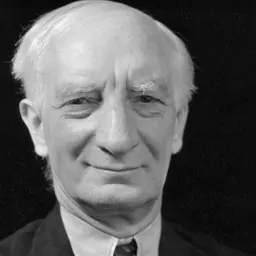
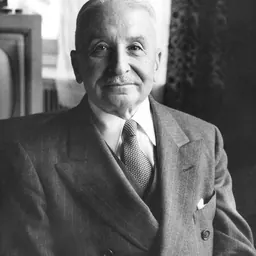
Related people
Same field, nearest in time


Contemporaries
People whose lives overlapped Esther Simpson's

Frequently asked questions
Who was Esther Simpson?
refugee co-ordinator, Secretary Society for the Protection of Science and Learning (1903–1996)
When was Esther Simpson born?
Esther Simpson was born on 17 January 1903 in Leeds.
When did Esther Simpson die?
Esther Simpson died on 17 January 1996.
What was Esther Simpson's occupation?
Esther Simpson was a pedagogue and violinist.
Sources & further reading
Cite this page
APA: Biography.guide. (2026). Esther Simpson. https://biography.guide/esther-simpson/
MLA: "Esther Simpson." Biography.guide, https://biography.guide/esther-simpson/.
Chicago: "Esther Simpson." Biography.guide. https://biography.guide/esther-simpson/.
Data last updated: 2026-09-22 · Spot an error? Report a correction.
Page generated 2026-09-27 05:23 UTC