
About Esta Henry
Lived 1883 – 1963 (aged 79–80). Esta Henry was a British businessperson.
Esta or Esther Henry (1882–17 January 1963) was an antiques dealer in Edinburgh, Scotland. Born in Sunderland, in her time she was the subject of news stories in many countries and known for her eccentric behavior. Sometimes called "Mrs. Scotland" in the press, she had ties to a number of notable people and events, including British queens and the auction of the collections of King Farouk of Egypt. She was born Esther Louis daughter of Louis Louis and Eveline Jackson. She married her first husband James H (Jacob) Henry on 28 August 1902 in Edinburgh.
Henry's shop Moubray House (to the left) and John Knox House on the High Street, near the Netherbow Port, on the Royal Mile, Edinburgh. Henry ran an antiques business out of a shop called The Luckenbooth in Moubray House, the oldest building on the Royal Mile in Edinburgh. A luckenbooth is a heart-shaped Scottish brooch named for the shops in the Luckenbooths tenements where jewelry was once sold. Moubray House is next to the John Knox House
The antique shop on the Royal Mile was "a favourite haunt" of Queen Mary (Mary of Teck), and visited by the Queen (Queen Elizabeth The Queen Mother) and Princess Margaret, in 1948. During the visit, Esta Henry took them to see the flat above the shop in Moubray House, where the Queen Mother said she "would like to live on the Royal Mile".
Jewelry theft On 1 May 1953, £650 of the "Hungarian crown jewels collection" was stolen from Henry's shop. The gems were later found at 22 St. Stephen's road in Canterbury. Henry agreed to pay £15 to the owner of the shop, Barnett Lee, to recover her property. The aquamarine, diamond and platinum brooch was sold to Lee (in parts) for £60, by one of two men who had been sentenced at the High Court in Edinburgh for the theft.
It is possible that these items were stolen from Henry by Archibald Hall, alias Roy Fontaine. Although he was caught and jailed for his crimes, Hall used the proceeds of his thefts in Scotland to move to London. In England he became infamous for infiltrating high class society, committing robberies, and killing a number of his targets. In 1978, Hall was found guilty of murder and sentenced to two life-terms. He died in Kingston Prison, Portsmouth in 2002. A screenplay for a film about Hall, called Monster Butler, was written by Peter Bellwood.
According to A. M. Nicol in the 2011 book, The Monster Butler, Hall claimed that he planned the theft that was Scotland's biggest jewel robbery. He devised a scheme with his accomplice, John Wootton, whom he met in prison. Together they took approximately £100,000 in goods from a tin box at the back of Henry's shop and went to Torquay. After hiding some of the jewels, they were arrested and sent to Edinburgh. Nicol writes, "the prosecution offered them a deal which involved the true value of the jewels not being made public". Nicol posits that Hall's story is a fabrication and the actual was an "opportunistic sneak theft" for a great deal less value.
King Farouk's auction Farouk I of Egypt was the king of Egypt and Sudan, following his father Fuad I of Egypt, in 1936. He was known for his extensive collection including decorated horological instruments, coins and pornographic art. In 1952, Farouk was deposed by the Egyptian government. His collections were auctioned in February 1954 to return the money spent by Farouk to Egypt's treasury. News of the auction was reported throughout the world, and Henry was the subject of a number of these articles.
The auction was run by the new government, not professional auctioneers, which resulted in unusual circumstances. During the auction, Henry protested that she could not see and left the salesroom; the supervisors followed her to make amends. Two days earlier, Henry insisted that they conduct the auction in English as well as French and Egyptian, and they complied. At one point Henry grabbed a clock from the stand in the middle of bidding, "When I saw it I rushed up and shouted, lay off—this is for Scotland. If any twister breaks my bid I'll break his neck."
quote|They tried to get me to talk politics. All I said was, 'I believe in Scotland for the Scots, England for the English, Egypt for the Egyptians, and equal rights for women.'|Esta Henry|The Sydney Morning Herald at the age of 9, "I started with a pushbike and 30 bob, I lived in one room which was also the shop." Shortly after her election Cormack announced he and Henry would stand for Parliament at the next UK general election, but in fact Henry soon left Protestant Action. Tom Gallagher believes Henry was not anti-Catholic, but joined Protestant Action as a means to become a councillor. Kenneth Baxter concurs with this view noting among other evidence the facts that she had previously sought election to Edinburgh Council as 'Moderate/Progressive' candidate without success on five previous occasions and in October 1936 had been intending to stand as an 'Independent Progressive'.
Henry was widowed in 1947 at the age of 64, and left with 2 daughters and 3 sons.
In 1953, a Romanian art dealer named Pinchas Haimovici was held in Saughton Prison, Edinburgh, pending deportation for entering the country on a false passport with the name Paul Eugene Dillon (a Belgian named Paul Dijon in other sources Henry declared that she "loved Paul" and she would marry him and take care of all his financial needs (presumably to legalize his position in Scotland).
Sculptor Benno Schotz created a piece called Paul and Esta Henry, shown at the Royal Academy of Arts in 1954.
From 1955 to 1961 Henry served as a member of the ruling council of the influential Edinburgh conservationist group the Cockburn Association.
Esta and Paul Henry died on 17 January 1963, in an air crash in São Paulo, Brazil, returning from a "belated honeymoon".
Don’t just read it —
keep it.
Full-length biographies made to live with: read them, listen on the way to work, watch them tonight.
- E-book
- Audio
- Video
Instant download · yours to keep · every purchase keeps this site free
Important facts
People in Esta Henry's life
Named in this biography and alive at the same time


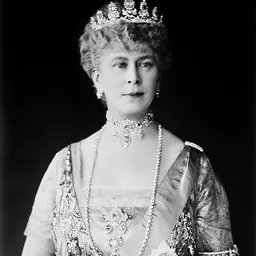



Related people
Same field, nearest in time

Contemporaries
People whose lives overlapped Esta Henry's



Frequently asked questions
Who was Esta Henry?
British businessman
When was Esta Henry born?
Esta Henry was born in 1883 in Newcastle upon Tyne.
When did Esta Henry die?
Esta Henry died in 1963 in São Paulo.
What was Esta Henry's occupation?
Esta Henry was a businessperson.
What nationality was Esta Henry?
Esta Henry was British.
Sources & further reading
Cite this page
APA: Biography.guide. (2026). Esta Henry. https://biography.guide/esta-henry/
MLA: "Esta Henry." Biography.guide, https://biography.guide/esta-henry/.
Chicago: "Esta Henry." Biography.guide. https://biography.guide/esta-henry/.
Data last updated: 2026-09-22 · Spot an error? Report a correction.
Page generated 2026-09-27 05:04 UTC