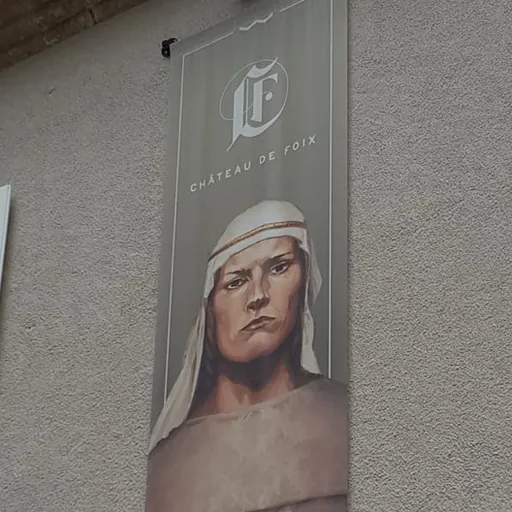
Esclarmonde of Foix
Cathar Perfect
About Esclarmonde of Foix
Lived 1151 – 1215 (aged 63–64).
Esclarmonde of Foix (French: Esclarmonde de Foix; Occitan: Esclarmonda de Fois), was a prominent figure associated with Catharism in thirteenth century Occitania (in the south of modern-day France).
Her biography is difficult to establish since several noblewomen in the same area at the same time had the same rare first name. The name Esclarmonde means "clarity of the world" in the Occitan language.
Family Esclarmonde of Foix was the daughter of Roger Bernard I, Count of Foix, and Cécile Trencavel, daughter of Raymond I Trencavel. Raymond-Roger of Foix, Count of Foix was her brother.
In 1175, she married Jourdain III, lord of L'Isle-Jourdain. They had: Bernard-Jourdain de l'Isle-Jourdain, the eldest and heir Escaronia Obica Jordan Othon-Bernard Philippa
Spiritual life Esclarmonde was widowed in October 1200 and turned to Catharism sometime thereafter. Catharism was a Christian dualist or Gnostic movement which thrived in Southern Europe, particularly in northern Italy and southern France. The religion was seen as heresy by the Catholic church.
Esclarmonde received the Cathar sacrament, the consolamentum, for becoming a Cathar Perfect from the Cathar bishop Guilhabert de Castres in 1204 in Fanjeaux, along with three other women of high rank, Aude de Fanjeaux, Fays de Durfort, and Raymonde of Saint-Germain. The ceremony was conducted in the presence of her brother, Raymond-Roger of Foix.
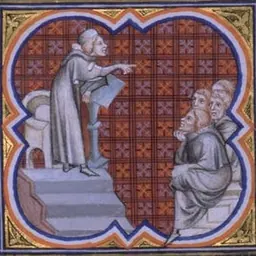
Esclarmonde settled in Pamiers and was probably involved in an initiative to rebuild the fortress of the Château de Montségur. She participated in the Conference of Pamiers of 1207, which followed the Conference of Montreal of the previous year. It was the last debate between the Cathars and the Roman Catholic Church, represented by Dominic Guzman, founder of the Dominican order and later known as Saint Dominic, and Diego de Acebo, the bishop of Osma.
The following year, in 1208, Pope Innocent III launched the Albigensian Crusade against the Cathars after the murder of his delegate Pierre de Castelnau.
Legacy Esclarmonde is remembered differently by different groups in France. For the Catholics, she spread heresy in the country and forced people to adopt the rules of the Cathars. For others, she was remembered for the creation of schools and hospitals in the region, earning the nickname "la Grande Esclarmonde" – "The Great Esclarmonde".
The significance of her name's meaning, i.e. "clarity of the world", is explored in several medieval epic poems including one referred to as "Esclaramonde", by Bertran de Born, and in "Parzival" by Wolfram von Eschenbach.
In her memory, in 1978, the University of Winnipeg created the Esclarmonde de Foix Memorial Travel Scholarship.
Don’t just read it —
keep it.
Full-length biographies made to live with: read them, listen on the way to work, watch them tonight.
- E-book
- Audio
- Video
Instant download · yours to keep · every purchase keeps this site free
Important facts
Family & relationships
People in Esclarmonde of Foix's life
Named in this biography and alive at the same time
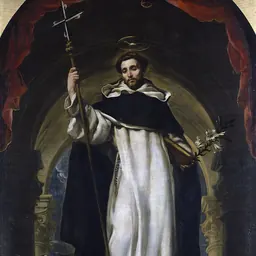



Contemporaries
People whose lives overlapped Esclarmonde of Foix's





Frequently asked questions
Who was Esclarmonde of Foix?
Cathar Perfect
When was Esclarmonde of Foix born?
Esclarmonde of Foix was born in 1151 in Kingdom of France.
When did Esclarmonde of Foix die?
Esclarmonde of Foix died in 1215 in France, Occitania.
Sources & further reading
· Wikipedia: Esclarmonde of Foix
· DBpedia: Esclarmonde of Foix
Cite this page
APA: Biography.guide. (2026). Esclarmonde of Foix. https://biography.guide/esclarmonde-of-foix/
MLA: "Esclarmonde of Foix." Biography.guide, https://biography.guide/esclarmonde-of-foix/.
Chicago: "Esclarmonde of Foix." Biography.guide. https://biography.guide/esclarmonde-of-foix/.
Data last updated: 2026-09-22 · Spot an error? Report a correction.
Portrait: Wikimedia Commons · author & licence
Page generated 2026-09-27 05:03 UTC