
About Esad Erbilî
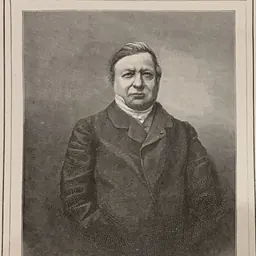
Lived 1847 – 1931 (aged 83–84). Esad Erbilî was a Turkish writer.
Esad Erbili or Mehmed Esad Efendi (1847 – March 1931) was a sheikh of the Naqshi-Khalidi Sufi order. At the beginning of World War I, he took a branch of the Naqshbandiyah school of thought to Istanbul.
Early years Esad Erbili was born in Arbil (present-day Kurdistan Region, Iraq) in 1847. He was the 30th Chain of the Golden Silsila, entitled to the honorific title Sayyid on both his mother's and father's side. His father, Master M. Said, was the Sheikh of Khalidî tekke in Arbil, while his grandfather, Master Hidayetullah, was a khalifa. After Erbili completed his education in Arbil and Deyr, he became affiliated with the Naqshi-Khalidi Sheikh Taha’l-Hariri at age 23. Five years later he was given the degree of the caliphate. but when his followers and visitors increased, he left and settled in the muezzin room of a mosque in Bayezid-Parmakkapi. He taught the Divān of Hafez and Luccet-ul Asrar of Mawlana Jamii in the Fatih Mosque. Hodja Master Yekta and other scholars took notice of these lessons and affiliated themselves with him.
In a short time, his reputation spread throughout Istanbul. The sultan's son-in-law, Darwish Pashazade Khalid Pasha, invited Erbili to the palace to learn Arabic and religious sciences from him. He was appointed to the rank of Majles-i Mashayih by Sultan Abdul Hamid II. In the meantime, he moved his house to one of the rooms over the Bayezid Mosque gates. He also appealed for a tekke. At that time, Kadiri Dargah was free, but its sheikh was required to have a Kadiri authorization. Erbili was appointed after receiving this authorization from one of the grandchildren of Abdul Kadir Gilani, Abdulhameed er-Refqani. In 1914, he was appointed chairman of the Assembly of Sheikhs (The Council of Islamic Teachers, or Meclis-i Meşâyıh) in Istanbul. He served in this role until the council was closed in 1915. He died shortly afterward in a military hospital in İzmir.
Writings Kenzul-Irfan - A translation of and commentary on 100,000 hadith. Maktubat (Mektubat) - A collection of letters to his students. Divan - Kurdish, Turkish and Persian poetry. Risale-i Es'adiyye - Autobiography. Tevhid Risalesi Tercümesi - A commentary on Ibn Arabi's Kitab al-Tawhid. Fatiha-i Şerife Tercümesi - A tafsir (exegesis) on the first chapter of the Qur'an.
Don’t just read it —
keep it.
Full-length biographies made to live with: read them, listen on the way to work, watch them tonight.
- E-book
- Audio
- Video
Instant download · yours to keep · every purchase keeps this site free
Important facts
People in Esad Erbilî's life
Named in this biography and alive at the same time

Related people
Same field, nearest in time
Contemporaries
People whose lives overlapped Esad Erbilî's




Frequently asked questions
Who was Esad Erbilî?
Kurdish writer (1847–1931)
When was Esad Erbilî born?
Esad Erbilî was born in 1847 in Istanbul.
When did Esad Erbilî die?
Esad Erbilî died on 9 March 1931 in İzmir.
What was Esad Erbilî's occupation?
Esad Erbilî was a writer.
What nationality was Esad Erbilî?
Esad Erbilî was Turkish.
Sources & further reading
Cite this page
APA: Biography.guide. (2026). Esad Erbilî. https://biography.guide/esad-erbili/
MLA: "Esad Erbilî." Biography.guide, https://biography.guide/esad-erbili/.
Chicago: "Esad Erbilî." Biography.guide. https://biography.guide/esad-erbili/.
Data last updated: 2026-09-22 · Spot an error? Report a correction.
Page generated 2026-09-27 05:27 UTC