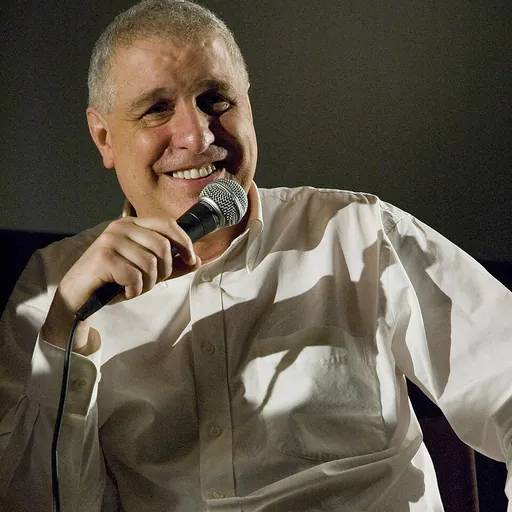
Errol Morris
American filmmaker and writer (born 1948)
About Errol Morris
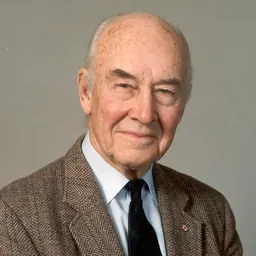
Born 1948. Errol Morris is an American film director, screenwriter, non-fiction writer, actor, film producer and film editor.
Errol Mark Morris (born February 5, 1948) is an American film director known for documentaries that interrogate the epistemology of their subjects, and the invention of the Interrotron. In 2003, his The Fog of War: Eleven Lessons from the Life of Robert S. McNamara won the Academy Award for Best Documentary Feature. His film The Thin Blue Line placed fifth on a Sight & Sound poll of the greatest documentaries ever made. Morris is known for making films about unusual subjects; Fast, Cheap & Out of Control interweaves the stories of an animal trainer, a topiary gardener, a robot scientist, and a naked mole-rat specialist.
Early life and education Errol Mark Morris was born on February 5, 1948, into a Jewish family in Hewlett, New York. His father died when he was two and he was raised by his mother, a piano teacher. After being treated for strabismus in childhood, Morris refused to wear an eye patch. As a consequence, he has limited sight in one eye and lacks normal stereoscopic vision.
In the 10th grade, Morris attended The Putney School, a boarding school in Vermont. He began playing the cello, spending a summer in France studying music under the acclaimed Nadia Boulanger, who also taught Morris's future collaborator Philip Glass. Describing Morris as a teenager, Mark Singer wrote that he "read with a passion the 14-odd Oz books, watched a lot of television, and on a regular basis went with a doting but not quite right maiden aunt ('I guess you'd have to say that Aunt Roz was somewhat demented') to Saturday matinées, where he saw such films as This Island Earth and Creature from the Black Lagoon—horror movies that, viewed again 30 years later, still seem scary to him."
College Morris attended the University of Wisconsin–Madison, graduating in 1969 with a Bachelor of Arts in history. For a brief time, Morris held small jobs, first as a cable-television salesman, and then as a term-paper writer. His unorthodox approach to applying for graduate school included "trying to get accepted at different graduate schools just by showing up on their doorstep."
In the fall of 1976, Herzog visited Plainfield again, this time to shoot part of his film Stroszek.
First films Morris accepted $2,000 from Herzog and used it to take a trip to Vernon, Florida. Vernon was nicknamed "Nub City" because its residents supposedly participated in a particularly gruesome form of insurance fraud in which they deliberately amputated a limb to collect the insurance money. Morris's second documentary was about the town and bore its name, although it made no mention of Vernon as "Nub City", but instead explored other idiosyncrasies of the town's residents. Morris made this omission because he received death threats while doing research; the town's residents were afraid that Morris would reveal their secret. Morris returned to Vernon in 1979 and again in 1980, renting a house in town and conducting interviews with the town's citizens. Vernon, Florida premiered at the 1981 New York Film Festival. Newsweek called it, "a film as odd and mysterious as its subjects, and quite unforgettable." The film, like Gates of Heaven, suffered from poor distribution. It was released on video in 1987, and DVD in 2005.
After finishing Vernon, Florida, Morris tried to get funding for a variety of projects. The Road story was about an interstate highway in Minnesota; one project was about Robert Golka, the creator of laser-induced fireballs in Utah; and another story was about Centralia, Pennsylvania, the coal town in which an inextinguishable subterranean fire ignited in 1962. He eventually got funding in 1983 to write a script about John and Jim Pardue, Missouri bank robbers who had killed their father and grandmother and robbed five banks. Morris's pitch went, "The great bank-robbery sprees always take place at a time when something is going wrong in the country. Bonnie and Clyde were apolitical, but it's impossible to imagine them without the Depression as a backdrop. The Pardue brothers were apolitical, but it's impossible to imagine them without Vietnam." This led to Grigson being nicknamed "Dr. Death." Through Grigson, Morris met the subject of his next film, 36-year-old Randall Dale Adams.
Adams was serving a life sentence that had been commuted from a death sentence on a legal technicality for the 1976 murder of Robert Wood, a Dallas police officer. Adams told Morris that he had been framed, and that David Harris, who was present at the time of the murder and was the principal witness for the prosecution, had in fact killed Wood. Morris began researching the case because it related to Dr. Grigson. He was at first unconvinced of Adams's innocence. After reading the transcripts of the trial and meeting David Harris at a bar, however, Morris was no longer so sure.
At the time, Morris had been making a living as a private investigator for a well-known private detective agency that specialized in Wall Street cases. Bringing together his talents as an investigator and his obsessions with murder, narration, and epistemology, Morris went to work on the case in earnest. Unedited interviews in which the prosecution's witnesses systematically contradicted themselves were used as testimony in Adams's 1986 habeas corpus hearing to determine if he would receive a new trial. David Harris famously confessed, in a roundabout manner, to killing Wood.
Although Adams was finally found innocent after years of being processed by the legal system, the judge in the habeas corpus hearing officially stated that, "much could be said about those videotape interviews, but nothing that would have any bearing on the matter before this court." Regardless, The Thin Blue Line, as Morris's film would be called, was popularly accepted as the main force behind getting its subject, Randall Adams, out of prison. As Morris said of the film, "The Thin Blue Line is two movies grafted together. On one simple level is the question, Did he do it, or didn't he? And on another level, The Thin Blue Line, properly considered, is an essay on false history. A whole group of people, literally everyone, believed a version of the world that was entirely wrong, and my accidental investigation of the story provided a different version of what happened."
The Thin Blue Line ranks among the most critically acclaimed documentaries ever made. According to a survey by The Washington Post, the film made dozens of critics' top ten lists for 1988, more than any other film that year. It won the documentary of the year award from both the New York Film Critics Circle and the National Society of Film Critics. Despite its widespread acclaim, it was not nominated for an Oscar, which created a small scandal regarding the nomination practices of the academy. The academy cited the film's genre of "non-fiction", arguing that it was not actually a documentary. It was the first of Morris's films to be scored by Philip Glass.
A Brief History of Time and Fast, Cheap & Out of Control Morris wanted to make a film about Albert Einstein's brain and approached Amblin Entertainment about it. Gordon Freedman had acquired the rights to Stephen Hawking's bestseller A Brief History of Time and Steven Spielberg suggested Morris direct it. After reading Hawking's book, Morris agreed to direct a documentary adaptation of it, having studied the philosophy of science at Princeton. Morris's film A Brief History of Time is less an adaptation of Hawking's book than a portrait of the scientist. It combines interviews with Hawking, his colleagues and his family with computer animations and clips from movies like Disney's The Black Hole. Morris said he was "very moved by Hawking as a man", calling him "immensely likable, perverse, funny...and yes, he's a genius."
Morris's Fast, Cheap & Out of Control interweaves interviews with a wild animal trainer, a topiary gardener, a robot scientist and a naked mole rat specialist with stock footage, cartoons and clips from film serials. Roger Ebert said of it, "If I had to describe it, I'd say it's about people who are trying to control things - to take upon themselves the mantle of God." Morris agreed there was a "Frankenstein element", adding "They're all involved in some very odd inquiry about life. It sounds horribly pretentious laid out that way, but there's something mysterious in each of the stories, something melancholy as well as funny. And there's an edge of mortality. For the end of the movie I showed the gardener clipping the top of his camel, clipping in a heavenly light, and then walking away in the rain. You know that this garden is not going to last much longer than the gardener's lifetime."
In 2002, Morris was commissioned to make a short film for the 75th Academy Awards. He was hired based on his advertising resume, not his career as a director of feature-length documentaries. Those interviewed ranged from Laura Bush to Iggy Pop to Kenneth Arrow to Morris's 15-year-old son Hamilton. Morris was nominated for an Emmy for this short film. He considered editing this footage into a feature-length film, focusing on Donald Trump discussing Citizen Kane (this segment was later released on the second issue of Wholphin). Morris went on to make a second short for the 79th Academy Awards in 2007, this time interviewing the various nominees and asking them about their Oscar experiences.
The Fog of War and later films
In 2003, Morris won the Oscar for Best Documentary for The Fog of War, a film about the career of Robert S. McNamara, the Secretary of Defense during the Vietnam War under Presidents John F. Kennedy and Lyndon B. Johnson. In the haunting opening about McNamara's relationship with U.S. General Curtis LeMay during World War II, Morris brings out complexities in the character of McNamara, which shaped McNamara's positions in the Cuban Missile Crisis and the Vietnam War. Like his earlier documentary, The Thin Blue Line, The Fog of War included extensive use of re-enactments, a technique which many had believed was inappropriate for documentaries prior to his Oscar win.
In early 2010, a new Morris documentary was submitted to several film festivals, including Toronto International Film Festival, Cannes Film Festival, and Telluride Film Festival. The film, Tabloid, features interviews with Joyce McKinney, a former Miss Wyoming, who was convicted in absentia for the kidnap and indecent assault of a Mormon missionary in England during 1977.
Subsequently, Morris has made documentaries such as The Unknown Known (2013), American Dharma (2018), and The Pigeon Tunnel (2023), revolving around interviews conducted with Donald Rumsfeld, Steve Bannon, and John le Carré, respectively.
Commercials Although Morris has achieved fame as a documentary filmmaker, he is also an accomplished director of television commercials. In 2002, Morris directed a series of television ads for Apple Computer as part of a popular "Switch" campaign. The commercials featured ex-Windows users discussing their various bad experiences that motivated their own personal switches to Macintosh. One commercial in the series, starring Ellen Feiss, a high-schooler friend of his son Hamilton Morris, became an Internet meme. Morris has directed hundreds of commercials for various companies and products, including Adidas, AIG, Cisco Systems, Citibank, Kimberly-Clark's Depend brand, Levi's, Miller High Life, Nike, PBS, The Quaker Oats Company, Southern Comfort, EA Sports, Toyota and Volkswagen. Many of these commercials are available on his website.
In July 2004, Morris directed another series of commercials in the style of the "Switch" ads. This campaign featured Republicans who voted for Bush in the 2000 election giving their personal reasons for voting for Kerry in 2004. Upon completing more than 50 commercials, Morris had difficulty getting them on the air. Eventually, the liberal advocacy group MoveOn PAC paid to air a few of the commercials. Morris also wrote an editorial for The New York Times discussing the commercials and Kerry's losing campaign.
In late 2004, Morris directed a series of noteworthy commercials for Sharp Electronics. The commercials enigmatically depicted various scenes from what appeared to be a short narrative that climaxed with a car crashing into a swimming pool. Each commercial showed a slightly different perspective on the events, and each ended with a cryptic weblink. The weblink was to a fake webpage advertising a prize offered to anyone who could discover the secret location of some valuable urns. It was in fact an alternate reality game. The original commercials can be found on Morris's website.
Morris directed a series of commercials for Reebok that featured six prominent National Football League (NFL) players. The 30-second promotional videos were aired during the 2006 NFL season.
In 2013, Morris stated that he has made around 1,000 commercials during his career.
In 2015, Morris made commercials for medical technology firm Theranos, and interviewed its founder, Elizabeth Holmes. After the company fell in disgrace, Morris was criticized by The Telegraph for seeming "captivated" by Holmes, and for contributing to Holmes' mythical persona as a visionary. In a 2019 New Yorker interview, Morris reflected, "To me, what really is interesting about Elizabeth [Holmes] ... did she really see herself as a fraud? Was it calculation? I have a hard time squaring that with my own experience. Could I have been self-deceived, delusional? You betcha. I'm no different than the next guy. I'd like to think I'm a little different. But I'm still fascinated by her."
Writings and documentary shorts Morris has also written long-form journalism, exploring different areas of interest and published on The New York Times website. A collection of these essays, titled Believing is Seeing: Observations on the Mysteries of Photography, was published by Penguin Press on September 1, 2011. In November 2011, Morris premiered a documentary short titled "The Umbrella Man"—featuring Josiah "Tink" Thompson—about the Kennedy assassination on The New York Times website.
In 2012, Morris published his second book, A Wilderness of Error: The Trials of Jeffrey MacDonald, about Jeffrey MacDonald, the Green Beret physician convicted of killing his wife and two daughters on February 17, 1970. Morris first became interested in the case in the early 1990s and believes that MacDonald is not guilty after undertaking extensive research. Morris explained in a July 2013 interview, prior to the reopening of the case: "What happened here is wrong. It's wrong to convict a man under these circumstances. And if I can help correct that, I will be a happy camper." He now states that he does not believe that Macdonald is guilty, but thinks it possible that Macdonald is guilty.
Style and legacy To conduct interviews, Morris invented a machine, called the Interrotron, which allows the interviewer and his subject to make eye-contact with each other while both staring through the camera lens itself. He explains the device as follows:
Author Marsha McCreadie, in her book Documentary Superstars: How Today's Filmmakers Are Reinventing the Form, had paired Morris with Werner Herzog as practitioners and visionaries in their approach in documentary filmmaking.
Morris uses narrative elements within his films. These include but are not limited to: stylized lighting, musical score, and re-enactment. The use of these elements is rejected by many documentary filmmakers who followed the cinema vérité style of the previous generations. Cinema vérité is characterized by its rejection of artistic additions to documentary film. While Morris faced backlash from many of the older-era filmmakers, his style has been embraced by the younger generations of filmmakers, as the use of re-enactment is present in many contemporary documentary films.
Morris advocates the reflexive style of documentary filmmaking. In Bill Nichols's book Introduction to Documentary he states that reflexive documentary "[speaks] not only about the historical world but about the problems and issues of representing it as well." Morris uses his films not only to portray social issues and non-fiction events but also to comment on the reliability of documentary making itself.
His style has been spoofed in the mockumentary series Documentary Now.
Even when interviewing controversial figures, Morris does not generally believe in adversarial interviews:
Filmography Feature films
Gates of Heaven (1978) Vernon, Florida (1981) The Thin Blue Line (1988) The Dark Wind (1991), fiction movie A Brief History of Time (1991) Fast, Cheap & Out of Control (1997) Mr. Death: The Rise and Fall of Fred A. Leuchter, Jr. (1999) The Fog of War: Eleven Lessons from the Life of Robert S. McNamara (2003) Standard Operating Procedure (2008) Tabloid (2010) The Act of Killing (executive producer) (2012) The Unknown Known (2013) The Look of Silence (executive producer) (2014) Happy Father's Day (video) (2015) Uncle Nick (executive producer) (2015) The B-Side: Elsa Dorfman's Portrait Photography (2016) National Bird (executive producer) (2016) American Dharma (2018) Enemies of the State (executive producer) (2020) My Psychedelic Love Story (2020) The Pigeon Tunnel (2023) Tune Out the Noise (2024) Separated (2024) CHAOS: The Manson Murders (2025)
Short films Survivors (2008) They Were There (Documentary short) (2011) El Wingador (Documentary short) (2012) Three Short Films About Peace (2014) Leymah Gbowee: The Dream (Documentary short) (2014)
Television Errol Morris Interrotron Stories: Digging Up the Past (TV miniseries documentary) (1995) First Person (TV series documentary) (17 episodes) (2000) Op-Docs (TV series documentary trilogy) The Umbrella Man about Umbrella man (JFK assassination) (2011) November 22, 1963 (2013) A Demon in the Freezer (2016) P.O.V. (executive producer) (2014–2016) It's Not Crazy, It's Sports (TV documentary series) (2015) The Subterranean Stadium (TV movie) (2015) The Streaker (TV movie) (2015) The Heist (TV movie) (2015) Most Valuable Whatever (TV movie) (2015) Chrome (TV movie) (2015) Being Mr. Met (TV movie) (2015) Zillow Hiram's Home (TV movie) (2016) Wormwood (miniseries) (2017) A Wilderness of Error (docuseries on FX) (2020)
Accolades
Gates of Heaven (1978) was long featured on Roger Ebert's list of the ten greatest films ever made. Golden Horse for Best Foreign Film at the Taiwan International Film Festival for The Thin Blue Line (1988) New York Film Critics Circle and the National Society of Film Critics Best Documentary for The Thin Blue Line (1988) Washington Post Best Film of the Year for The Thin Blue Line (1988) Edgar Award for Best Motion Picture, from the Mystery Writers of America, for The Thin Blue Line (1989) Guggenheim Fellowship (1989) MacArthur Fellowship (1989) Emmy for Best Commercial for PBS commercial "Photobooth" (2001) In December 2001, the United States' National Film Preservation Foundation announced that Morris's The Thin Blue Line would be one of the 25 films selected that year for preservation in the National Film Registry at the Library of Congress, bringing the total at the time to 325. 2002 International Documentary Association list of the 20 all-time best documentaries: The Thin Blue Line (#2), Fast, Cheap & Out of Control (#14) Best Documentary of the Year awards for The Fog of War (2003): the National Board of Review, the Los Angeles Film Critics Association, the Chicago Film Critics, and the Washington D.C. Area Film Critics. In 2003, The Guardian put him seventh in its list of the world's 40 best active directors. Academy Award for Documentary Feature The Fog of War (2004) Fellow of the American Academy of Arts and Sciences (2007) Jury Grand Prix Silver Bear at the 2008 Berlin International Film Festival for Standard Operating Procedure Columbia Journalism Award (2013) In 2019, The Fog of War was selected by the Library of Congress for preservation in the National Film Registry for being "culturally, historically, or aesthetically significant".
Honorary degrees Middlebury College, Hon. D.F.A. (2010) Brandeis University, Hon. D.H.L. (2011) University of Wisconsin–Madison, Hon. D.H.L. (2013)
Don’t just read it —
keep it.
Full-length biographies made to live with: read them, listen on the way to work, watch them tonight.
- E-book
- Audio
- Video
Instant download · yours to keep · every purchase keeps this site free
Important facts
Family & relationships
People in Errol Morris's life
Named in this biography and alive at the same time





Related people
Same field, nearest in time



Contemporaries
People whose lives overlapped Errol Morris's

Frequently asked questions
Who is Errol Morris?
American filmmaker and writer (born 1948)
When was Errol Morris born?
Errol Morris was born on 5 February 1948 in Hewlett.
What is Errol Morris's occupation?
Errol Morris is a film director, screenwriter, non-fiction writer, actor, film producer and film editor.
What nationality is Errol Morris?
Errol Morris is American.
Sources & further reading
Cite this page
APA: Biography.guide. (2026). Errol Morris. https://biography.guide/errol-morris/
MLA: "Errol Morris." Biography.guide, https://biography.guide/errol-morris/.
Chicago: "Errol Morris." Biography.guide. https://biography.guide/errol-morris/.
Data last updated: 2026-09-22 · Spot an error? Report a correction.
Portrait: Wikimedia Commons · author & licence
Page generated 2026-09-27 05:01 UTC