
About Errett Callahan
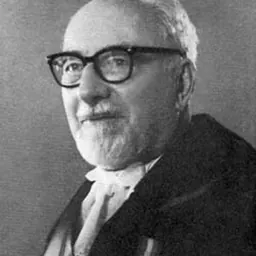
Lived 1937 – 2019 (aged 81). Errett Callahan was an American anthropologist, archaeologist, painter and university teacher.
Errett Callahan (December 17, 1937 – May 29, 2019) was an American archaeologist, flintknapper, and pioneer in the fields of experimental archaeology and lithic replication studies.
Early life
Errett Callahan was born in Lynchburg, Virginia, on December 17, 1937. Callahan’s interest in the outdoors and Native American lifeways began quite early on. As a boy Callahan was a member of the Boy Scouts of America and it was as a Boy Scout that he was first exposed to the skills and techniques that the Native Americans used to survive in the outdoors. His father, who was also his Scoutmaster, played a large role in this, not only imparting his technical knowledge, but also instilling a sense of self-reliance and independence that would shape Errett’s outlook his entire life.
Callahan attended Hampden-Sydney College in Hampden-Sydney, Virginia, from 1956 to 1960. While at Hampden-Sydney Callahan majored in French to better prepare himself for the missionary work in West Africa he hoped to do after graduation. teaching classes that combined academic study and research with primitive technological experimentation. With the help of his students, Callahan conducted seven living archaeology experiments over this time period that contributed greatly to both the understanding of native lifeways as well as the field of experimental archaeology itself. The first, the Old Rag project, was an Early Woodland encampment experiment conducted in the Blue Ridge Mountains of Virginia in 1972. At the Old Rag project Callahan and his students produced all of the stone and bone tools used in the construction and subsequent short-term habitation of the site and its dwelling. In 1973, Callahan and his students continued their experimental work at the Wagner Basalt Quarry project in northern Arizona, where they constructed and lived in a reproduction Desert Archaic encampment much in the same way they did at the Old Rag project. After the Wagner Basalt Quarry project, Callahan began an even more ambitious undertaking in 1974 with the multi-phased Pamunkey project. This project, located along the Pamunkey River in Tidewater Virginia, consisted of a series of extended (one month) living experiences in Eastern Middle and Late Woodland encampments of their own construction. As with the previous projects everything used was produced on site, however, the extended nature of this project allowed for a more advanced understanding of Late Woodland technology, which Callahan presented for his Doctoral dissertation, Pamunkey Housebuilding: an Experimental Study of Late Woodland Technology in the Powatan Confederacy.
Flint knapping and experimental archaeology
Callahan first began flint knapping in 1956. He was completely self-taught for the first ten years, learning all he knew through trial and error and by examining the prehistoric artifacts he was trying to recreate. After his first decade of work, he studied with such Master-level flint knappers as Don Crabtree, Gene Titmus, François Bordes, J. B. Sollberger, and Jacques Pelegrin. Along with his continued experimentation and instructions from the masters, Callahan began reading everything he could get his hands on that pertained to flint knapping and primitive technologies. Over the first twenty years of his research Callahan worked his way through the lithic technologies of the European Paleolithic, Paleo-Indian, Archaic, and Woodland traditions of the Americas with another five years spent deciphering the technologies of the European Mesolithic, all the while voluntarily restricting himself to replications of prehistoric forms. Not content to stop there Callahan spent the next twenty years of his life working his way through the complex stone technologies of the European Neolithic. Only after that was Callahan ready to start his work on the Post Neolithic and Non-Traditional technologies where he was once again in uncharted territory, working by trial and error to produce forms that had never been seen before.
Ethics in experimental archaeology
Along with his work in the technological aspects of the field of experimental archaeology, Callahan worked tirelessly to promote ethical research and documentation among fellow experimental archaeologists. as reconstructions which are successful, functional units undertaken with the correct period tools, materials, and procedures and which are scientifically monitored. In this statement, Callahan urged other flint knappers and experimental archaeologists against using modern replica tools such as copper billets to reproduce stone tools instead of the traditional bone and stone hammers used throughout prehistory. Callahan also said in the statement that without proper documentation of the techniques and processes there is no real experiment. With Callahan at the forefront of experimental archaeology, the field of replication studies gained acceptance throughout the academic community.
Northern Europe
In 1972 Errett received a call from Hans-Ole Hansen, founder of the former Lejre Experimental Centre, nowadays Land of legends (Sagnlandet Lejre), in Lejre, Denmark. shed new light on several long standing questions, including population migration, microblade technology, and knapping efficiency vs. waste, faced by Swedish archaeologists who studied the lithic technologies of the area. As a result of his research in Sweden he was awarded an honorary doctorate from the Faculty of Humanities at Uppsala University, Sweden in 1992 and a faculty position in the archaeology department at Uppsala University in Uppsala, Sweden. These ultra-sharp edges produce less scarring and tissue damage and speed the healing process. Though they are not popular in the medical field, Callahan’s obsidian scalpels have been used with great success in hundreds of operations, many performed by doctors and scientists at the University of Michigan Health System who have done extensive research using scalpels produced by Callahan.
Society of primitive technology
Throughout the 1980s the fields of experimental archaeology and lithic replication studies endured some harsh criticisms in the United States from various members of the academic community. It was at this gathering that The Society of Primitive Technology was founded to promote the practice and teaching of aboriginal skills, foster communication between teachers and practitioners, and to bring about a set of standards for the authenticity, quality and ethics of the research that was being carried out. The society, of which Callahan was president from its inception until he retired his post in 1996,
Don’t just read it —
keep it.
Full-length biographies made to live with: read them, listen on the way to work, watch them tonight.
- E-book
- Audio
- Video
Instant download · yours to keep · every purchase keeps this site free
Important facts
People in Errett Callahan's life
Named in this biography and alive at the same time
Related people
Same field, nearest in time




Contemporaries
People whose lives overlapped Errett Callahan's



Frequently asked questions
Who was Errett Callahan?
American archaeologist (1937-2019)
When was Errett Callahan born?
Errett Callahan was born on 17 December 1937.
When did Errett Callahan die?
Errett Callahan died on 29 May 2019.
What was Errett Callahan's occupation?
Errett Callahan was an anthropologist, archaeologist, painter and university teacher.
What nationality was Errett Callahan?
Errett Callahan was American.
Sources & further reading
Cite this page
APA: Biography.guide. (2026). Errett Callahan. https://biography.guide/errett-callahan/
MLA: "Errett Callahan." Biography.guide, https://biography.guide/errett-callahan/.
Chicago: "Errett Callahan." Biography.guide. https://biography.guide/errett-callahan/.
Data last updated: 2026-09-20 · Spot an error? Report a correction.
Page generated 2026-09-27 05:05 UTC