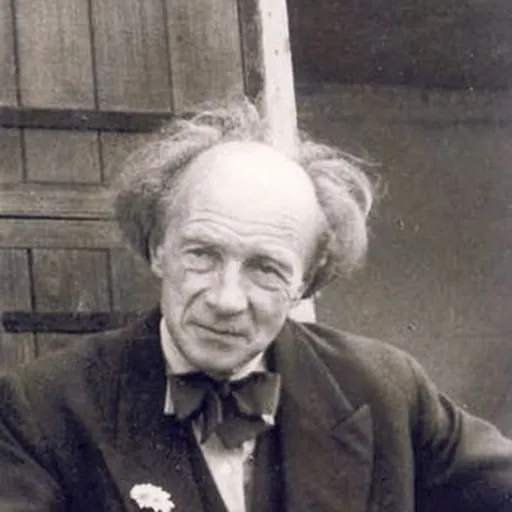
About Ernst Wiechert
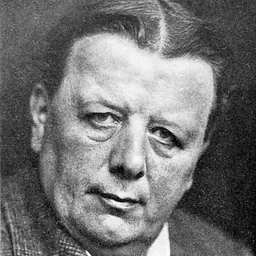
Lived 1887 – 1950 (aged 63). Ernst Wiechert was a writer, studienrat, military officer, secondary school teacher, resistance fighter and poet.
Ernst Wiechert (18 May 1887 – 24 August 1950) was a German teacher, poet and writer.
Biography
Wiechert was born in the village of Kleinort, East Prussia, (now Piersławek, Poland).
He was one of the most widely read novelists in Germany during the 1930s. He incorporated his humanist ideals in his novels among which Das einfache Leben (The simple Life, 1939) and Die Jeromin-Kinder (The Jeromin children, 1945/47) are the best known today.
Wiechert was strongly opposed to Nazism from the start. He appealed in 1933 and 1935 to the undergraduates in Munich to retain their critical thinking in relation to the national socialist ideology. This was rated as call to internal resistance. The minutes of the speech circulated illegally in Germany and reached Moscow in 1937 baked in bread. Here it was published in the influential exile magazine Das Wort (The Word). But Wiechert went even further and dared to openly criticize the imprisonment of Martin Niemöller by the Nazis in 1938. He was arrested shortly after the rigged plebiscite by which Germany absorbed Austria in April 1938.
In consequence of his criticism, he was interned in the Buchenwald concentration camp for four months. He wrote down his memories about his imprisonment and buried the manuscript; it was published in 1945 as Der Totenwald (Forest of the dead).
After the war, Wiechert was a critic of West German society. In 1948, he settled in Stäfa, Switzerland, where he died in August 1950 of cancer. He was buried in Stäfa.
Works Die Flucht, novel, (pseudonym: Ernst Barany Bjell), 1916 Der Wald, novel, 1922 Der Totenwolf, novel, 1924 Die blauen Schwingen, novel, 1925 Der Knecht Gottes Andreas Nyland, novel, 1926 Der silberne Wagen, short stories, 1928 Die kleine Passion. Geschichte eines Kindes, novel, 1929 Die Flöte des Pan, short stories, 1930 Jedermann, novel, 1931 Die Magd des Jürgen Doskocil, 1932 Geschichte eines Knaben, novel, 1933 Das Spiel vom deutschen Bettelmann, radio play, 1933 Die Majorin, novel, 1934 Der Todeskandidat, short stories, 1934 Der verlorene Sohn, play, 1935 Die goldene Stadt, play, 1935 Hirtennovelle, short stories, 1935 Wälder und Menschen, childhood memoirs, 1936 Das heilige Jahr, short stories, 1936 Von den treuen Begleitern, interpretations of poems, 1938 Atli, der Bestmann, short stories, 1938 Das einfache Leben, novel, 1939, Die Jeromin-Kinder, novel, 1945/7, , Die Totenmesse, short story, 1945/7 Der brennende Dornbusch, short story, 1945 Demetrius, short story, 1945 Der Totenwald, Report from the concentration camp Buchenwald, 1946 (written in 1937) Märchen 1946/7 Der weiße Büffel oder Von der großen Gerechtigkeit, 1946 (written in 1937) Der armen Kinder Weihnachten, play, 1946 Okay oder die Unsterblichen, play, 1946 Die Gebärde, short stories, 1947 Der Richter, short story, 1948 Jahre und Zeiten, memoirs, 1949, Die Mutter, short stories, 1948 Missa sine Nomine, novel 1950 Der Exote, novel, 1951 Die letzten Lieder, poems, 1951 Es geht ein Pflüger übers Land, short stories chosen by Lilje Wiechert, 1951 Häftling Nr. 7188, diary entries and letters, 1966 Vom Trost der Welt, 1938
Don’t just read it —
keep it.
Full-length biographies made to live with: read them, listen on the way to work, watch them tonight.
- E-book
- Audio
- Video
Instant download · yours to keep · every purchase keeps this site free
Important facts
People in Ernst Wiechert's life
Named in this biography and alive at the same time

Related people
Same field, nearest in time


Contemporaries
People whose lives overlapped Ernst Wiechert's



Frequently asked questions
Who was Ernst Wiechert?
German writer (1887-1950)
When was Ernst Wiechert born?
Ernst Wiechert was born on 18 May 1887 in Piersławek.
When did Ernst Wiechert die?
Ernst Wiechert died on 24 August 1950 in Stäfa.
What was Ernst Wiechert's occupation?
Ernst Wiechert was a writer, studienrat, military officer, secondary school teacher, resistance fighter and poet.
What nationality was Ernst Wiechert?
Ernst Wiechert's recorded nationality: German Reich.
Sources & further reading
Cite this page
APA: Biography.guide. (2026). Ernst Wiechert. https://biography.guide/ernst-wiechert/
MLA: "Ernst Wiechert." Biography.guide, https://biography.guide/ernst-wiechert/.
Chicago: "Ernst Wiechert." Biography.guide. https://biography.guide/ernst-wiechert/.
Data last updated: 2026-09-22 · Spot an error? Report a correction.
Portrait: Wikimedia Commons · author & licence
Page generated 2026-09-27 05:02 UTC