
About Ernst Schneller
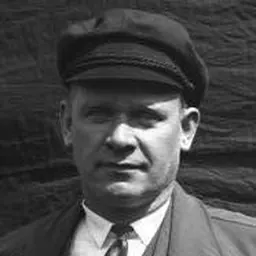
Lived 1890 – 1944 (aged 53). Ernst Schneller was a politician, teacher, resistance fighter and pedagogue.
Ernst Hugo Schneller (8 November 1890 – 11 October 1944) was a German school teacher. In 1914 he volunteered to join the army when World War I broke out. Sent to fight on the Eastern Front, he became politicised and radicalised, especially as the ideas behind the Russian Revolution filtered through to the German troops. After the war he joined first the Social Democratic Party and then, in 1920, the recently launched Communist Party of Germany. He served as a regional member ("Landtagsabgeordneter") of parliament in the Saxon parliament ("Landtag") between 1921 and 1924, and then between 1924 and 1933 as a member ("Reichstagsabgeordneter") of the national parliament ("Reichstag"). He was arrested in 1933 and imprisoned. Transfer to the Sachsenhausen concentration camp followed in 1939.
On 11 October 1944, Ernst Schneller was one of 24 German camp inmates deemed culpable of "communist activities", taken out, and together with three French communist shot dead by Nazi paramilitaries (SS).
Life Provenance and early years Ernst Schneller was born in Leipzig, the sixth child of a railway official. He nevertheless passed the necessary exams to become a teaching assistant, and worked in this capacity from 1911 till 1913 at Kirchberg im Erzgebirge, a small town in the mining region south of Zwickau. He then passed more exams and became a qualified teacher, moving to a school in Leipzig. War broke out in July 1914 and Schneller unhesitatingly volunteered for military service. In 1916 he was sent on an officers' training course, after which he was promoted to the rank of Leutnant. Further promotions followed. By 1917/1918, still on the Eastern Front, Ernst Schneller was serving as a "Bataillonsadjutant". His entry in the official Parliamentary directory ("Reichstags-Handbuch") is unusually brief: it describes him as a "teacher in Schwarzenberg (Saxony)" and as a "dissident".
The Ninth Party Congress was held at Frankfurt in April 1924. At it Ernst Schneller was one of the fifteen delegates elected to membership of the powerful "Parteizentrale", precursor to the Party Central Committee and effectively the governing body of the party. Within that committee he took responsibility for important military and organisational matters. In 1928 the German party sent Schneller to Moscow as a delegate for the Sixth World Congress of the Comintern. He was appointed to the candidates' list for the powerful Comintern Executive Committee (ECCI / ИККИ). He would never make it to membership of the committee, however. However, Thälmann arranged for the matter to be referred to the ECCI in Moscow, which gave Stalin the opportunity to reverse Thälmann's removal. The German party's Central Committee decision to condemn Thälmann had been "mistaken". The result was that Ernst Thälmann was rapidly "rehabilitated" and restored to the leadership: the Communist Party of Germany fell more firmly under Moscow's control than ever. The result of the "error" for Ernst Schneller was rapid removal from the Politburo. The Twelfth Party Congress was held in the Wedding quarter of Berlin in June 1929. This time thirty-eight comrades were elected to Central Committee membership. Ernst Schneller was no longer among them, however. He was nevertheless given a job by the Central Committee, in the "Business department" ("Geschäftsabteilung") where for some months he was made responsible for "party printed matter".
A Communist leader in Germany under National Socialism The Reichstag fire took place on the night of 27 February 1933. Although the government, with almost indecent haste, identified it as part of a communist plot, many took the view that it was actually the government that appeared to have planned for such an eventuality. Several leading members of the Communist Party were promptly arrested. Ernst Schneller was among those arrested overnight in Berlin on 27/28 February 1933 and taken to the "Investigatory Prison" in Berlin-Moabit. he was able to ensure that the group were able to stay informed about political and military developments in the world outside.
Family Ernst and Hilde Schneller married in 1916. The Schnellers also had a son: Helmut Schneller (1922–2010) later made a reputation for himself as an author in the German Democratic Republic. He worked between 1953 and 1990 as "cabaret author" at East Berlin's Distel Cabaret Theatre, and liked to claim that his work at the cabaret was primarily motivated (till 1990) by the constant game he played with the censor.
Legacy
In the German Democratic Republic, which functioned as a Soviet sponsored separate version of Germany between 1949 and 1989/90, there was an Ernst Schneller Street or an Ernst Schneller Square or an Ernst Schneller School or college in many towns and cities. There was an Ernst Schneller Barracks in Berlin-Alt-Treptow, as well as a special home for looking after and monitoring troubled children and young people in Eilenburg named after him. On 3 September 1973 a company of "missile troops" ("Geschoßwerfertruppenteil") in the National People's Army was assigned his name. Many of these very public buildings named after Ernst Schneller were renamed following the 1990 reunification, but there are still plenty of towns and cities left in the former East Germany with their own "Ernst Schneller Straße" ("Ernst Schneller Street"). These include Leipzig, Halle, Erfurt, Jena and Heidenau. A 150 m2 ocean-yacht used between 1954 and 1989/90 by the "August Lütgens GTS naval school" also carried his name. The sports-yacht was subsequently sold to the municipality of Anklam and renamed "Arms of Anklam". The Ernst Schneller Medal for sporting achievement in the "Sport and Technology Society" ("Gesellschaft für Sport und Technik"/ GTS) was inaugurated in 1961.
In 1977, the East German Television Service ("Deutscher Fernsehfunk" / DFF) produced a biographical film about Schneller. Horst Schulze played the part of Ernst Schneller. The part of his wife Hilde was played by a leading star of East German cinema, Renate Blume.
Don’t just read it —
keep it.
Full-length biographies made to live with: read them, listen on the way to work, watch them tonight.
- E-book
- Audio
- Video
Instant download · yours to keep · every purchase keeps this site free
Important facts
People in Ernst Schneller's life
Named in this biography and alive at the same time


Related people
Same field, nearest in time




Contemporaries
People whose lives overlapped Ernst Schneller's




Frequently asked questions
Who was Ernst Schneller?
German politician (1890-1944)
When was Ernst Schneller born?
Ernst Schneller was born on 8 November 1890 in Leipzig.
When did Ernst Schneller die?
Ernst Schneller died on 11 October 1944 in Sachsenhausen concentration camp.
What was Ernst Schneller's occupation?
Ernst Schneller was a politician, teacher, resistance fighter and pedagogue.
What nationality was Ernst Schneller?
Ernst Schneller's recorded nationality: German Reich.
Sources & further reading
Cite this page
APA: Biography.guide. (2026). Ernst Schneller. https://biography.guide/ernst-schneller/
MLA: "Ernst Schneller." Biography.guide, https://biography.guide/ernst-schneller/.
Chicago: "Ernst Schneller." Biography.guide. https://biography.guide/ernst-schneller/.
Data last updated: 2026-09-22 · Spot an error? Report a correction.
Page generated 2026-09-27 05:25 UTC