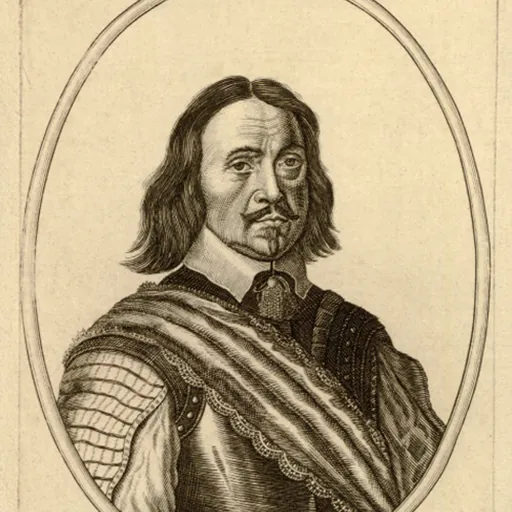
Ernst Odowalsky
Imperial and Swedish soldier in the Thirty Years' War
About Ernst Odowalsky
Lived 1592 – 1672 (aged 79–80). Ernst Odowalsky was a colonel.
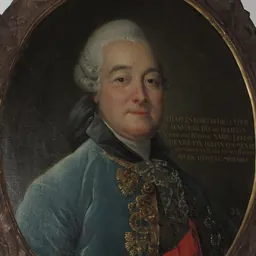
Ernst Odowalsky (von Streitberg since 1651; 1592 – 15 March 1672), was a military officer during the Thirty Years' War. He rose from the rank of common soldier to that of Lieutenant Colonel in the Imperial Army. Due to disability, he lost his position, and through looting, he lost his property. When the Emperor refused him compensation, he defected to the Swedes in 1648; his intelligence subsequently enabled General Hans Christoff von Königsmarck to capture of the Malá Strana.
In Imperial service Odowalsky came from either a Bohemian or Franconian family. During the Bohemian Revolt at the beginning of the Thirty Years' War, he sided with the Imperial cause and fought as a common musketeer in the Battle of White Mountain in November 1620. Over the following years, he rose through the ranks to become an officer. In 1628, holding the rank of captain, he was stationed in the Imperial occupied city of Wismar.
In October 1634, "Ottowaldische soldiers on horseback" were mentioned in records; they attempted to extort a payment of 1,000 thalers from the Electoral Saxon town of Marienberg in the Ore Mountains in exchange for sparing the town.
Following the defeat of Imperial General by Swedish troops in the skirmish of Ruppertsgrün near Pöhl in March 1639, Odowalsky, then a lieutenant colonel, managed to escape along with his commander, Colonel Wamboldt, and approximately 1,000 men, successfully making their way to safety in Eger (now Cheb, Czech Republic).
Due to a severe injury to his arm or shoulder, he was forced to retire from active military service later that same year. For the next several years, Odowalsky resided primarily in Eger, where he had married a local woman in 1628 and owned both a house and landed estates in the surrounding countryside.
In 1645 and 1646, he was involved in the billeting of soldiers stationed within the Eger District; in this capacity, he traveled to various locations, including the Imperial headquarters in Klatovy and the town of Marktredwitz, which was administratively subordinate to Eger. Although his estates had already been plundered on multiple occasions since the 1630s, his house was also burned to the ground during the Swedish capture of Eger in 1647, and he himself was taken prisoner.
Swedish service
As a result of the destruction, Odowalsky had lost his livelihood. He obtained permission from , the new Swedish commander of Eger, to travel to Prague. There, he was granted an audience with Emperor Ferdinand III, who gave him a sum of money as compensation for his plight and promised him an officer's post in Elbogen (now Loket).
However, the Bohemian Provincial Commander, Rudolf von Colloredo, failed to honor this promise; instead, he merely allocated Odowalsky "eight rations", of a nature not specified in the records, while Odowalsky ran out of funds during the ensuing wait.
Without the intelligence provided by Odowalsky, the capture of the Lesser Town would have been all but impossible. Although the Swedes ultimately failed to capture the Old Town and New Town, located on the opposite bank of the Vltava River, before the war ended and the looming threat of Prague’s total conquest had profound consequences for the willingness of the country's sovereign, Emperor Ferdinand, to pursue peace; in September, he gave his consent to the conclusion of the Peace of Westphalia.
At the insistence of the Swedes, a special declaration of protection for Odowalsky was included in the text of the Peace of Westphalia. He also authored a written defense of his motives, accompanied by an account of the capture of the Lesser Town, which was published in the sixth volume of the Theatrum Europaeum.
In 1651, Queen Christina of Sweden honored him by elevating him to the nobility with the predicate "von Streitberg." Odowalsky acquired property in Oberndorf in Franconia, where he died on 15 March 1672.
Don’t just read it —
keep it.
Full-length biographies made to live with: read them, listen on the way to work, watch them tonight.
- E-book
- Audio
- Video
Instant download · yours to keep · every purchase keeps this site free
Important facts
People in Ernst Odowalsky's life
Named in this biography and alive at the same time

Related people
Same field, nearest in time




Contemporaries
People whose lives overlapped Ernst Odowalsky's




Frequently asked questions
Who was Ernst Odowalsky?
Imperial and Swedish soldier in the Thirty Years' War
When was Ernst Odowalsky born?
Ernst Odowalsky was born in 1592.
When did Ernst Odowalsky die?
Ernst Odowalsky died on 15 March 1672.
What was Ernst Odowalsky's occupation?
Ernst Odowalsky was a colonel.
Sources & further reading
Cite this page
APA: Biography.guide. (2026). Ernst Odowalsky. https://biography.guide/ernst-odowalsky/
MLA: "Ernst Odowalsky." Biography.guide, https://biography.guide/ernst-odowalsky/.
Chicago: "Ernst Odowalsky." Biography.guide. https://biography.guide/ernst-odowalsky/.
Data last updated: 2026-09-22 · Spot an error? Report a correction.
Portrait: Wikimedia Commons · author & licence
Page generated 2026-09-27 05:03 UTC