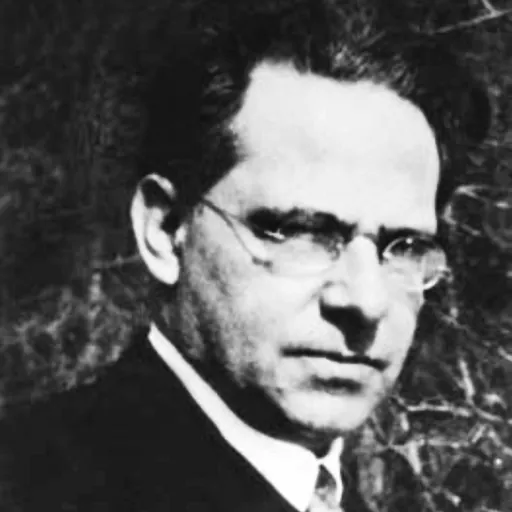
About Ernst Kurth
Lived 1886 – 1946 (aged 60). Ernst Kurth was a Swiss and Austrian philosopher, musicologist, music theorist, university teacher and non-fiction writer.
Ernst Kurth (1 June 1886 – 2 August 1946) was a Swiss music theorist of Austrian origin.
Life and career Ernst Kurth was born in Vienna on 1 June 1886. Kurth studied musicology there with Guido Adler (a student of Bruckner and Hanslick) at Vienna University and privately with Robert Gund, earning his Ph.D. (1908) with a thesis about Christoph Willibald Gluck's operatic style.
In a relatively short publishing career of about 15 years, Kurth wrote four enormously influential works: Grundlagen des Linearen Kontrapunkts (Foundations of Linear Counterpoint), Romantische Harmonik und ihre Krise in Wagners "Tristan" (Romantic Harmony and its Crisis in Wagner's "Tristan"), Bruckner, and Musikpsychologie. Since the 1940s, Kurth was gradually eclipsed by other theorists (notably Heinrich Schenker). However, his concept of "developmental motif" has remained influential. A developmental motif is one which gradually changes or grows, becoming a structural carrier of formal developments. An example is the triadic motif heard at the beginning of the first movement of Beethovens' third symphony which only becomes a closed theme at the culminating closing of the movement. Unfortunately, only a small selection of excerpts from Kurth's writings was translated into English by Lee A. Rothfarb.
Kurth died in Bern on 2 August 1946.
Writings Der Stil der opera seria von Gluck bis zum Orfeo, (diss., U. of Vienna, 1908; published as Die Jugendopern Glucks bis Orfeo, SMw, i (1913), 193–277) Kritische Bemerkungen zum V. Kapitel der 'Ars cantus mensurabilis' des Franko von Köln, KJb, xxi (1908), 39–47 Die Voraussetzungen der theoretischen Harmonik und der tonalen Darstellungssysteme (Habilitationsschrift, U. of Berne, 1912; Berne, 1913/R) Grundlagen des linearen Kontrapunkts: Einführung in Stil und Technik von Bachs melodischer Polyphonie (Berne, 1917, 5/1956/R) Zur Motivbildung Bachs, BJb 1917, 80–136 Romantische Harmonik und ihre Krise in Wagners 'Tristan''' (Berne, 1920/R, 2/1923/R; Russ. trans., 1975)Bruckner (Berlin, 1925/R)Die Schulmusik und ihre Reform, SMz, lxx (1930), 297–304Musikpsychologie (Berlin, 1931/R, 2/1947)Ernst Kurth: Selected Writings, ed. and trans. Rothfarb (New York, 1991)
Don’t just read it —
keep it.
Full-length biographies made to live with: read them, listen on the way to work, watch them tonight.
- E-book
- Audio
- Video
Instant download · yours to keep · every purchase keeps this site free
Important facts
People in Ernst Kurth's life
Named in this biography and alive at the same time


Related people
Same field, nearest in time



Contemporaries
People whose lives overlapped Ernst Kurth's




Frequently asked questions
Who was Ernst Kurth?
Swiss music theorist
When was Ernst Kurth born?
Ernst Kurth was born on 1 June 1886 in Vienna.
When did Ernst Kurth die?
Ernst Kurth died on 2 August 1946 in Bern.
What was Ernst Kurth's occupation?
Ernst Kurth was a philosopher, musicologist, music theorist, university teacher and non-fiction writer.
What nationality was Ernst Kurth?
Ernst Kurth was Swiss and Austrian.
Sources & further reading
Cite this page
APA: Biography.guide. (2026). Ernst Kurth. https://biography.guide/ernst-kurth/
MLA: "Ernst Kurth." Biography.guide, https://biography.guide/ernst-kurth/.
Chicago: "Ernst Kurth." Biography.guide. https://biography.guide/ernst-kurth/.
Data last updated: 2026-09-22 · Spot an error? Report a correction.
Portrait: Wikimedia Commons · author & licence
Page generated 2026-09-27 05:04 UTC