
About Ernst Krappe
Lived 1891 – 1977 (aged 85). Ernst Krappe was a German politician.
Ernst Krappe (31 October 1891 – 12 May 1977) was a German lawyer, economics expert and Nazi Party politician who served as the chairman of the State Presidency of the Free State of Lippe in 1933.
Early life Krappe was born in Soest and graduated from the Gymnasium in Minden. He then studied law, political science and economics at the University of Lausanne, the Ludwig-Maximilians-Universität München and the Humboldt University of Berlin. In 1914, he passed the Referendar state examination and began working as an apprentice lawyer. At the outbreak of the First World War, he joined the Imperial German Army in August 1914, first seeing combat with a field artillery unit and then becoming an Ordonnanz (orderly officer) with Artillery Command 232. He served on both the western and eastern fronts, and was awarded the Iron Cross 1st and 2nd class.
After the end of the war, Krappe resumed his legal studies. In 1920, he received a Doctor of Law degree from the University of Breslau (today, the University of Wrocław). Passage of the Assessor examination followed in 1921. Between 1921 and 1929, Krappe worked as an administrative lawyer in the Reich Finance Administration in Minden, Paderborn and Herford. On 1 November 1929, he became a Regierungsrat (government councilor) and was appointed as head of the tax office in Lemgo.
Seeking to reverse the decline in their electoral fortunes from November, the Nazis made a concerted effort to win the next state legislative election, which was scheduled in the Free State of Lippe for 15 January 1933. Monetary and manpower resources were invested in campaign propaganda, with Adolf Hitler himself delivered seventeen speeches there in eleven days. When the election results came in, the Nazis had out-polled all other parties and increased their share of the vote from 34.7% to 39.5%. Krappe secured a seat in the Landtag (state parliament), which on 7 February elected him as chairman of the three-member State Presidency, succeeding the Social Democrat, Heinrich Drake. On 26 May 1933, however, Krappe stepped down from this office at his own request. He was succeeded by Hans-Joachim Riecke. In July 1933, Krappe became an Oberregierungsrat (senior government councilor) at the state tax office in Kassel, rising to the position of office director in July 1934.
Little is known of his subsequent life, and he died in Minden in 1977.
Written works Beiträge zur Lehre von der Notverordnung (1920). (Dissertation)
Don’t just read it —
keep it.
Full-length biographies made to live with: read them, listen on the way to work, watch them tonight.
- E-book
- Audio
- Video
Instant download · yours to keep · every purchase keeps this site free
Important facts
People in Ernst Krappe's life
Named in this biography and alive at the same time

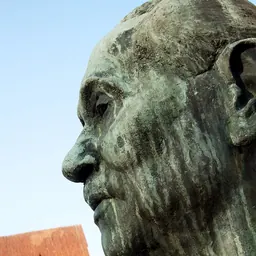
Related people
Same field, nearest in time




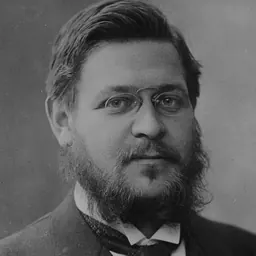
Contemporaries
People whose lives overlapped Ernst Krappe's

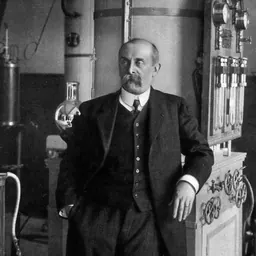


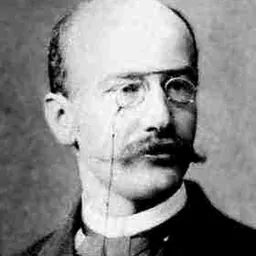
Frequently asked questions
Who was Ernst Krappe?
German politician (1891-1977)
When was Ernst Krappe born?
Ernst Krappe was born on 31 October 1891 in Soest.
When did Ernst Krappe die?
Ernst Krappe died on 12 May 1977 in Minden.
What was Ernst Krappe's occupation?
Ernst Krappe was a politician.
What nationality was Ernst Krappe?
Ernst Krappe was German.
Sources & further reading
Cite this page
APA: Biography.guide. (2026). Ernst Krappe. https://biography.guide/ernst-krappe/
MLA: "Ernst Krappe." Biography.guide, https://biography.guide/ernst-krappe/.
Chicago: "Ernst Krappe." Biography.guide. https://biography.guide/ernst-krappe/.
Data last updated: 2026-09-20 · Spot an error? Report a correction.
Page generated 2026-09-27 05:17 UTC