
About Ernst Haas
Lived 1921 – 1986 (aged 65). Ernst Haas was an American and Austrian photographer, photojournalist, journalist, writer and stock photographer.
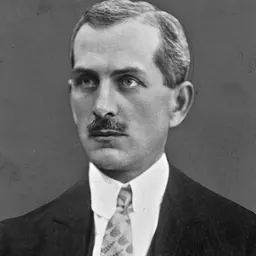
Ernst Haas (March 2, 1921 – September 12, 1986) was an Austrian-American photojournalist and color photographer. During his 40-year career Haas trod the line between photojournalism and art photography. In addition to his coverage of events around the globe after World War II Haas was an early innovator in color photography. His images were carried by magazines like Life and Vogue and, in 1962, were the subject of the first single-artist exhibition of color photography at New York's Museum of Modern Art. He served as president of the cooperative Magnum Photos. His book of volcano photographs, The Creation, remains one of the most successful photography books ever published, selling more than 350,000 copies.
Early life and education Haas was born in Vienna, Austria, on March 2, 1921. He was the son of Ernst Haas, a high-level civil servant, and Frederike Haas-Zipser. He had an older brother named Fritz Haas.
Haas was raised in the cultural climate of Vienna before World War II. His parents, who placed great value upon education and the arts, encouraged his creative pursuits from an early age. His father enjoyed music and photography, and his mother wrote poetry and aspired to be an artist. Haas's teachers had him act as a judge, rather than a participant, in artistic competitions among his peers. As a painter, he had particular interest in an artwork's formal qualities, and developed a refined sense of composition and perspective.
From 1935 to 1938, Haas attended LEH Grinzing, a private school in Vienna, where he studied art, literature, poetry, philosophy, and science. His formal education was interrupted in 1938, when the school was closed following Germany's invasion of Austria. The following year, Haas received his diploma from Rainer Gymnasium.
Haas was sent to a German army labor camp, working six hours a day in exchange for two daily hours of school attendance. He left the service in 1940 and returned to Vienna to study medicine. Haas was only able to complete one year of medical school before he was forced out as a result of his Jewish ancestry.
Introduction to photography Haas was uninterested in learning photography as a child, though his father tried to encourage him. Upon his father's death in 1940, Haas first entered the darkroom, learning to print old family negatives. His interest grew, and he soon began to take his own photographs.
Though his formal education was complicated by the war, Haas was an autodidact and worked to learn the medium. In 1941, as the “school photographer” of the Max Reinhardt Film Seminar, he attended technical classes and developed an interest in filmmaking. Haas also took advantage of his family's extensive library, as well as museums and libraries in Vienna. He studied philosophy and poetry, in particular, both of which informed his beliefs about the creative potential for photography.
A Poet’s Camera selection of photography by Bryan Holme (1946), which combined poetry with metaphoric imagery by artists like Edward Weston, was particularly important to Haas's early development. Many of his first extant photographs—close-ups of plants, water, and natural forms—reflect its influence.
Unsure of his career path, Haas realized that photography could provide both a means of support and a vehicle for communicating his ideas. He obtained his first camera in 1946, at the age of 25, trading a 20-pound block of margarine for a Rolleiflex on the Vienna black market. Of the decision, he later said:
I never really wanted to be a photographer. It slowly grew out of the compromise of a boy who desired to combine two goals—explorer or painter. I wanted to travel, see and experience. What better profession could there be than the one of a photographer, almost a painter in a hurry, overwhelmed by too many constantly changing impressions? But all my inspirational influences came much more from all the arts than from photo magazines.
While Haas would continue traveling for his work, he lived the rest of his life in New York City.
Assignments for Life magazine In 1952 Haas hitchhiked across the United States to White Sands National Monument in New Mexico, planning to photograph Native Americans. Working with the vast area's changing light and clouds, Haas also photographed symbols, local details, and tourist oddities. His finished photo essay, published by Life as “Land of Enchantment” in a six-page spread, was well received by readers and prompted the magazine to initiate another project. According to writer (and early Magnum employee) Inge Bondi, Haas’ Western chronicle was the first major story he created based on his own instinct and at his own financial risk.
Technique and innovations in color photography alt=Blurred motion photo of bullfighter sweeping red cape over rushing bull. Haas' La Suerte De Capa, Pamplona, Spain, 1956Though Haas continued to use black-and-white film for much of his career, color film and visual experimentalism became integral to his photography. He frequently employed techniques like shallow depth of field, selective focus, and blurred motion to create evocative, metaphorical works. When he submitted his blurred motion bullfight photos, original at the time, to the lab they said there was a problem and they were unusable. Life ran a 12-page spread. He became interested in, as he put it, "transforming an object from what it is to what you want it to be." Magnum's first president, was killed while on assignment covering the First Indochina War. That same year, Werner Bischof died in a car accident in the Andes. Following their deaths, Haas was elected to Magnum's board of directors and traveled to Indochina himself to cover the war.
After the death of David “Chim” Seymour in Suez in 1959, Haas was named the fourth president of Magnum. He made significant and lasting contributions to the organization as its leader. Haas had a deep understanding of the cooperative's mission and encouraged its members to strive for excellence and innovation. In a letter to the members of Magnum, he wrote:
Exhibitions In 1962 the Museum of Modern Art in New York presented a ten-year survey of Haas's color photography. Titled Ernst Haas: Color Photography, the exhibition marked MoMA's first solo-artist retrospective exhibition dedicated to color work, but the original prints exist, allowing a much later "re-creation" of the exhibition.
Before his solo exhibition at MoMA, Haas had been included in Steichen's exhibition The Family of Man, which premiered in 1955 and traveled to 38 countries.
Advertising and stills photography Haas was a respected stills photographer for many films, including The Misfits, Little Big Man, Moby Dick, Hello Dolly, West Side Story, and Heaven's Gate. John Huston employed Haas as a second-unit director for his 1966 film The Bible: In the Beginning (a.k.a. The Bible), to visualize the section devoted to creation.
A number of awards have been created in Haas's honor, including the Ernst Haas Award for Creative Photography by the American Society of Media Photographers (ASMP); and the Ernst Haas Photographers Grant, funded by Kodak, at the Maine Photographic Workshops. In 1998 the Ernst Haas Studio archive was sent to London to be housed at the Hulton Getty Picture Library as part of a licensing agreement with Getty Images. In 1999 the Ernst Haas Memorial Collection was established at the Portland Museum of Art in Maine.
The Ernst Haas Estate is operated by his children, Alexander Haas and Victoria Haas.
Selected awards
Newhouse Award from Syracuse University, 1958 The Cultural Award from the German Society for Photography (DGPh), 1972 Wilson Hicks Medal from the University of Miami, 1978 Hasselblad Photographer of the Year, 1986
Collections Haas' work is held in the following public collections:
Provincial Museum Voor Kunstambachten, Antwerp, Belgium New Zealand Center for Photography, Auckland, New Zealand Royal Society of Photography, Bath, UK Museum of Fine Arts, Boston, Massachusetts, US Mint Museum of Fine Art, Charlotte, North Carolina, US The Exchange National Bank of Chicago, Illinois, US Museum Ludwig, Cologne, Germany Erna and Victor Hasselblad Foundation, Goteborg, Sweden The National Museum of Art, Kyoto, Japan International Center of Photography, New York, US The Metropolitan Museum of Art, New York, US The Museum of Modern Art, New York, US Philip Morris Companies, Inc., New York, US Citibank Art Collection, New York, US Westinghouse Electric Corporation, Pittsburgh, Pennsylvania, US Reader's Digest, Pleasantville, New York, US Squibb Corporation, Princeton, New Jersey, US International Museum of Photography at the George Eastman House, Rochester, New York, US Kimberly-Clark Corporation, St. Louis, Missouri, US Missouri Botanical Garden, St Louis, Missouri, US Museum of Fine Art, St Petersburg, Florida, US Rupertinum Salzburger Museum, Salzburg, Austria Western States Museum of Photography, Santa Barbara, California, US National Museum of Art, Tokyo, Japan Museum Modern Kunst, Vienna, Austria Corcoran Gallery of Art, Washington, D.C., US National Portrait Gallery, Washington D.C., US International Photography Hall of Fame, St.Lous, Missouri, US
Don’t just read it —
keep it.
Full-length biographies made to live with: read them, listen on the way to work, watch them tonight.
- E-book
- Audio
- Video
Instant download · yours to keep · every purchase keeps this site free
Important facts
People in Ernst Haas's life
Named in this biography and alive at the same time




Related people
Same field, nearest in time



Contemporaries
People whose lives overlapped Ernst Haas's


Frequently asked questions
Who was Ernst Haas?
American photographer (1921-1986)
When was Ernst Haas born?
Ernst Haas was born on 2 March 1921 in Vienna.
When did Ernst Haas die?
Ernst Haas died on 12 September 1986 in New York City.
What was Ernst Haas's occupation?
Ernst Haas was a photographer, photojournalist, journalist, writer and stock photographer.
What nationality was Ernst Haas?
Ernst Haas was American and Austrian.
Sources & further reading
Cite this page
APA: Biography.guide. (2026). Ernst Haas. https://biography.guide/ernst-haas-photographer/
MLA: "Ernst Haas." Biography.guide, https://biography.guide/ernst-haas-photographer/.
Chicago: "Ernst Haas." Biography.guide. https://biography.guide/ernst-haas-photographer/.
Data last updated: 2026-09-26 · Spot an error? Report a correction.
Page generated 2026-09-27 05:14 UTC