
About Ernst Guhl
Lived 1819 – 1862 (aged 43). Ernst Guhl was a German art historian, university teacher, writer, opinion journalist, etcher and graphic artist.
Ernst Karl Guhl (20 July 1818 – 20 August 1862) was a German art historian of the Berlin School of Art History (Berliner Schule der Kunstgeschichte). He focused on Ancient European, Ancient Greek, and Medieval culture. He is noted as the first historian to write a study specifically on female artists.
Biography Guhl was born in Berlin to Adam Wilhelm Guhl and Wilhelmine Caroline Gehricke. He studied philology and archaeology as an undergraduate at the Friedrich-Wilhelms-Universität (now Humboldt University). Following the practice of other early art historians, Guhl traveled throughout Europe to study classical art and architecture, including a fifteen-month period of self-study in Italy from 1846 to 1847.
He served as a Privatdozent beginning in 1848 at the Friedrich-Wilhelms-Universität. His Habilitation, Versuch über das Ionische Kapitäl (A Study on the Ionian Capital), was published in 1848 as a contribution to the history of Greek architecture. He began teaching in the summer of 1848, offering a course on the history of modern painting and a private course on ancient architecture.
Guhl was hired in a temporary capacity to teach at the Akademie der Kunst in 1849; this appointment was made permanent in 1853. Between 1854 and 1858, he undertook four study trips to London, Paris, Spain, and Greece. Following a university-sponsored trip to Italy in 1861, he taught briefly at Berlin before succumbing to a brief illness. He died in Berlin at the age of 44.
Academic career Guhl was the only new instructor with a primary focus on the history of art to join the Friedrich-Wilhelms-Universität until the late 1860s. His colleagues included Eduard Gerhard and Theodor Panofka, Heinrich Hotho, and Gustav Waagen. In 1847, he joined historians compiling reference books on art history. He was assigned to write the descriptions for Denkmäler der Kunst, a picture book intended to accompany Franz Kugler's Handbuch der Kunstgeschichte. Beginning in 1851, he published Denkmäler der Kunst together with Wilhelm Lübke.
Despite his scholarly contributions, Guhl struggled to advance within the university. He applied for an extraordinary professorship four times between 1851 and 1858, but was unsuccessful. It is suggested that his broad focus as a scholar was viewed as problematic, or that the discipline of art history itself was not yet deemed deserving of that level of professorship at the time. He did, however, hold the position of professor and secretary at the Berlin Academy.
Scholarship and methodology Guhl's methodology was initially aligned with the "Berlin School of Art History" (Berliner Schule der Kunstgeschichte), which emphasized the use of documents and disciplined research procedures over anecdotal writing. However, his methodology shifted with his work Künstlerbriefe (Artists’ Letters), where he examined biographical data, moving away from the strict "Berlin School" approach. This method of using artists' letters to construct biography is evident in later biographies by Herman Grimm, Carl Justi, and Anton Springer.
In 1858, Guhl published Die Frauen in der Kunstgeschichte (Women in Art History), which was the first examination of female artists and women's roles in art. The American author Elizabeth F. Ellet borrowed heavily from this work—with some sources suggesting plagiarism—for her book Women Artists in All Ages and Countries, published the following year.
Guhl also collaborated with the philologist Wilhelm Koner (1817–1887) on Das Leben der Griechen und Römer, a book intended for a general audience.
Don’t just read it —
keep it.
Full-length biographies made to live with: read them, listen on the way to work, watch them tonight.
- E-book
- Audio
- Video
Instant download · yours to keep · every purchase keeps this site free
Important facts
People in Ernst Guhl's life
Named in this biography and alive at the same time
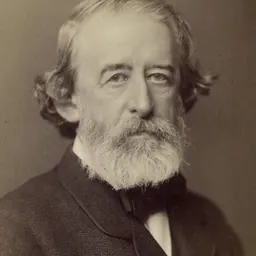

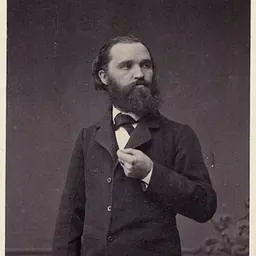

Related people
Same field, nearest in time
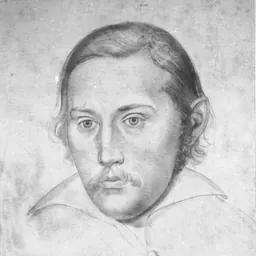
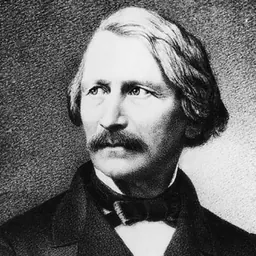

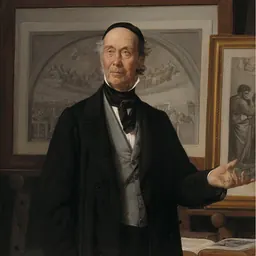


Contemporaries
People whose lives overlapped Ernst Guhl's

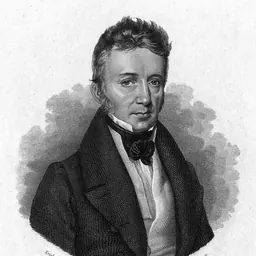


Frequently asked questions
Who was Ernst Guhl?
German art historian (1819-1862)
When was Ernst Guhl born?
Ernst Guhl was born on 20 July 1819 in Berlin.
When did Ernst Guhl die?
Ernst Guhl died on 20 August 1862 in Berlin.
What was Ernst Guhl's occupation?
Ernst Guhl was an art historian, university teacher, writer, opinion journalist, etcher and graphic artist.
What nationality was Ernst Guhl?
Ernst Guhl was German.
Sources & further reading
Cite this page
APA: Biography.guide. (2026). Ernst Guhl. https://biography.guide/ernst-guhl/
MLA: "Ernst Guhl." Biography.guide, https://biography.guide/ernst-guhl/.
Chicago: "Ernst Guhl." Biography.guide. https://biography.guide/ernst-guhl/.
Data last updated: 2026-09-20 · Spot an error? Report a correction.
Page generated 2026-09-27 05:25 UTC