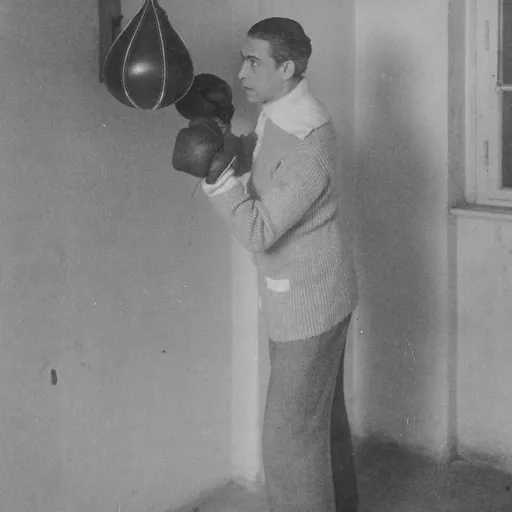
About Ernst Deutsch
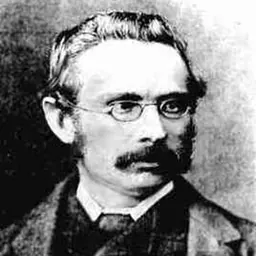
Lived 1890 – 1969 (aged 78). Ernst Deutsch was a German and Austrian stage actor, film actor, television actor, actor and writer.
Ernst Deutsch (16 September 1890 – 22 March 1969), also known as Ernest Dorian, was a Czech-Austrian actor of stage and screen. He established himself in the Expressionist theatre movement in Germany during the mid-1910s, and saw success there and in Austria until the rise of Nazism led him to emigrate to the United States. After the war, he returned to Europe, where he resumed his career.
Deutsch won the Best Actor Award at the 9th Venice International Film Festival for his performance in G. W. Pabst's The Trial (1948). He is best known to international film audiences for his roles as the antihero Famulus in Paul Wegener's silent horror film The Golem: How He Came into the World (1920), and as Baron Kurtz in Carol Reed's film noir The Third Man (1949).
Early life and education Deutsch was born in Prague (then a part Austria-Hungary), the son of Jewish parents Ludwig Deutsch, a merchant, and his wife, Louise (née Kraus). He was a childhood friend of writer Franz Werfel.
During his teenage years, Deutsch was a skilled tennis player, ranking seventh on the Austro-Hungarian tennis list. After high school, Deutsch served in the army.
Career In 1914, Deutsch made his stage debut for Berthold Viertel at the People's Theatre in Vienna. After a short season in Prague, Edgar Licho hired him for the Albert Theatre in Dresden, where he moved in 1916. In Dresden, Deutsch played Franz Moor in Schiller's The Robbers and Moritz Stiefel in Frank Wedekind's Spring Awakening. His performance in the title role of Walter Hasenclever's Expressionist play The Son, which premiered on 8 October 1916, earned him critical recogniition established him as an Expressionist actor; he also appeared in the play in 1918 and 1923.
In 1917, Deutsch went to the Volksbühne in Berlin. He appeared until 1933 on a number of stages in the city, gave guest performances in Hamburg, Munich and Vienna, and participated in a tour of South America. Beginning in 1916, Deutsch appeared in 42 silent films.
In April 1933, he left Germany due to Nazi antisemitism. Deutsch returned to Vienna and Prague, gave guest performances in Zürich, Brussels and (in 1936) London where he appeared in Charles Bennett's play Page From a Diary in the West End.
In 1938 he emigrated to New York City and played briefly on Broadway in 1939 before moving to Hollywood, where he became an American citizen.
After a 1946 stay in Buenos Aires, Deutsch returned to Vienna via Paris the following year. In Vienna, he became a member of the Burgtheater. At the National Theatre Deutsch appeared in The Helpers of God, about Red Cross founder Henri Dunant, in 1948. Three years later he moved back to Berlin, appearing at the Schiller and Schlossparktheater. Deutsch also toured in Germany and abroad.
Deutsch's film roles included Baron Kurtz in Carol Reed's film noir, The Third Man, starring Orson Welles and Joseph Cotten. He received the Volpi Cup as Best Actor at the 9th Venice International Film Festival in 1948 Venice Film Festival for his performance in Der Prozeß. Deutsch's performances in the title role of Gotthold Ephraim Lessing's Nathan the Wise and as Shylock in Shakespeare's The Merchant of Venice were critically praised. He played Nathan for more than 2,000 performances, and traveled with productions throughout Europe.
Personal life He married childhood friend Anuschka Fuchsova (daughter of Prague industrialist Arthur Fuchs) in 1922. Anuschka's cousin, Herbert Fuchs of Robettin, was the brother-in-law of author Franz Werfel.
Death Deutsch died on 22 March 1969 in West Berlin, and is buried in the Jewish cemetery on the Berlin highway.
Legacy
On the fourth anniversary of his death in 1973, Friedrich Schütter's former Junges Theater in the Uhlenhorst quarter of Hamburg was renamed after Deutsch (who had staged a performance of Nathan The Wise there shortly before his death).
Filmography
Die Rache der Toten (1916) – Schreiber, Ferenc Die zweite Frau (1917) – Jesuit Apokalypse (1918) Pique Dame (1918) – Graf St-. Germain Irrungen (1919) – Franz, Arbeiter The Geisha and the Samurai (1919) Die Frau im Käfig (1919) Blonde Poison (1919) – Rolf Röm (Enkel) The Galley Slave (2 parts) (1919) – Galeerensträfling Fluch der Vergangenheit (1919) Vom Schicksal erdrosselt (1919) – Ernst Dutton Die Tochter des Henkers (1919) The Monastery of Sendomir (1919) Aladdin und die Wunderlampe (1919) Hate (1920) From Morn to Midnight (1920) – Kassierer Monika Vogelsang (1920) – Johannes Walterspiel Gerechtigkeit (1920) Blackmailed (1920) The Hunt for Death (1920) The Golem: How He Came into the World (1920) – Der Rabbi Famulus Judith Trachtenberg (1920) – Judith's Brother Fiebernächte (1920) Ferreol (1920) Der gelbe Tod (2 parts) (1920) The Women House of Brescia (1920) Hannerl and Her Lovers (1921) – Priester Burning Country (1921) – Vikar Benedikt Lady Godiva (1921) Die Dame und der Landstreicher (1922) Duke Ferrante's End (1922) – Orlando Sein ist das Gericht (1922) Liebe kann man nicht kaufen (1922) Der Kampf ums Ich (1922) Der alte Gospodar (1922) – Zdenko & Wolfgan The Pagoda (1923) The Burning Secret (1923) The Ancient Law (1923) – Baruch, sein Sohn Debit and Credit (1924) – Bernhard Dagfin (1926) – Assairan, ein Armenier The Bordello in Rio (1927) – Plüsch (Popescu) Two Under the Stars (1927) – Pierre Marescot, Eintänzer Artists (1928) – Der Illusionist Maranoff The Prisoner of Corbal (1936) – The Fugitive Nurse Edith Cavell (1939) – Dr. Schroeder, Public Prosecutor The Man I Married (1940) – Otto Escape (1940) – Baron von Reiber (uncredited) So Ends Our Night (1941) – Dr. Behr Prisoner of Japan (1942) – Matsuru Enemy Agents Meet Ellery Queen (1942) – Dr. Morse, Lido Club Physician Reunion in France (1942) – Captain The Moon Is Down (1943) – Maj. Hunter Night Plane from Chungking (1943) – Major Brissac Isle of the Dead (1945) – Dr. Drossos The Trial (1948) – Scharf, Tempeldiener The Third Man (1949) – 'Baron' Kurtz (1951) – Abel de Yonkh When the Heath Dreams at Night (1952) Nathan der Weise (1955, TV film) – Nathan Jedermann (1958, TV film) Sebastian Kneipp (1958) – Pope Leo XIII Ein Mädchen vom Lande (1961, TV film) – Frank Elgin Vor Sonnenuntergang (1962, TV film) – Matthias Clausen In der Strafkolonie (1963, TV film) – Der Reisende Der Fall Bohr (1966, TV film) – Peter von Bohr (final film role)
Don’t just read it —
keep it.
Full-length biographies made to live with: read them, listen on the way to work, watch them tonight.
- E-book
- Audio
- Video
Instant download · yours to keep · every purchase keeps this site free
Important facts
People in Ernst Deutsch's life
Named in this biography and alive at the same time






Related people
Same field, nearest in time


Contemporaries
People whose lives overlapped Ernst Deutsch's


Frequently asked questions
Who was Ernst Deutsch?
Austrian actor (1890–1969)
When was Ernst Deutsch born?
Ernst Deutsch was born on 16 September 1890 in Prague.
When did Ernst Deutsch die?
Ernst Deutsch died on 22 March 1969 in Berlin.
What was Ernst Deutsch's occupation?
Ernst Deutsch was a stage actor, film actor, television actor, actor and writer.
What nationality was Ernst Deutsch?
Ernst Deutsch was German and Austrian.
Sources & further reading
Cite this page
APA: Biography.guide. (2026). Ernst Deutsch. https://biography.guide/ernst-deutsch/
MLA: "Ernst Deutsch." Biography.guide, https://biography.guide/ernst-deutsch/.
Chicago: "Ernst Deutsch." Biography.guide. https://biography.guide/ernst-deutsch/.
Data last updated: 2026-09-22 · Spot an error? Report a correction.
Portrait: Wikimedia Commons · author & licence
Page generated 2026-09-27 05:04 UTC