
About Ernst A. Lehmann
Lived 1886 – 1937 (aged 50). Ernst A. Lehmann was an aircraft pilot.
Captain Ernst August Lehmann (12 May 1886 – 7 May 1937) was a German Zeppelin captain. He was one of the most famous and experienced figures in German airship travel. The Pittsburgh Press called Lehmann the best airship pilot in the world, although he was criticized by Hugo Eckener for often making dangerous maneuvers that compromised the airships. He was a victim of the Hindenburg disaster in 1937.
Pre-war experience Ernst Lehmann was born in 1886 in Ludwigshafen am Rhein. At the age of 14, he decided that he wanted to build ships. He studied engineering at the Technische Hochschule Berlin and received his degree in 1912. By this time, he had already joined the navy and had attained the rank of naval reserve lieutenant.
Upon graduation, he began work at the Imperial Dockyards in Kiel. and finally the navy ships LZ 90,
Captain Lehmann served as commanding officer on more than 100 of the flights of the Graf Zeppelin between 1928 and 1936. In 1936, he commanded 10 round-trip flights to Lakehurst on the new Hindenburg. Captain Lehmann was a skilled accordion player, which he often used to entertain passengers on long flights with renditions of Wagner pieces or German folk songs.
Death Although Max Pruss was the commanding officer of the last flight of the Hindenburg, Captain Lehmann was the most senior officer on board, but was there only as an observer.
Criticism
Lehmann often came into conflict with Hugo Eckener over the safety of his piloting techniques. Lehmann cancelled important flight tests for the Hindenburg to fulfill a request by the Nazi Ministry of Propaganda for the Hindenburg and the Graf Zeppelin to take part in a propaganda flight (Deutschlandfahrt) in support of Adolf Hitler. Lehmann insisted on making the flight despite unfavorable weather conditions, which resulted in high winds damaging the Hindenburgs lower fin as the airship was being removed from its hangar. Eckener criticised Lehmann harshly and publicly for endangering the new airship and the entire zeppelin program to impress the Nazis. However, Lehmann never actually joined the Nazi Party despite his apparent support and may have only pretended to be sympathetic to the regime. (Of the seven active Zeppelin commanders, only Max Pruss and Anton Wittemann were Party members of the NSDAP).
After the loss of the Hindenburg, Eckener blamed Pruss for his handling of the airship but also suggested that Lehmann was responsible for pressuring Pruss to make the flight, although Eckener did not rule out other causes. After investigating the disaster himself, Eckener testified to the inquiry that a sharp S-turn during the landing procedure might have caused a bracing wire to break and tear a gasbag, and resulted in mixture of hydrogen with air, which then likely was ignited by an electrostatic discharge.
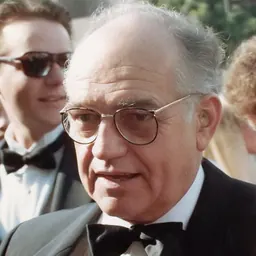
Portrayals In the 1975 film The Hindenburg, Captain Lehmann was portrayed by American actor Richard Dysart, although this portrayal is inaccurate with Lehmann appearing to be quite wary of the Nazis, whereas the real Lehmann was a well-known Nazi supporter, at least publicly. In the 2007 docudrama Hindenburg: The Untold Story, Polish actor Aleksander Trabczynski portrayed Lehmann. In the fictional 2011 RTL television movie of the disaster, he was portrayed by Ulrich Noethen. In this film, he supports the Gestapo in their brutal torture of Merten Kroger for the alleged murder of a passenger, but orders his release upon seeing proof of a bomb aboard the ship. During the landing approach, he pushes the landing approach and ignores Kroger's warning that putting stress on the ship's frame would be dangerous, saying it's "less dangerous than a bomb going off". He is proven wrong when although the bomb is defused, the airship explodes due to static electricity.
Books Captain Lehmann published his first book in English with Howard Mingos in New York and in 1927 it was reprinted in London. The Zeppelins: The Development of the Airship, with the Story of the Zeppelin Air Raids in the World War.
Captain Lehmann recounts his personal experiences as a zeppelin captain in war and peace in Auf Luftpatrouille und Weltfahrt: Erlebnisse eines Zeppelin Fuhrers in Krieg und Frieden.
Captain Lehmann's last book, Zeppelin: The Story of Lighter-than-air Craft, was being translated by Leonhard Adelt, who was on board with Lehmann as a guest during the Hindenburgs last flight. The book had recently been published in German when the Hindenburg was destroyed. The English translation, completed by Jay Dratler, was published later in 1937 with a preface and closing chapter by the American airship captain Charles E. Rosendahl, who had interviewed Lehmann on his deathbed.
Footnotes
Don’t just read it —
keep it.
Full-length biographies made to live with: read them, listen on the way to work, watch them tonight.
- E-book
- Audio
- Video
Instant download · yours to keep · every purchase keeps this site free
Important facts
People in Ernst A. Lehmann's life
Named in this biography and alive at the same time



Related people
Same field, nearest in time

Contemporaries
People whose lives overlapped Ernst A. Lehmann's






Frequently asked questions
Who was Ernst A. Lehmann?
German airship captain and Zeppelin builder (1886-1937)
When was Ernst A. Lehmann born?
Ernst A. Lehmann was born on 12 May 1886 in Ludwigshafen.
When did Ernst A. Lehmann die?
Ernst A. Lehmann died on 7 May 1937 in Lakehurst.
What was Ernst A. Lehmann's occupation?
Ernst A. Lehmann was an aircraft pilot.
What nationality was Ernst A. Lehmann?
Ernst A. Lehmann's recorded nationality: German Reich.
Sources & further reading
Cite this page
APA: Biography.guide. (2026). Ernst A. Lehmann. https://biography.guide/ernst-a-lehmann/
MLA: "Ernst A. Lehmann." Biography.guide, https://biography.guide/ernst-a-lehmann/.
Chicago: "Ernst A. Lehmann." Biography.guide. https://biography.guide/ernst-a-lehmann/.
Data last updated: 2026-09-20 · Spot an error? Report a correction.
Page generated 2026-09-27 05:22 UTC