
Hugo Eckener
Manager of the Luftschiffbau Zeppelin company
About Hugo Eckener
Lived 1868 – 1954 (aged 86). Hugo Eckener was a German entrepreneur, engineer and aircraft pilot.
Hugo Eckener (; 10 August 1868 – 14 August 1954) was the manager of Luftschiffbau Zeppelin during the inter-war years, and also the commander of the famous Graf Zeppelin for most of its record-setting flights, including the first airship flight around the world, making him the most successful airship commander in history. He was also responsible for the construction of the most successful type of airships of all time. An anti-Nazi who was invited to campaign as a moderate in the German presidential elections, he was blacklisted by the Nazi regime and eventually sidelined.
Background
Eckener was born in Flensburg as the first child of Johann Christoph Eckener from Bremen and Anna Lange, daughter of a shoemaker. Nonetheless, he became a very successful airshipman.
World War I Eckener was responsible for training most of Germany's airship pilots both during Upon arrival in America, a country which Eckener grew to love, he and the crew were subject to the first of two New York ticker tape parades.
Eckener captained Graf Zeppelin during most of its record-setting flights, including the 1928 first intercontinental passenger airship flight, the 1929 flight around the world (the only such flight by an airship, and the second by an aircraft of any type) and the 1931 Arctic flight.
Cover autographed by Eckener flown on the nearly disastrous "Interrupted Flight" in May/August 1929A master of publicity as well as a master airship captain, Eckener used the Graf Zeppelin to establish the Zeppelin as a symbol of German pride and engineering.
After these flights the public treated Eckener as a national hero. In supposed anger and fear of Eckener, Hitler's de facto deputy, Hermann Esser, once called him the "director of the flying Weisswurst",
Hugo Eckener had always made safety his absolute priority during his many years managing airship operations. With Eckener's management, the Zeppelin company had a perfect safety record with no passenger ever sustaining a serious injury on any of the more than 1 million air miles that the rigid airships flew, until the Hindenburg disaster of 1937. Eckener was in Graz, Austria when he heard news of the Hindenburg disaster on 6 May 1937. In the official inquiry he concluded that a static spark ignited leaking hydrogen in the aft section of the ship. The leak would have been caused by a sharp turn, which he believed overstrained a bracing wire, causing it to snap and rip open an adjacent gas cell.
After the destruction of the Hindenburg, the nearly-completed LZ-130 Graf Zeppelin II was redesigned as a helium-filled ship, although, owing to geo-political considerations, the helium extracted from natural gas in the USA was not available. Thus the ship never began commercial service. However, under the command of Captain Albert Sammt, who had previously survived the fiery destruction of the Hindenburg, albeit with severe burns, the ship performed an espionage mission off the coast of Great Britain, intended to investigate the radar defences. Eckener, however, had by this time little influence on the Zeppelin Company.
After World War II Eckener survived World War II despite his disagreements with the Nazis. Post-war, he was involved in a plan by the Goodyear Zeppelin Corporation to build large rigid airships, but the project came to nothing.
In 1945, Johannes Weyl and Eckener co-founded the regional newspaper and Eckener started writing for German-French co-operation. The judgement was rejected in July 1948 and Eckener was rehabilitated. including two books in English: Eckener, Hugo: Count Zeppelin. The Man and his Work. London: Massie Publishing Company, Ltd. 1938. Eckener, Hugo: My Zeppelins. London: Putnam 1958.
In popular culture Eckener features as a character in the 2004 short story "The Eckener Alternative" by James L. Cambias, the 2012 novel Flight from Berlin by David John, and in the novels Vango: Between Sky and Earth (2010) and "A Prince Without Kingdom" (2011) by Timothée de Fombelle. Eckener also appears as a character in the 2018 novel 'Beneath Gray Skies', by Hugh Ashton.
Eckener features as a character in the crime novel, The Good Nazi, by Samir Machado de Machado, translated into English in 2025.
Don’t just read it —
keep it.
Full-length biographies made to live with: read them, listen on the way to work, watch them tonight.
- E-book
- Audio
- Video
Instant download · yours to keep · every purchase keeps this site free
Important facts
People in Hugo Eckener's life
Named in this biography and alive at the same time
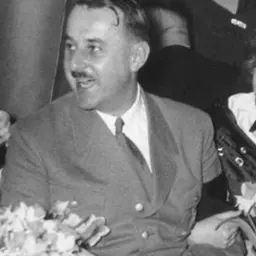



Related people
Same field, nearest in time

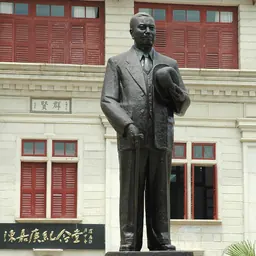
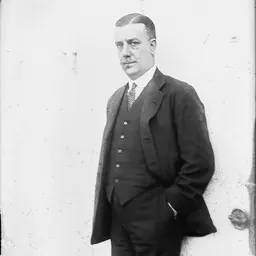

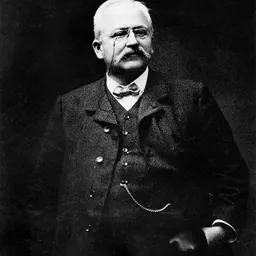
Contemporaries
People whose lives overlapped Hugo Eckener's





Frequently asked questions
Who was Hugo Eckener?
manager of the Luftschiffbau Zeppelin company (1868–1954)
When was Hugo Eckener born?
Hugo Eckener was born on 10 August 1868 in Flensburg.
When did Hugo Eckener die?
Hugo Eckener died on 14 August 1954 in Friedrichshafen.
What was Hugo Eckener's occupation?
Hugo Eckener was an entrepreneur, engineer and aircraft pilot.
What nationality was Hugo Eckener?
Hugo Eckener was German.
Sources & further reading
Cite this page
APA: Biography.guide. (2026). Hugo Eckener. https://biography.guide/hugo-eckener/
MLA: "Hugo Eckener." Biography.guide, https://biography.guide/hugo-eckener/.
Chicago: "Hugo Eckener." Biography.guide. https://biography.guide/hugo-eckener/.
Data last updated: 2026-09-26 · Spot an error? Report a correction.
Page generated 2026-09-27 05:16 UTC