
About Ernie Vick
Lived 1900 – 1980 (aged 80). Ernie Vick was an American baseball player and american football player.
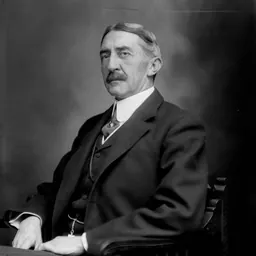
Henry Arthur "Ernie" Vick (July 2, 1900 – July 16, 1980) was an American football and baseball player. He was selected as an All-American center in 1921, played on the 1926 World Series champion St. Louis Cardinals, and was elected to the College Football Hall of Fame in 1983.
University of Michigan Born in Toledo, Ohio, Vick graduated from Toledo Scott High School. He attended the University of Michigan where he lettered four years in football (1918–1921) and two years in baseball (1921–1922).
Football As a 180-pound freshman in 1918, Vick was permitted to play varsity football under the Students' Army Training Corps rule in effect during World War I. He was named to a number of All-Western teams as a freshman in 1918.
In 1919, owing to "the lack of backfield material" in Ann Arbor, Vick was moved to the fullback position. After being laid up with a foot blister in Michigan's early games, Vick built a reputation as "a star line plunger" who was "fast for his weight." Camp said of Vick: "He is the only man who has throughout the season added great power and aggressiveness to steadiness and consistency." After exception was taken by many to Camp's selection of Vick, Michigan's Harry Kipke wrote a column in the Lansing State Journal defending the selection. Kipke wrote:"Vick is the greatest lineman Michigan has had since the days of "Germany" Schultze. He is good on the offense and even greater on the defense. He has studied football and knows the game from all angles. His defensive work is the best that has been seen on the western gridirons in years. … He is a rough, rugged and dependable man to have in the pivot position." Press accounts praised Vick for "his absolute dependability in passing the ball, coupled with his almost superhuman defensive play."
After Vick graduated from Michigan, sports columnist Billy Evans wrote, "The name Vick will live long in the memory of those who like Big Ten football. Michigan will always remember his great work." Vick proved himself to be "a great baseball player" and was considered the best catcher in the Big Ten in 1921. Vick had been set to join the St. Louis Cardinals in 1922, but opted to stay for his senior year after being selected as the team's captain.
Professional athlete
Baseball As soon as the college baseball season had ended, Vick signed with the St. Louis Cardinals and joined the team in Boston on June 5, 1922. He made his Major League debut on June 29, 1922, but spent most of the 1922 season playing for the Cardinals' affiliate in the American Association at Syracuse. Vick batted .320 with Syracuse in 1922. In the spring of 1923, Vick played with the Houston Buffs, His most serious injury was "a badly shattered thumb" that threatened to end his career. Vick was best known in baseball as the catcher for Grover Cleveland Alexander.
In four seasons with the Cardinals, Vick appeared in 57 Major League games, compiling 26 hits in 112 at-bats for a .232 batting average with 7 RBIs and scoring 12 runs. The paper reported that there was "a twinkle in his eyes" when he saw his picture in the team photo of the 1926 Cardinals, seated in the front row with Billy Southworth, Bob O'Farrell and Grover Cleveland Alexander. During his coaching days, Vick published an article about proper technique for centers in which he described the center as "the mainspring of the football machine." He noted there were two ways of passing the ball to the backfield—the spiral or end-over-end. Vick wrote that he preferred the end-over-end, because he was a more accurate passer that way. In 1927, Vick signed with George Halas's Chicago Bears team. Vick was secured by the Bears after the Panthers fell "on the financial rocks." Vick played in 10 games for the 1927 Bears team.
In 1928, Vick split the season between the Bears and the Detroit Wolverines, playing one game for Chicago and six for Detroit. And in the fall of 1929, Vick was working as a bond salesman in Michigan, but also signed up to serve as an assistant football coach under Bud Daugherty at Albion College. Vick later worked as a football official for the Big Ten Conference. He spent 22 years working games for the conference before retiring in 1953. He also officiated in baseball games and worked the Rose Bowl game and other important post-season contests.
He also worked as a manufacturer's representative before retiring in 1959. Vick died in July 1980, in Ann Arbor, Michigan.
Don’t just read it —
keep it.
Full-length biographies made to live with: read them, listen on the way to work, watch them tonight.
- E-book
- Audio
- Video
Instant download · yours to keep · every purchase keeps this site free
Important facts
People in Ernie Vick's life
Named in this biography and alive at the same time



Related people
Same field, nearest in time
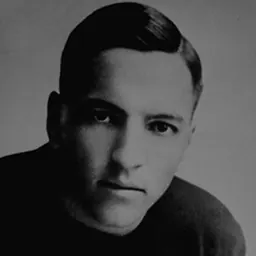
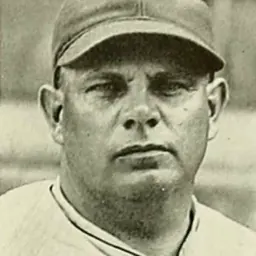

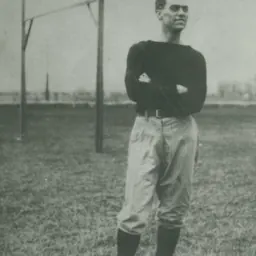
Contemporaries
People whose lives overlapped Ernie Vick's
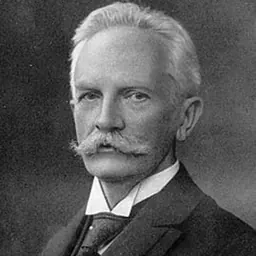




Frequently asked questions
Who was Ernie Vick?
American football player and coach (1900-1980)
When was Ernie Vick born?
Ernie Vick was born on 2 July 1900 in Toledo.
When did Ernie Vick die?
Ernie Vick died on 16 July 1980 in Ann Arbor.
What was Ernie Vick's occupation?
Ernie Vick was a baseball player and american football player.
What nationality was Ernie Vick?
Ernie Vick was American.
Sources & further reading
Cite this page
APA: Biography.guide. (2026). Ernie Vick. https://biography.guide/ernie-vick/
MLA: "Ernie Vick." Biography.guide, https://biography.guide/ernie-vick/.
Chicago: "Ernie Vick." Biography.guide. https://biography.guide/ernie-vick/.
Data last updated: 2026-09-20 · Spot an error? Report a correction.
Page generated 2026-09-27 05:19 UTC