
Ernesto Bark
Baltic German writer, journalist and political activist lived in Spain
About Ernesto Bark
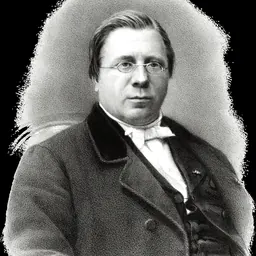
Lived 1858 – 1922 (aged 64). Ernesto Bark was a Spanish and Russian journalist, opinion journalist, writer, novelist and opinion writer.
Ernst Moritz Heinrich Bark Schultz (23 March 1858 – 24 October 1922), also known as Ernesto Bark, was a Livonian writer, journalist and political activist based in Spain. He took part in the Bohemian scene in Madrid.
Biography Born on 23 March 1858 in Kaava, Laiuse, in the vicinity of Dorpart in Estonia, then part of the Russian Empire. Regarding his self-identification, aside from presenting himself as a Livonian, he declared to have three nationalities: "the German one from an ethnographic standpoint, the Russian one from a political standpoint (and unfortunately) and the Spanish one because of affection and love". In any case, he also contextually self-identified as a Baltic German in his writings. He even declared to be "Polish" on some occasions. Pío Baroja dubbed him as a "Latvian revolutionary". He took studies in Riga, Leipzig, Munich and Berlin.
Involved in Baltic nationalist propaganda, he founded the clandestine newspaper Der Baltische Föderalist in Switzerland in 1883, whose success reportedly led to a deportation to Siberia.
He settled in Spain circa 1884 (after a previous brief stay in 1882). He lived for a time in Alicante, then in Madrid. He worked as writer for , as well as correspondent for Köln Zeitung and . He also earned a living in Spain as teacher of foreign languages. During his time in Madrid, he supported, along his friend , Jewish immigrants coming from Russia. A noted polemicist vis-à-vis his political activity, espousing republican-socialist ideas, Bark held feuds with Pablo Iglesias Posse and Juan Montseny Carret (Federico Urales). A close acquaintance of Alejandro Sawa, the character Basilio Soulinake in Ramón María del Valle-Inclán's Luces de bohemia is based on Bark.
He became a member of the Radical Party circa 1910, developing a close friendship with Alejandro Lerroux. or El Liberal. Instead of the , he was buried on the next day in the Almudena Cemetery following the Catholic rite professed by his wife Matilde Cabello, with whom he had six children.
He was the uncle of Pyotr Bark, minister of Finance of Nicholas II from 1914 to 1917.
Don’t just read it —
keep it.
Full-length biographies made to live with: read them, listen on the way to work, watch them tonight.
- E-book
- Audio
- Video
Instant download · yours to keep · every purchase keeps this site free
Important facts
People in Ernesto Bark's life
Named in this biography and alive at the same time


Related people
Same field, nearest in time
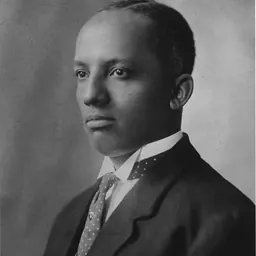
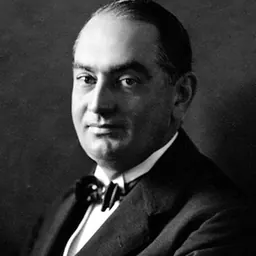
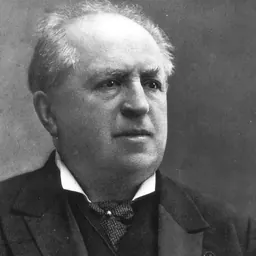
Contemporaries
People whose lives overlapped Ernesto Bark's



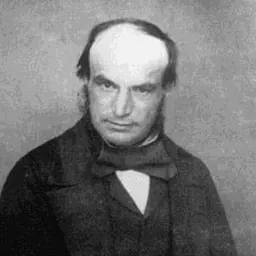
Frequently asked questions
Who was Ernesto Bark?
Baltic German writer, journalist and political activist lived in Spain (1858-1922)
When was Ernesto Bark born?
Ernesto Bark was born on 23 March 1858 in Jõgeva, Laiuse.
When did Ernesto Bark die?
Ernesto Bark died on 24 October 1922 in Calle de Ayala.
What was Ernesto Bark's occupation?
Ernesto Bark was a journalist, opinion journalist, writer, novelist and opinion writer.
What nationality was Ernesto Bark?
Ernesto Bark was Spanish and Russian.
Sources & further reading
Cite this page
APA: Biography.guide. (2026). Ernesto Bark. https://biography.guide/ernesto-bark/
MLA: "Ernesto Bark." Biography.guide, https://biography.guide/ernesto-bark/.
Chicago: "Ernesto Bark." Biography.guide. https://biography.guide/ernesto-bark/.
Data last updated: 2026-09-22 · Spot an error? Report a correction.
Page generated 2026-09-27 05:28 UTC