
Ernest Weber
French football pioneer and sports journalist
About Ernest Weber
Lived 1877 – 1945 (aged 67–68). Ernest Weber was an association football player, journalist and association football coach.
Ernest Weber (1877 – 1945) was a French author and sports journalist, who was one of the most important figures in the amateur beginnings of football in Paris, co-founding several historic clubs in the French capital in the 1890s, such as Club Français in 1892 and Red Star in 1897, the latter with Jules Rimet, the future president of FIFA. As the star journalist of the French newspaper L'Auto in the early 20th century, he played a prominent role in promoting football in the country, but he is best known for being a very influential figure in the locker room of the French national team in its first years of existence. He was the author of one of only two chronicles relating France's inaugural match in 1904, the other being Robert Guérin, founder of FIFA.
Early and personal life Ernest Weber was born in Montmartre in 1877, but spent the better part of his childhood at , where his grandmother lived. This means that he co-founded a club at the age of 15, which was common at the time, with Bernat being only a year older than him. On 1 November 1896, he started for CF in a match against Standard AC. Weber was still playing at Club Français in 1897,
Later career Despite being three years younger than Jules Rimet, it was Weber who introduced football to the future president of FIFA, along with Charles de Saint-Cyr, a fellow journalist and former member of the Racing Club de France. Despite still being in his early 20s, Weber seems to have never played for Red Star. During half-time, however, Gaston Peltier managed to find a former CF player among the many spectators, Weber, who was described in the press as "ancient" not because of his age, since he was still only 23, but because he had not played a single match for at least three years, since 1897. Weber took advantage of such a platform to establish himself as one of the most influential figures in the world of French football at the time.
In the following month, on 16 April, SEFA assembled a French team to face Corinthians, which was welcomed to Paris by a reception committee that was made up of the most notable figures in French football at the time, including Weber, Gilon (SEFA), William Sleator (The White Rovers), Walter Hewson (Cook et Cie house), Philip Tomalin, Alfred Tunmer, Jack Wood, Shepherd (Williams house), Georges Duhamel, the Paris Committee of the USFSA, United SC, and the newspapers L'Auto and La Vie au grand air. In the preview of this match, Weber explained that SEFA's white shirt would be confused with the white of the Corinthians, so the French instead wore a black and gold striped shirt provided by the Williams house. however, this Weber was a different person, because on 1 May 1904, while the player was helping United SC, the champions of the USFSA, to a 5–1 win over Étoile des deux lacs, the champions of the FGSPF, the journalist was in Brussels, as the correspondent for L'Auto in the inaugural match of the French national team against Belgium, so he could write the technical summary of the game, which was publishing the next day. For many years, this short article from Weber was commonly accepted as the only source of reference relating France's debut, until another report was found in 2020, in a non-sports daily newspaper, La Presse, under the signature "OFF-SIDE", which was the pseudonym of Robert Guérin, founder of FIFA. Furthermore, Weber also had to manage last-minute withdrawals; for instance, he temporarily concealed the news about the withdrawals of Pierre Allemane and Charles Wilkes, releasing this information only on the following day, so as "not to worry our internationals", thus demonstrating his predilection for psychologic tactics. Despite the withdrawals, the French squad arrived in Brussels with 12 men, and after much discussion between the players, Guérin, and Weber, it all came down to a coin toss between Jacques Davy and Emile Fontaine, which was won by the former, while the latter was never able to become an international. Before the match, Weber and Guérin boosted the morale of the players, instilling in them the desire to save national honour, because "we have, in fact, to defend our colours"; the match ended in a 3–3 draw, and against Belgium in May, again in Brussels, in which he heavily criticized the pitch, which had been affected by heavy rain, describing it as "more of a swamp than a football ground" and that "on such a ground, one should rather play water polo than football.
Following Guérin's withdrawal in early 1906, the helm of the national team was given to André Billy and André Espir, and when they made their debut in a friendly against Belgium on 22 April, they asked Weber for help, since he was the only one from that trio who had watched the previous two Franco-Belgian meetings, thus having a valuable input, and indeed, Weber had noted that Belgian's full-back Edgard Poelmans constantly delivered precise passes to his forwards, so he had the idea of intercepting them, an excellent avant-garde idea that never came to fruition because the captain of the French team, Pierre Allemane, forgot to give France's winger Raymond Jouve the instructions he had received from either Weber or Espir: to mark and hinder Poelmans; France lost 0–5. Two weeks prior, the national coach André Billy had postponed his infamous Nord-Paris meeting, which served as annual test match for the French national team, in order to focus on Belgium, a decision criticized by Weber, who wrote in L'Auto that "the Belgium-France match has already been played three times without any stake, and still became a classic, so the Paris-Nord match might become one as well". At the end of that month, Weber and Billy had another quarrel after the former criticized the performance of the club that the latter presided (Olympique Lillois) in the final of the 1907 Coupe Dewar on 28 April, (Weber stated that Lillois had a slow and weak start, so the opponents did the same "probably out of politeness", with "the second half resuming with as much sluggishness as the first", and also that OM "did not attempt any attack; it was of a desperate monotony".) In 1905, Bayrou captained his side Gallia Club to a triumph in the final of the 1905 USFSA Football Championship, but Weber was not gentle in describing this victory snatched with a goal from Raymond Jouve in the 118th minute: "Two hours! during which we saw 20 men running after the ball, kicking it, and... that's it!".
A few months later, in October 1906, Weber wrote in L'Auto that "For a long time I criticized the game of the Gallia Club, so strongly that I was accused of bias, but actually, I did not like their game because it is made of jolts, thrusts, endurance, and ardor", but he then confessed to being wrong since "those who show calm, precise preparation, are the result of skill or strength, and not of nervousness or lack of courage". He then proceeded to show his impartiality, stating that "after having attacked the Gallia, when it was victorious, I will now sing its praises, even if it knows defeat", going on to describe the qualities of Gallia's squad, including Bayrou, stating that "he catches up when he is balanced on his feet", and "easy to recognize on a playing field: he is the most... least elegant you can see".
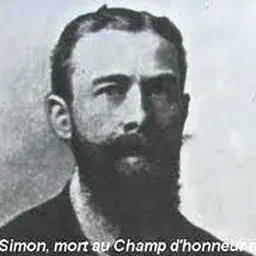
At the time, the USFSA was competing with several rival federations, most notably Charles Simon's FGSPF, but this never stopped Weber from publicly showing his support towards the FGSPF, which was made up of catholic patronages that were reigned by complete amateurism. For instance, in October 1906, the Paris Committee of the USFSA reminded clubs that they must request the requalification of people who have been part of other federations (mainly the FGSPF) before asking for their admission to the USFSA, but Weber called them out and wrote that this official statement was just a "good trick on the FGSPF". A few days later, Simon, the president of the FGSPF, visited the L'Auto newsroom to thank him, stating that the "ridiculous decision affecting the members of other federations made by the leaders of the Paris Committee has no value since it does not come from the power leaders of the USFSA", to which Weber later wrote that "we do not defend ourselves against those against whom we do not fear". The French team ended up winning 4–2, with Weber blaming this result on the English forward line being too individualistic, stating that "perhaps they had been assured that in France, the columnists mainly sing the praises of individuals and they were looking to be mentioned. Disillusions!". In this article, Weber also stated that just as Charles Brennus is recognized as the "father of rugby", the president of Standard Philip Tomalin "deserves that the French players award him the title of father of association football". In October 1907, Weber described the 28-year-old Fernand Desrousseaux as "the oldest footballer in the North", but also added that "his presence of mind and his skill makes him one of the best goalkeepers in the North". On 1 April 1907, the 30-year-old Weber put on his boots again to play for the so-called Vieilles Gloires, playing alongside several former fellow Club Français players, as well as fellow CF co-founder Charles Bernat; they lost 4–1 to Old Etonians. In the chronicle of this match, Weber, who was described as "the father of Vieuix Débris", was reported to have enjoyed "the success of this day, which will be annual and thus certainly provoke the return to sport of more people who considered themselves too old". In February 1907, CA Paris won its third consecutive Coupe Manier, thus earning the right to permanently keep the trophy, so Weber announced the club's intentions to do so, while pointed out that "the more generous Club Français had previously renounced its right of ownership", having won this tournament five times in a row at the turn of the century.
On 2 June 1907, two days after the general meeting of The Football Association in which it was decided that a new and separate organization must be created for amateur football (Amateur Football Alliance), Weber wrote a small article about this situation, stating "we cannot logically admit another English federation to FIFA, which means that the amateurs of continent[al Europe] won't be able to play against the English amateurs. How fun that will be!". This was most likely a reference to an international match held the previous year, on 1 November 1906, in which France, then made up of amateur players, was trashed by England Amateurs by a score of 0–15, with Weber then writing on the following day that "the English played as they should, that is to say, superbly”.
Relying only on the appearance of his signature in the columns of L'Auto, Weber stayed there from 1904 until as late as February 1908. and four years later, in 1909, he published the Spanish version of this book (Sports atléticos). In 1913, Weber published a further two books, L'Entraînement à tous les sports ("Training for all sports") and Aéroplanes et hydroaéroplanes ("Aeroplanes and hydroaeroplanes").
In 1908, Weber and Henri Sonnet, a fellow journalist, published a work listing all the sports records called Les Tablettes Sportives, which was very well received by Frantz Reichel of Le Figaro, who described it as "a booklet of undeniable utility for all sportsmen", and also by Maurice Chérié of L'Aurore, who stated that Weber and Sonnet "grouped the documents briefly and clearly, classified in a simple and logical order, finally sifted through with rigorous accuracy".
After the War, a certain "E. Weber" wrote A Quoi Jouons Nous? ("What are we playing?"), a children's book of 68 pages full of watercolor drawings by Robert Salles, and published by the Librairie Garnier Freres in the 1920s.
Death Weber died in 1945, at the age of either 67 or 68. Sports athlétiques (1905) Le Basket-ball, le base-ball, la crosse, le hockey, le golf, la longue paume, le jeu de paume, la pelote basque, le badminton, le cricket, la thèque, le croquet (1905) Aéroplanes et hydroaéroplanes (1913) L'Entraînement à tous les sports (1913)
Honours Club Français USFSA Football Championship: Champions (1): 1896
Coupe Manier: Champions (1): 1900
Don’t just read it —
keep it.
Full-length biographies made to live with: read them, listen on the way to work, watch them tonight.
- E-book
- Audio
- Video
Instant download · yours to keep · every purchase keeps this site free
Important facts
People in Ernest Weber's life
Named in this biography and alive at the same time




Related people
Same field, nearest in time



Contemporaries
People whose lives overlapped Ernest Weber's


Frequently asked questions
Who was Ernest Weber?
French football pioneer and sports journalist
When was Ernest Weber born?
Ernest Weber was born in 1877 in Montmartre.
When did Ernest Weber die?
Ernest Weber died in 1945.
What was Ernest Weber's occupation?
Ernest Weber was an association football player, journalist and association football coach.
Sources & further reading
· DBpedia: Ernest Weber (footballer)
Cite this page
APA: Biography.guide. (2026). Ernest Weber. https://biography.guide/ernest-weber/
MLA: "Ernest Weber." Biography.guide, https://biography.guide/ernest-weber/.
Chicago: "Ernest Weber." Biography.guide. https://biography.guide/ernest-weber/.
Data last updated: 2026-09-20 · Spot an error? Report a correction.
Page generated 2026-09-27 05:02 UTC