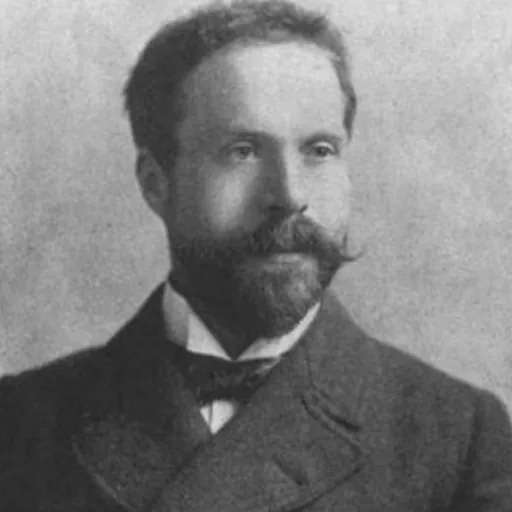
About Ernest Rhys
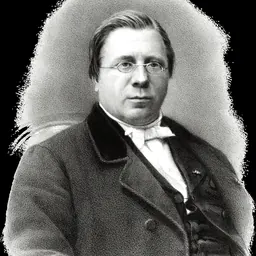
Lived 1859 – 1946 (aged 86). Ernest Rhys was a British poet, editor, writer and editing staff.
Ernest Percival Rhys ( ; 17 July 1859 – 25 May 1946) was a Welsh-English writer, best known for his role as founding editor of the Everyman's Library series of affordable classics. He wrote essays, stories, poetry, novels and plays.
Early life Rhys was born in Islington in north London, the son of John Rees (his spelling) and his English wife Emma Percival of Hockerill. Shortly afterwards his father set up in the wine and spirits trade, working for Walter Gilbey in premises in Nott Square, Carmarthen, where before marriage he had been in training for the ministry. The family was in Carmarthen for a number of years, and had a Welsh-speaking maid. In 1865 John Rees was transferred to another Gilbey shop, in Newcastle upon Tyne.
After home education with a governess, Rhys spent two years at Bishop's Stortford Grammar School as a boarder, leaving in poor health. He then attended a Newcastle school run by a German master, acquiring some German and French. He then spent a desultory period working in his father's office. In 1876 he took up an apprenticeship as a mining engineer, or "coal viewer". Against the wishes of his father, Rhys did not apply to the University of Oxford.
Rhys worked through his apprenticeship in the Durham coalfield. He passed his mining engineer examination. At this period he lived in a pit village in Lower Weardale, and wrote extensively, poetry and prose, without being published. He set up a library, a book group and a programme of lectures. He described the miners' life in his story collection Black Horse Pit (1925). He was employed by the Walter Scott Publishing Co. of Newcastle. Initially he edited the works of George Herbert for its Canterbury Poets series. After that he was employed doing editorial work on its Camelot Series, of reprints and translations. Rhys later wrote that the approach was based on the mistaken idea that he was the academic John Rhys. He was a friend of Percival Chubb (1860–1960), eventually President of the American Ethical Union. In his early life, Chubb was a disciple of Thomas Davidson, founder of the Fellowship of the New Life, and indirectly of the Fabian Society. Chubb with Rhys at the start of the 1880s mixed in these circles, and also with the Social Democratic Federation. Rhys kept up during the decade with socialists such as Edward Carpenter.
Rhys was one of a number of British socialists who visited Walt Whitman; it followed a postal introduction in 1885 by William Michael Rossetti.
In London Turning to writing in London as a profession from 1886, Rhys built up a steady reputation as a reviewer for periodicals. In 1890, he was sharing rooms in Hampstead with Arthur Symons.
Rhys married his wife Grace in 1891. Initially they lived in a cottage on Moel y Gamelin near Llangollen, but it proved impractical for the literary life, and they returned to London. They moved on from "Hunt Cottage", but within Hampstead so-called, to a house in Hermitage Lane, now Childs Hill, which they named "Derwen". The Rhyses there held a form of literary salon.
In 1906, Rhys persuaded J. M. Dent the publisher to start out on the ambitious Everyman's Library project. When Rhys died in London on 25 May 1946, 983 Everyman titles had been produced.
London associations In 1887 Rhys met W. B. Yeats at a Sunday political gathering called by Morris; he later introduced Yeats to the duo Michael Field. It was at a garden party held by Yeats that Rhys first met Grace Little, his future wife. In its early form, the club was for "Celtic" poets. That restriction changed in January 1891, with a meeting at the base of the Century Guild of Artists in Fitzroy Street.
Chapter XIX of Everyman Remembers describes an occasion at Rhys's home attended by Yeats, Davidson, Ezra Pound, Ford Madox Hueffer and D. H. Lawrence. It has been argued that this gathering, dated to 1909, must be a conflation of events, since chronology makes it implausible that Davidson and Lawrence were both there. That year, Rhys and Ernest Radford were 1890s figures invited to the founding meeting of the poets' club set up by F. S. Flint and T. E. Hulme.
The Rhyses also knew Arthur Waugh and his family, who included the authors Alec Waugh and Evelyn Waugh; Grace became a close friend of Arthur's wife Catherine. They had settled at Hillfield Road in West Hampstead, having earlier lived off the Finchley Road. Alec Waugh was Ernest Rhys's first biographer in the Oxford Dictionary of National Biography.
Works The Great Cockney Tragedy (1891) A London Rose: and other rhymes (1894) poems The Fiddler of Carne (1896) prose fable, derivative of Fiona Macleod, according to Sutherland, as was The Whistling Maid Everyman Remembers (1931) autobiography Rhymes for Everyman (1933) poems Letters from Limbo (1936) Song of the Sun (1937) poems Wales England Wed (1940) autobiography
As editor with John Gwenogvryn Evans, The Text of the Bruts from the Red Book of Hergest (1890) editors Literary Pamphlets Chiefly Relating to Poetry from Sidney to Byron (1897) editor Lays of the Round Table and Other Lyric Romances (1905) editor Fairy Gold: A book of Old English Fairy Tales (1906) editor A Century of English Essays (1913) editor The New Golden Treasury of Songs and Lyrics (1914) editor Browning & His Poetry (1918) editor The Golden Treasury of Longer Poems (1921) editor The Growth of Political Liberty: A Source Book of English History (1921) editor The Haunters and the Haunted: Ghost Stories and Tales of the Supernatural (1921) editor 31 Stories by Thirty and One Authors (1923) editor Volume 8 of Library of World’s Best Literature Ancient and Modern, Thirty Volumes, edited by Charles Dudley Warner, R. S. Peale and J. A. Hill, publishers, 1897, contains a rather long section (47 pages, pp. 3403–3450), devoted comprehensively to Celtic literature, written by William Sharp and Rhys.
Don’t just read it —
keep it.
Full-length biographies made to live with: read them, listen on the way to work, watch them tonight.
- E-book
- Audio
- Video
Instant download · yours to keep · every purchase keeps this site free
Important facts
People in Ernest Rhys's life
Named in this biography and alive at the same time




Related people
Same field, nearest in time
Contemporaries
People whose lives overlapped Ernest Rhys's


Frequently asked questions
Who was Ernest Rhys?
British writer; original editor of Everyman's Library (1859–1946)
When was Ernest Rhys born?
Ernest Rhys was born on 17 July 1859 in Islington.
When did Ernest Rhys die?
Ernest Rhys died on 25 May 1946 in London.
What was Ernest Rhys's occupation?
Ernest Rhys was a poet, editor, writer and editing staff.
What nationality was Ernest Rhys?
Ernest Rhys was British.
Sources & further reading
Cite this page
APA: Biography.guide. (2026). Ernest Rhys. https://biography.guide/ernest-rhys/
MLA: "Ernest Rhys." Biography.guide, https://biography.guide/ernest-rhys/.
Chicago: "Ernest Rhys." Biography.guide. https://biography.guide/ernest-rhys/.
Data last updated: 2026-09-23 · Spot an error? Report a correction.
Portrait: Wikimedia Commons · author & licence
Page generated 2026-09-27 05:05 UTC