
About Ernest Dezentjé
Lived 1885 – 1972 (aged 86). Ernest Dezentjé was a Dutch painter.
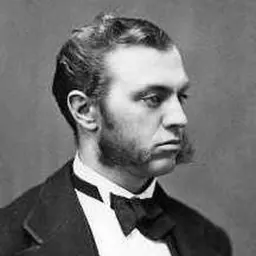
Ernest Regnard Leonce Dezentjé (17 August 188512 January 1972) was a Dutch-Indonesian painter. Dezentjé worked for the office of the auditor general until the 1910s, when he took up painting and began learning from established artists such as Leo Eland and Gerard Pieter Adolfs. Dezentjé joined the Kuntskring ('Batavia Art Circle') and was exhibiting by the 1920s, gaining popularity for his depiction of Mount Gede. By 1940 he had held several solo exhibitions and was acknowledged as one of the most important artists of the Dutch East Indies. He remained active through the 1970s, establishing a close friendship with President Sukarno and taking several apprentices.
Dezentjé was best known for his landscape paintings, which emphasized natural beauty and lighting, and is considered part of the Mooi Indië movement. Reception of his works was initially positive, though later critics questioned his formulaic presentation and use of perspective. Paintings by Dezentjé are exhibited at the Merdeka and Bogor Palaces and held by several museums.
Biography Ernest Dezentjé was born in Meester Cornelis, Batavia, Dutch East Indies (now Jatinegara, Jakarta, Indonesia) on 17 August 1885. He was the third of eight children born to Leon Caspar Dezentjé and his wife Wilhelmina (née Reijnhart). He was descended from a prominent Indo family, with French, Dutch, and Javanese heritage. Dezentjé was educated in Batavia, where he completed his secondary studies. Initially, Dezentjé worked for the office of the auditor general, following a career path determined by his father.
However, at the age of 30, Dezentjé chose to take up painting against his parents' wishes. He received instruction from contemporaries, learning from the landscape painter Leo Eland as well as other artists such as Gerard Pieter Adolfs. He also spent time at an art academy in Europe. He later joined the Kuntskring ('Batavia Art Circle'), and participated in a joint exhibition at the Trade Fair in Bandung in 1920. In 1922, he received a commission from the Koninklijke Paketvaart-Maatschappij shipping line to complete a view of Mount Gede.
His painting of Mount Gede was well-received, and Dezentjé began to gain a following. Upon the betrothal of Princess Juliana of the Netherlands to Prince Bernhard in 1936, one of Dezentjé's paintings was presented to the couple as a gift from the people of Batavia. Between 1936 and 1939 Dezentjé held several solo exhibitions in Batavia. Governor General Bonifacius Cornelis de Jonge attended his 1936 exhibition at the Kolff Bookstore. The 1938 exhibition at Kolff, meanwhile, consisted of some fifty paintings. In 1940, Dezentjé held an exhibition at the Kunstzaal-Kollf in Batavia. He exhibited another forty works at the Kolff Gallery the following year.
Dezentjé married Siti Rasmani, with whom he lived in the Bondongan district of Bogor. After Indonesia's independence, he took Indonesian citizenship. When he and Siti were unable to conceive, they adopted her nephew Satria Djupriyani, who later became an artist.
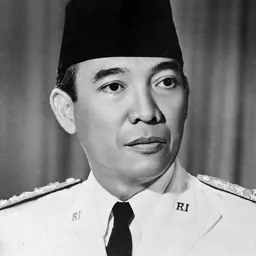
Dezentjé was reported to be a close friend of President Sukarno, having established their relationship before Indonesia's independence. According to the curator , Sukarno regularly visited Dezentjé at his home, and entrusted his eldest son Guntur to the artist after the Dutch began their Police Actions during the Indonesian National Revolution. The president also asked Dezentjé to curate his art collection, and would regularly commission new works for display. In his ('Notes from the Margins 9'), the Indonesian poet Goenawan Mohammad described Sukarno as "enjoying Dezentjé's works as he enjoyed the sculptures of women with harmonious bodies".
Dezentjé died on 12 January 1972. He was buried next to his wife in Muara Kidul, West Bogor. Prior to his death, he had been working in Jakarta with his adopted son.
Art
Dezentjé is best known for his landscape paintings, though by the 1940s he had also begun painting figures. In a 1956 interview, he recalled that he had produced hundreds of works. His paintings were completed in an impressionist style, with little influence from modernism; when pressured to adopt the tenets of modern art, Dezentjé refused. In a 1938 article, the Bataviaasch Nieuwsblad described his creative process:
Common subjects of Dezentjé's works included rice fields, mountains, rivers, and indigenous villages. His works emphasized the natural beauty of the archipelago, and thus he is considered part of the Mooi Indië movement. He was recognized for his use of light, with De Indische Courant highlighting his depiction of light reflecting off rice paddies in a 1938 review.
Dezentjé was considered one of the most important artists of the Dutch East Indies, and his name was synonymous with the Mooi Indië movement. He took several apprentices, including the Dutch painter and the Indonesian academic Koentjaraningrat. Works by Dezentjé are held by the Indonesian government at the Merdeka Palace and Bogor Palace. Dezentjé's paintings are in the collection of the Wereldmuseum Amsterdam in the Netherlands and the Adam Malik Museum in Jakarta. At the time of his death, works were also held in the United States and the Soviet Union.
In 1938, the Bataviaasch Nieuwsblad described Dezentjé as creating a "spectacle for the eye" that "captivates the eye and the heart", putting greater emphasis on natural beauty than the psychological experience of human actions. De Indische Courant, reviewing his 1938 exhibition, wrote that Dezentjé "is a good painter in the best sense of the word", having an expressiveness best demonstrated by his large canvases. Reviewing Dezentjé's 1939 exhibition, the Bataviaasch Nieuwsblad was more critical, writing that, while the artist was at his best with carefree depictions of sunny rivers and kampong roads, his works lacked the strength of perspective and form expected of naturalism. Meanwhile, the Dutch art critic criticized Dezentjé's work as formulaic, writing "the water glistens like silver, the little dykes are green ... a mountain in the background, and this mountainyou can count on thatis dark blue. The mandatory palm tree is in the picture too, and in the heavens in the distance yearning yellows melt into poetic red." At the same time, he considered Dezentjé to have put much thought into "creating a soft, tender mood".
Explanatory notes
Don’t just read it —
keep it.
Full-length biographies made to live with: read them, listen on the way to work, watch them tonight.
- E-book
- Audio
- Video
Instant download · yours to keep · every purchase keeps this site free
Important facts
People in Ernest Dezentjé's life
Named in this biography and alive at the same time



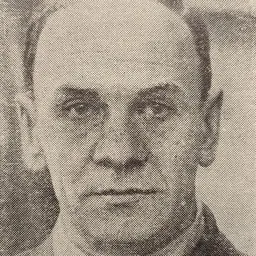
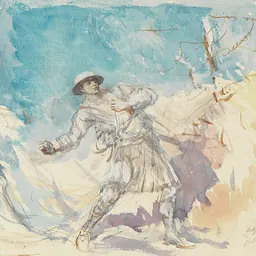
Related people
Same field, nearest in time

Contemporaries
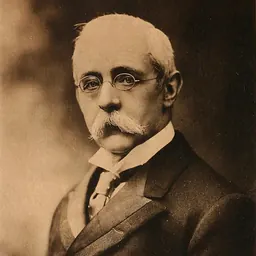
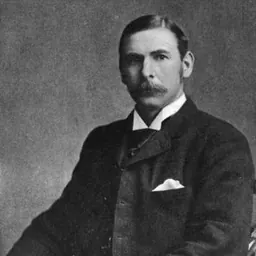
People whose lives overlapped Ernest Dezentjé's



Frequently asked questions
Who was Ernest Dezentjé?
Dutch painter (1885-1972)
When was Ernest Dezentjé born?
Ernest Dezentjé was born on 17 August 1885 in Jatinegara.
When did Ernest Dezentjé die?
Ernest Dezentjé died on 12 January 1972 in Jakarta.
What was Ernest Dezentjé's occupation?
Ernest Dezentjé was a painter.
What nationality was Ernest Dezentjé?
Ernest Dezentjé was Dutch.
Sources & further reading
Cite this page
APA: Biography.guide. (2026). Ernest Dezentjé. https://biography.guide/ernest-dezentje/
MLA: "Ernest Dezentjé." Biography.guide, https://biography.guide/ernest-dezentje/.
Chicago: "Ernest Dezentjé." Biography.guide. https://biography.guide/ernest-dezentje/.
Data last updated: 2026-09-25 · Spot an error? Report a correction.
Page generated 2026-09-27 05:12 UTC