
Erik von Kuehnelt-Leddihn
Austrian noble and political theorist
About Erik von Kuehnelt-Leddihn
Lived 1909 – 1999 (aged 89). Erik von Kuehnelt-Leddihn was an Austrian philosopher, university teacher, journalist, literary critic, politician and painter.
Erik Maria Ritter von Kuehnelt-Leddihn (31 July 1909 – 26 May 1999) was an Austrian-American nobleman and polymath, whose areas of interest included philosophy, history, political science, economics, linguistics, art and theology. He opposed the ideas of the French Revolution, as well as those of communism and Nazism. Describing himself as a "conservative arch-liberal" or "extreme liberal", Kuehnelt-Leddihn often argued that majority rule in democracies is a threat to individual liberties. He declared himself a monarchist and an enemy of all forms of totalitarianism, although he also supported what he defined as "non-democratic republics", such as Switzerland and the early United States. Kuehnelt-Leddihn cited the U.S. Founding Fathers, Tocqueville, Burckhardt, and Montalembert as the primary influences for his skepticism towards democracy.
Described as a "Walking Book of Knowledge" by William F. Buckley Jr., Kuehnelt-Leddihn had an encyclopedic knowledge of humanities and was a polyglot, being able to speak eight languages and read seventeen others. His early books The Menace of the Herd (1943) and Liberty or Equality (1952) were influential within the American conservative movement. An associate of Buckley Jr., his best-known writings appeared in National Review, where he was a columnist for 35 years.
Early life and career Kuehnelt-Leddihn was born in Tobelbad, Styria, Austria-Hungary. At 16, he became the Vienna correspondent of The Spectator. From then on, he wrote for the rest of his life. He studied civil and canon law at the University of Vienna at 18. Then he went to the University of Budapest, from which he received an M.A. in economics, studying under Pál Teleki, and later his doctorate in political science. Moving back to Vienna, he took up studies in theology. In 1935, Kuehnelt-Leddihn traveled to England to become a schoolmaster at Beaumont College, a Jesuit public school. Subsequently, he moved to the United States, where he taught at Georgetown University (1937–1938), Saint Peter's College, New Jersey (head of the History and Sociology Department, 1938–1943), Fordham University (Japanese, 1942–1943), and Chestnut Hill College, Philadelphia (1943–1947).
In a 1939 letter to the editor of The New York Times, Kuehnelt-Leddihn critiqued the design of every American coin then in circulation except for the Washington quarter, which he allowed was "so far the most satisfactory coin" and judged the Mercury dime to be "the most deplorable."
After publishing books like Jesuiten, Spießer und Bolschewiken in 1933 (published in German by Pustet, Salzburg) and The Menace of the Herd in 1943, in which he criticized the National Socialists as well as the Socialists, he remained in the United States, as he could not return to the Austria that had been incorporated into the Third Reich. Kuehnelt-Leddihn moved to Washington, D.C. in 1937, where he taught at Georgetown University. He also lectured at Fordham University, teaching a course in Japanese.
Following the Second World War, he resettled in Lans, where he lived until his death. He was an avid traveler: he had visited over seventy-five countries (including the Soviet Union in 1930–1931), as well as all fifty states in the United States and Puerto Rico.
Kuehnelt-Leddihn wrote for a variety of publications, including Chronicles, Thought, the Rothbard-Rockwell Report, Catholic World, and the Norwegian business magazine Farmand. He also worked with the Acton Institute, which declared him after his death "a great friend and supporter." He was an adjunct scholar of the Ludwig von Mises Institute. For much of his life, Kuehnelt was also a painter; he illustrated some of his own books.
Work
His socio-political writings dealt with the origins and the philosophical and cultural currents that formed Nazism. He endeavored to explain the intricacies of monarchist concepts and the systems of Europe, cultural movements such as Hussitism and Protestantism, and what he saw as the disastrous effects of an American policy derived from antimonarchical feelings and ignorance of European culture and history.
Kuehnelt-Leddihn directed some of his most significant critiques towards Wilsonian foreign policy activism. Traces of Wilsonianism could be detected in the foreign policies of Franklin Roosevelt; specifically, the assumption that democracy is the ideal political system in any context. Kuehnelt-Leddihn believed that Americans misunderstood much of Central European culture such as the Austro-Hungarian Empire, which Kuehnelt-Leddihn claimed as one of the contributing factors to the rise of Nazism. He also highlighted characteristics of the German society and culture (especially the influences of both Protestant and Catholic mentalities) and attempted to explain the sociological undercurrents of Nazism. Thus, he concludes that sound Catholicism, sound Protestantism, or even, probably, sound popular sovereignty (German-Austrian unification in 1919) would have prevented National Socialism although Kuehnelt-Leddihn rather dislikes the latter two.
Contrary to the prevailing view that the Nazi Party was a radical right-wing movement with only superficial and minimal leftist elements, Kuehnelt-Leddihn asserted that Nazism (National Socialism) was a strongly leftist, democratic movement ultimately rooted in the French Revolution that unleashed forces of egalitarianism, conformity, materialism and centralization. He argued that Nazism, fascism, radical-liberalism, anarchism, communism and socialism were essentially democratic movements, based upon inciting the masses to revolution and intent upon destroying the old forms of society. Furthermore, Kuehnelt-Leddihn claimed that all democracy is basically totalitarian and that all democracies eventually degenerate into dictatorships. He said that it was not the case for "republics" (the word, for Kuehnelt-Leddihn, has the meaning of what Aristotle calls πολιτεία), such as Switzerland, or the United States, as it was originally intended in its constitution. However, he considered the United States to have been to a certain extent subject to a silent democratic revolution in the late 1820s.
In Liberty or Equality, his masterpiece, Kuehnelt-Leddihn contrasted monarchy with democracy and presented his arguments for the superiority of monarchy: diversity is upheld better in monarchical countries than in democracies. Monarchism is not based on party rule and "fits organically into the ecclesiastic and familistic pattern of Christian society." After insisting that the demand for liberty is about how to govern and by no means by whom to govern a given country, he draws arguments for his view that monarchical government is genuinely more liberal in this sense, but democracy naturally advocates for equality, even by enforcement, and thus becomes anti-liberal. As modern life becomes increasingly complicated across many different sociopolitical levels, Kuehnelt-Leddihn submits that the Scita (the political, economic, technological, scientific, military, geographical, psychological knowledge of the masses and of their representatives) and the Scienda (the knowledge in these matters that is necessary to reach logical-rational-moral conclusions) are separated by an incessantly and cruelly widening gap and that democratic governments are totally inadequate for such undertakings.
In February 1969, Kuehnelt-Leddihn wrote an article arguing against seeking a peace deal to end the Vietnam War. Instead, he argued that the two options proposed, a reunification scheme and the creation of a coalition Vietnamese government, were unacceptable concessions to the Marxist North Vietnam. He wrote that "The Bishops' letter breathes idealism... moral imperialism, the attempt to inject theology into politics, ought to be avoided except in extreme cases, of which abolition and slavery are examples." with whom he had three children. At the time of his death in 1999, he was survived by all four of them, as well as seven grandchildren. According to Buckley, Kuehnelt-Leddihn was "the world's most fascinating man." Catholic apologist Karl Keating stated that Kuehnelt-Leddihn was the most intelligent man he ever met.
Don’t just read it —
keep it.
Full-length biographies made to live with: read them, listen on the way to work, watch them tonight.
- E-book
- Audio
- Video
Instant download · yours to keep · every purchase keeps this site free
Important facts
Family & relationships
People in Erik von Kuehnelt-Leddihn's life
Named in this biography and alive at the same time

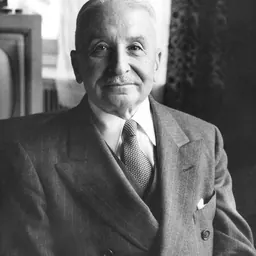



Related people
Same field, nearest in time
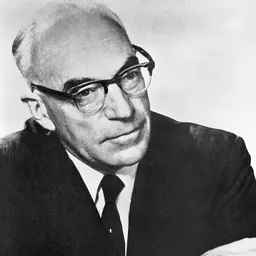

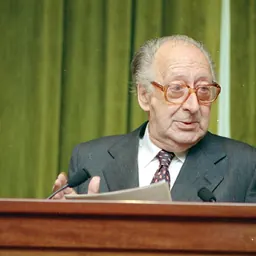

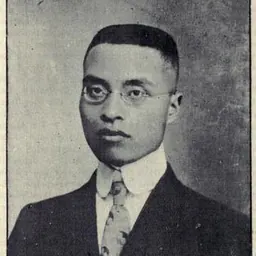
Contemporaries
People whose lives overlapped Erik von Kuehnelt-Leddihn's

Frequently asked questions
Who was Erik von Kuehnelt-Leddihn?
Austrian noble and political theorist (1909-1999)
When was Erik von Kuehnelt-Leddihn born?
Erik von Kuehnelt-Leddihn was born on 31 July 1909 in Haselsdorf-Tobelbad.
When did Erik von Kuehnelt-Leddihn die?
Erik von Kuehnelt-Leddihn died on 26 May 1999 in Lans.
What was Erik von Kuehnelt-Leddihn's occupation?
Erik von Kuehnelt-Leddihn was a philosopher, university teacher, journalist, literary critic, politician and painter.
What nationality was Erik von Kuehnelt-Leddihn?
Erik von Kuehnelt-Leddihn was Austrian.
Sources & further reading
· Wikipedia: Erik von Kuehnelt-Leddihn
· DBpedia: Erik von Kuehnelt-Leddihn
Cite this page
APA: Biography.guide. (2026). Erik von Kuehnelt-Leddihn. https://biography.guide/erik-von-kuehnelt-leddihn/
MLA: "Erik von Kuehnelt-Leddihn." Biography.guide, https://biography.guide/erik-von-kuehnelt-leddihn/.
Chicago: "Erik von Kuehnelt-Leddihn." Biography.guide. https://biography.guide/erik-von-kuehnelt-leddihn/.
Data last updated: 2026-09-20 · Spot an error? Report a correction.
Page generated 2026-09-27 05:03 UTC