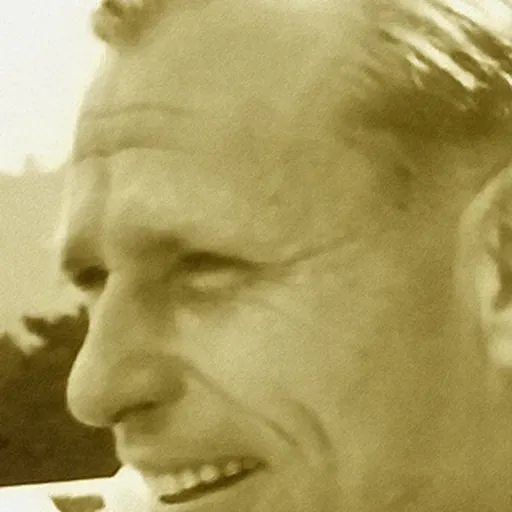
About Erich Warsitz
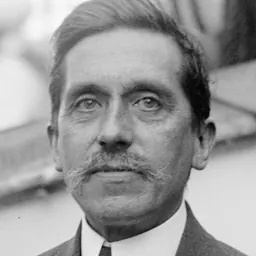
Lived 1906 – 1983 (aged 76). Erich Warsitz was a German aircraft pilot and test pilot.
Erich Karl Warsitz (18 October 1906 – 12 July 1983) was a German test pilot of the 1930s. He held the rank of Flight-Captain in the Luftwaffe and was selected by the Reich Air Ministry as chief test pilot at Peenemünde West. He is remembered as the first person to fly an aircraft under liquid-fueled rocket power, the Heinkel He 176, on June 20, 1939 and also the first to fly an aircraft under turbojet power, the Heinkel He 178, on August 27 the same year.
Biography
Aviation career Warsitz was born at Hattingen.
Heinkel He 176
During the development programme at Neuhardenberg the term "interceptor" had been coined, and the Heinkel He 176 was seen as the research machine for the project. The RLM was really thinking along the lines of a new kind of fighter aircraft. With a fantastic rate of climb it would take off almost vertically to intercept enemy bomber formations at 6000 – 7000 metres, make a swift attack from below at high speed, emptying the MGs or cannons into the enemy machines and then land once the fuel tanks were dry. The Messerschmitt Me 163, which was developed and tested independently of the He 176, came later, during the Second World War, as an operational interceptor. Because the He 176 development was classified top secret, Heinkel set up a special department in his Rostock-Marienehe works. A wooden barrack hut was erected first for the initial testing. Only very few employees were allowed access. This "shed" was soon converted into a permanent building. The development then progressed very quickly. Ground work began at Peenemünde-West with rolling tests to establish the characteristics on the runway.
There came a moment when Erich Warsitz felt that a series of brief hops in the He 176 had made him familiar with its characteristics and nasty tricks, and he suddenly made up his mind to carry out the first real flight on June 20, 1939.
Heinkel He 178
The He 176 rocket aircraft had been developed in close collaboration with the RLM, but in spite of its success, Heinkel did not receive the support he had hoped for. In fact, there were many important individuals at the Air Ministry who showed an interest, but the Second World War was imminent, and other concerns took centre stage. The He 178 design was pushed through without the knowledge of the RLM, and it was this small aircraft which was later to usher in the Jet Age. On August 27, 1939 Erich Warsitz undertook the world first jet flight with the Heinkel He 178 fitted with Hans von Ohain’s jet engine, the He S 3 turbine.
After the second circuit Erich Warsitz set the He 178 up for the landing. The turbine responded to the throttle lever very obediently. Just above the ground he corrected the machine’s attitude, pulled off a perfect landing and came to a halt just short of the waters of the Warnow.
World War II
After the Führer-Directive, ordering all developments not ready for mass-production within a year to be suspended with immediate effect, Erich Warsitz dedicated himself fully to his work as chief test pilot at Peenemünde-West. In 1941 also as an instructor in Nantes and Eindhoven training the bomber squadrons the correct use of the rocket boosters (Heinkel He 111 and Junkers Ju 88).
In 1942, during a test flight with a Messerschmitt Bf 109, he had an accident – caused by a faulty fuel lead – which put him out of flying for a year. Thus he took over the management of his father’s precision mechanical firm and also founded the ‘Warsitz Werke’ in Amsterdam making various high-precision materials.
Post-war
After the end of the war, Warsitz was living in an apartment in the American sector of Berlin, but at 3 a.m. on the night of 5 / December 6, 1945 he was abducted by four Soviet officers. Numerous interrogations followed, concentrating on his former work on the development of rocket and jet aircraft in the OKH and RLM, at Peenemünde and the Heinkel factory. He was required to sign a contract which obliged him to co-operate with the Soviets for a period of five years on the development of related technology, but he refused. As a result, he was condemned to twenty-five years forced labour. Shortly after this he was transported to Siberia, to the penal colony 7525/13.
After his return in 1950, thanks to Chancellor of West Germany Konrad Adenauer, he founded his precision mechanical firm “Maschinenfabrik Hilden”, until, in 1965, he retired.
Death In April 1983, Warsitz suffered a stroke and as a result died at the age of 76 on July 12, 1983, at Lugano, Switzerland.
Commemoration For his flying achievements, Erich Warsitz’ memory was honoured with a special stamp issue by the German Post Office on October 4, 2007. Cultural references Rocketmen, a documentary produced by film director Philip Osborn in 2009.
Don’t just read it —
keep it.
Full-length biographies made to live with: read them, listen on the way to work, watch them tonight.
- E-book
- Audio
- Video
Instant download · yours to keep · every purchase keeps this site free
Important facts
People in Erich Warsitz's life
Named in this biography and alive at the same time

Related people
Same field, nearest in time



Contemporaries
People whose lives overlapped Erich Warsitz's

Frequently asked questions
Who was Erich Warsitz?
German aviator (1906-1983)
When was Erich Warsitz born?
Erich Warsitz was born on 18 October 1906 in Hattingen.
When did Erich Warsitz die?
Erich Warsitz died on 12 July 1983 in Lugano.
What was Erich Warsitz's occupation?
Erich Warsitz was an aircraft pilot and test pilot.
What nationality was Erich Warsitz?
Erich Warsitz was German.
Sources & further reading
Cite this page
APA: Biography.guide. (2026). Erich Warsitz. https://biography.guide/erich-warsitz/
MLA: "Erich Warsitz." Biography.guide, https://biography.guide/erich-warsitz/.
Chicago: "Erich Warsitz." Biography.guide. https://biography.guide/erich-warsitz/.
Data last updated: 2026-09-21 · Spot an error? Report a correction.
Portrait: Wikimedia Commons · author & licence
Page generated 2026-09-27 04:59 UTC