
About Eric Isenburger
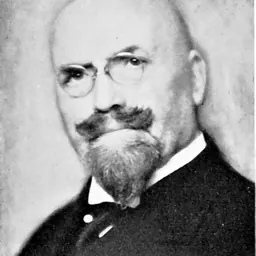
Lived 1902 – 1994 (aged 91). Eric Isenburger was a German and American painter.
Eric Isenburger (born Erich Jacob Isenburger , May 17, 1902, Frankfurt; died March 26, 1994, New York) was a German–Jewish artist who lived in France from 1933 and in New York from 1941.
Life and career European period Erich Isenburger was born in Frankfurt am Main on May 17, 1902 as the son of Sally (Salomon) and Olga, née Neumond. Sally was described as an Ökonom working within Isenburger & Co. in Frankfurt, whose partners were Sally and two of his brothers; Olga, a housewife, was the daughter of a horse-trader, two of whose brothers ran a grain-trading firm, K. E. Neumond, that had offices in both Germany and the United States; in 1921 they founded a banking company, but the following year both died as the result of a car accident, whereupon their shares in the companies and various properties passed to Olga. Erich's slightly older brother Herbert was educated to join a Neumond company.
As a pupil of the Pestalozzi-influenced Musterschule Gymnasium für Jungen in Frankfurt from 1909 to 1921, Erich became a keen painter. Despite some reluctance from his parents, he enrolled at the Frankfurt Kunstgewerbeschule (school of applied arts). He also enrolled at Frankfurt University for courses in art history and archaeology. In 1923, while he was a student at the Kunstgewerbeschule, it merged with the Städelschule (art academy), Franz Karl Delavilla became a professor, and Isenburger ended his university studies. Delavilla's own artwork included commercial assignments, which required an ability in a variety of graphic applications as well as stage settings. Isenburger was a student in his graphic arts class, and decades later he described this education as "strict and traditional". He completed his studies at the Kunstgewerbeschule in 1925, after an extensive trip in 1924 to Italy: along the Italian riviera and to Milan, Venice, Florence, and Rome.
Isenburger had intended to stay in Paris for its malerische ('painterly') material; but on learning that visa extensions would be difficult for Germans, instead went in 1925 to Barcelona, staying there until 1927. He stated in the 1980s that he had studied during this time at the Real Academia Catalana de Bellas Artes, but a later search in the school records provided no evidence for this. What is certain is that he had his own own studio (on Carrer d'Aulèstia i Pijoan, in the Gràcia quarter). A photograph of a wall within the studio shows twelve paintings: landscapes, nudes, portraits, and still-lifes.
Gregory Hahn and Karolina Hyży note that although one still-life among the twelve was at one time titled Zerfallendes Judentum ('Crumbling Jewish world'), it "shows no Jewish ritual objects"; and indeed "there are at this time no known works on Jewish themes recorded in the inventories [of Isenburger's works] or in other archival sources", aside from a single, much later, commissioned painting (The Prophet Moses): "Isenburger remained detached from historical, political, and religious themes". Rolf Jessewitsch broadly concurs, and points out that the title Zerfallendes Judentum was not applied by Isenburger himself but instead by the art collector .
In the paintings of this period can be seen "Isenburger's procedure of not entirely covering over deeper layers of paint, but instead deliberately integrating them in new pictorial compositions. At times all motifs will be clearly demarcated next to each other."
In the spring of 1925, Isenburger had happened to meet Jula Elenbogen – then 17 and speaking only Polish and perhaps also Yiddish – who had been sent by her parents in Augustów to stay with relatives in Frankfurt. After his return from Barcelona in spring 1927 the two continued to meet, going on walks together and eventually making journeys to Dresden, Berlin, and Augustów. His mother and family were opposed to marriage with Jula, who was not yet of marriageable age; her parents had met him before Jula had, but plans for a large wedding in Augustów were abandoned when her father suddenly died. They had a small wedding ceremony in Warsaw on December 1, 1927. Jula took classes in dance given by teachers as prominent as Gertrud Kraus, the dances were photographed by and others, and "a wealth of new relationships opened up in this way".
Still disapproving of the marriage, Erich's mother reduced his allowance. As the cost of living was lower in Vienna, in 1928, the couple moved there, renting a studio apartment, first on Spittelauer Platz, and later on Weihburggasse, above the restaurant Zum Weissen Rauchfangkehrer, then popular among artists (broadly defined). During this period, Isenburger painted numerous portraits of such people, but many have since been lost. While Jula embarked on her career in dance, he worked as a freelance commercial artist and stage designer for a Jewish theater group, Vilna Truppe ('Vilnius Troupe'), when it, directed by Alex Stein, made guest appearances in Vienna in 1930.
Isenburger was short of money, as the theater was not paying him. His departure from the position of stage designer was already decided in October 1930 when his mother killed herself in Frankfurt. This resulted in the expectation of a considerable inheritance for each of her sons, but it was the estate of Erich's father that financed a move to Berlin, then a center for the arts. The couple had the architect transform an apartment at Paulsbornerstraße 77 in Berlin-Halensee into "a sleek, modernist, all-birch studio and apartment"; Neufeld later said that "all of it was furnished by the leading shops and craftsmen of Berlin". The redecoration process would in 1931 have made it hard to use the apartment for its intended purposes, so the Isenburgers traveled to Italy. Their new home was habitable by spring 1932.
Jessewitsch describes Isenburger's techniques of the time:
utlines are scratched into the painting surface ... n 1931 Isenburger painted thin, glaze-like colour surfaces layered one above the other – first colours, then black on top – and then wiped away enough of the black to allow the colours below to shine forth.
He notes that Isenburger's techniques of the period had also been used by Max Ernst, , and Oscar Kokoschka.
The gallery owner Wolfgang Gurlitt noticed Isenburger's participation in at least one joint exhibition in 1932 and was greatly impressed, asking to see more of his work. In January 1933, Isenburger had seven or more works exhibited at the Gurlitt's Berlin gallery. Although it was not a solo exhibition, Isenburger's works eclipsed those by other artists, which were shown "in the gallery's lesser spaces". His own were enthusiastically reviewed by , and others. Osborn remarked on the way that paint was subjected to scratches down to the canvas; another review compared these works to frescoes; a little earlier, Curt Glaser had compared them to mezzotints. Loving the music of Cab Calloway and Duke Ellington, and fascinated by the jazz dances of Josephine Baker, Isenburger placed paintings of dark-skinned dancers at the center of the works he exhibited. The exhibition "rocketed Isenburger to short-lived stardom"; "his was Isenburger's break-through to a stellar career – and at the same time its end".
Not only did Gurlitt stage this exhibition, he also arranged to make Isenburger a monthly payment that would enable himself to have first-purchase rights to his work, got Isenburger to look for emerging artists that he, Gurlitt, might also exhibit, and appointed him managing editor of the annual Das graphische Jahr.
Isenburger painted numerous portraits while living in Berlin. Although most have been lost, a portrait of Gurlitt survives; it:
is remarkable on account of Isenburger's application of thin, glaze-like paint surfaces one on top of the other, for which reason a face can be discerned in a deeper layer of paint under Gurlitt's hands. Motifs of this kind are clearly to be seen in other paintings later on as well. In this Isenburger developed an approach to painting that was uniquely his own.
But after the Reichstag fire and a defamatory review of Isenburger's "degenerate, Jewish art" by the painter and SA Sturmbannführer in the National Socialist German Students' League newspaper Der deutsche Student, Gurlitt advised the Isenburgers to leave Germany and go to Paris for the time being; as he was on good terms with the French consul in Berlin (who had come to see the exhibition), Gurlitt was able to procure the needed travel papers very quickly.
The couple fled by train to Paris on March 31, 1933. In early April, armed men raided the gallery and robbed it of all the works of Isenburger that they could find. With hindsight, Gurlitt blamed not only the most politically extreme Nazis but also artists with Nazi tendencies who resented Isenburger's success.
The Isenburgers were based in Paris for about four years. Erich participated in the eleventh Salon des Tuileries; writing for Le Temps, François Thiébault-Sisson criticized the use of color in one work, but praised the artist. Isenburger made a surreptitious one-day visit to Berlin on October 1, 1933, in order to retrieve some possessions (a plan abandoned as too dangerous), to establish a new address on Till-Wardenburg-Str (a genuine address, but one at which his residence was a fiction) in the hope that this would continue to allow money transfers, and to consult with Gurlitt.
One of Isenburger's paintings was exhibited in the 1933 Salon des Tuileries; and, thanks to the Comité français pour la Protection des Intellectuels juifs persécutés, two in the Salon d'Automne later the same year. The catalog for the latter gave the exhibitors' addresses; Isenburger's (46 Place Jules-Ferry) was the same as that of Gert Wollheim and Tatjana Barbakoff, and was living in number 44. Writing in Beaux-arts, the critics Raymond Cogniat and Philippe Diolé were dismissive about all the exhibitors other than Isenburger, whose work they praised. Writing in Prager Presse, Paul Westheim singled out Wollheim, , Lipman-Wulf, and Isenburger, "who knew how to create his own signature style, a very striking light-dark of the surface, [and] has been experiencing what one calls a success in the press".
In June 1934, Isenburger participated in the émigré exhibition – Exhibition of German-Jewish Artists' Work: Sculpture, Painting, Architecture, sponsored by the Jewish Refugees Committee and curated by Carl Braunschweig (Charles Brunswick) – at Parsons Galleries in London. Isenburger exhibited three works; Franz Landsberger, wrote that these, and especially Lady Sitting, "have something phosphorescent about them, a mysterious effect that is augmented all the more by the incised lines". A short notice in The Manchester Guardian noted "the lively surrealistic eccentricities of Erich Isenburger and Yankel Adler". Helen Rosenau wrote of Isenburger's remarkable color palette.
In Paris, in summer 1933, the Isenburgers met and became friends with the Swedish dance and portrait photographer Anna Riwkin-Brick, who, with her brother , would arrange for an exhibition in Stockholm's . Running from late December 1934 into January, this was Isenburger's first ever solo show, most of whose exhibits came from Berlin. It brought mixed reviews, but Gregory Hahn and Karolina Hyży single out a perceptive and appreciative review by as "[standing] out from all the rest". Two years later, Isenburger's second exhibition there was of paintings made in France. Judisk Krönika published a particularly appreciative review.
While in France "the couple more or less managed to sustain themselves": Eric by group exhibitions, Jula by dancing. They were much photographed by Riwkin-Brick. By this time Isenburger was using only four pigments: red, Prussian blue, Indian yellow, and black. This lasted until he was settled in the United States, and it intrigued Henri Matisse. In many of his paintings "The paint is applied very thinly, with several transparent layers on top of each other and details ... engraved into the surface as though into a printing plate." In 1935, Isenburger is first known to have designed costumes, sometimes in collaboration with the Swedish artist Ise Morssing.
The Isenburgers moved from Stockholm to Nice in summer 1937. Erich had managed to procure a three-year French visa, but not a work permit, making it very hard to earn an income – and the duration of the visa was suddenly cut by two years. He asked Hans Weil, Anna Riwkin-Brick, and her brother Aminodow Riwkin to attempt to sell his works that were left in Stockholm, where storage was expensive and from where delivery to France would be prohibitively so. His French visa and carte d'identité both expired and his passport was suspended because of non-payment of inheritance taxes. He planned for a March 1938 exhibition in London, but had to cancel as he could not afford the expense either of his own travel (for which he anyway lacked the necessary documents) or of shipping works there from Stockholm. However, during 1938 he had small exhibitions in Nice, one at the Carroll Carstairs Gallery in New York, and participated in one at Stockholm's Galerie Moderne. At some time in the late 1930s, Isenburger met Pierre Bonnard in Le Cannet. He also met Matisse, admired the work of Édouard Vuillard, and was influenced by Paul Cézanne to change his technique:
[Isenburger] created surfaces in the image by means of slightly impasto, evenly covering applications of paint. Transparent over- or under-painting was no longer possible here, and in this way depth was lost, the scene has a flat appearance. Isenburger, who had got on well with camp officials (as well as his fellow internees) by giving them pen and ink or pencil drawings of themselves, was released on February 10, 1940 on medical grounds; he returned to Grasse. – are mistaken. (Having lost her Polish citizenship when she married and now having German nationality, Jula was interned in Gurs, west of Pau and close to the Pyrenees. Isenburger seems to have been quickly accepted into New York's art circles, for example appearing with such artists as Chagall and O'Keeffe in an "Artists' Evening" in December 1943.
Jewell described the work that Isenburger exhibited at Knoedler's in 1947:
Retained in full force is the brush-stroke texture that in some mysterious fashion resembles silk or velvet. But the forms that emerge through this strange faintly blurring web are now more firmly defined, and the prevailing color key is quite a bit higher than before.
His expressionism is purely decorative, never "social". This work is decorative in the sense that Matisse's also is, though there the resemblance ends.
Isenburger makes always telling use of accents, with respect both to color and to design. Thus a singingly inventive interior or piece of still-life becomes, in its own right, dramatic.
Both the Isenburgers became U.S. citizens in 1949.
In 1956, Isenburger was admitted as an Associate Member ("ANA") of the National Academy of Design in New York, and was elected a full member a year later.
For some period from 1957 to 1959, Isenburger was a visiting professor of art in Mary Washington College (Fredericksburg, Virginia); and in the second semester of the 1972/1973 academic year, he was a visiting artist there.
In June 1962, Isenburger had another solo exhibition in Munich, in the Wolfgang Gurlitt Gallery. Rolf Jessewitsch concurs, writing that in America Isenburger continued the approach to painting that he had adopted in France, ignoring developments in the art world of the 1950s to 1970s, and "or this reason he declined in importance in the last decades of his life".
Isenburger died in New York City in 1994.
The German National Library possesses an archive of thousands of items related to Isenburger.
Exhibitions This list is selective.
Erich Isenburger, Fritz Wagner, Gerda von Freimann, Kurt Günther, Robert Stieler, Karl May, Galerie Wolfgang Gurlitt, Berlin. January 8–31, 1933. Seven or more works. (Also, works by five other artists.) Erich Isenburger. Galerie Moderne, Stockholm. December 19, 1936 – January 7, 1937. 43 works. Paintings by Eric Isenburger. McClees Galleries, Philadelphia. March 16–28, 1942. 21 works. Exhibitions of Art for the Young Collector: Paintings by Eric Isenburger. Baltimore Museum of Art. November 20 – December 20, 1942. 20 works. Recent Acquisitions: Painting and Sculpture. Museum of Modern Art, New York City. September–December 1942. Recent Paintings by Eric Isenburger. Knoedler Gallery, New York City. October 4–23, 1943. 26 works. Recent Paintings by Eric Isenburger. Knoedler Gallery, New York City. March 5–24, 1945. 21 works. European Artists in America. Whitney Museum of American Art, New York City. March 13 – April 11, 1945. Four works. Eric Isenburger. De Young Memorial Museum, San Francisco. April 6 – May 9, 1945. 33 works. Exhibition of Paintings by Eric Isenburger. Francis Taylor Galleries, Beverly Hills, California. June 5–30, 1945. 28 works. Exhibition of Eleven Modern Painters. Parrish Museum of Southampton, Southampton, New York. July 12 – August 5, 1945. Four works. Paintings by Eric Isenburger and Sculptures by Henry Rox. Museum of Fine Arts, Springfield, Massachusetts. November 1–30, 1945. 22 works (also, works by Henry Rox). Paintings by Eric Isenburger. John Herron Art Institute, Indianapolis. March 12 – April 14, 1946. Paintings by Eric Isenburger. Knoedler Gallery, New York City. March 10–29, 1947. 24 works. Portraits, Flowers, Interiors, Water Colors. Parrish Museum Southampton, Southampton, New York. July 19 – August 10, 1947. Eight works. Eric Isenburger. Exhibition of Paintings. Closson Galleries, Cincinnati, Ohio. Two weeks in February 1948. 20 works. Eric Isenburger. Knoedler Gallery, New York City. September 27 – October 16, 1948. 20 works. Eric Isenburger. Associated American Artists Galleries, Los Angeles. June 2–22, 1949. 20 works. Eric Isenburger. Knoedler Gallery, New York City. November 27 – December 16, 1950. 20 works. Eric Isenburger. Knoedler Gallery, New York City. January 5–24, 1953. 21 works. Eric Isenburger. Country Gallery, Westbury, New York. June 15 – July 3. 1954. 22 works. An Exhibition of Recent Works by Eric Isenburger. Knoedler Gallery, New York City. September 19 – October 8, 1955. 13 works. Paintings by Isenburger. Gallery 100, Princeton, New Jersey. October 15 – November 15, 1960. An Exhibition of Drawings and Paintings by Eric Isenburger. Scarborough School, Scarborough-on-Hudson, New York. 30 works. March 11–23, 1962. Eric Isenburger. New York. Galerie Wolfgang Gurlitt, Munich, June 4–26, 1962. Eric Isenburger. Recent Paintings. Hammer Galleries, New York. 18 works. October 2–13, 1962. [Title and details unknown]. The Virginia Steele Scott Collection of Art, Knoll House Gallery, Pasadena, California. 1976. Seven works. Exhibition and Sale of Paintings by Eric Isenburger. Artistic Ventures Gallery, West Haven, Connecticut. July 1990. Eugene Speicher. 1883–1962 / Eric Isenburger. 1902–. Wooster Gallery, New York City. October 5 – November 18, 1990. 12 works (also, works by Speicher). Eric Isenburger 1902–1994. Ausgewählte Werke. Städtische Galerie im Rathausfletz, Neuburg an der Donau. May–June 1999. Dreams and Nightmares. , Prague. March–May 2012. Paintings (also, works by 24 other artists) from the . Eric und Jula Isenburger. Von Frankfurt nach New York. Museum Giersch, Goethe University, Frankfurt am Main, October 2017 – February 2018. Kunstmuseum Bayreuth. June 10 – October 14, 2018. Accompanied by a catalogue. Der Angriff der Gegenwart auf die übrige Zeit. Künstlerische Zeugnisse von Krieg und Repression = The Assault of the Present on the Rest of Time: Artistic Testimonies of War and Repression. Brücke-Museum, Berlin. September 2023 – February 2024. Three works. "Painting in the United States, 1947", Carnegie Institute. Third prize ($700). 1947; for the painting Playing the Banjo. Medal of honor of the National Academy of Design, late 1940s. National Academy of Design: elected an associate, 1956; elected an academician, March 7, 1957. Edwin Palmer Memorial Prize (National Academy of Design) and $1500, for Beach through the Window, 1970.
Collections This list is probably incomplete. Pennsylvania Academy of the Fine Arts, Philadelphia Baltimore Museum of Art , Solingen Jewish Museum Frankfurt Nationalmuseum, Stockholm Museum of Applied Arts, Vienna
Don’t just read it —
keep it.
Full-length biographies made to live with: read them, listen on the way to work, watch them tonight.
- E-book
- Audio
- Video
Instant download · yours to keep · every purchase keeps this site free
Important facts
People in Eric Isenburger's life
Named in this biography and alive at the same time




Related people
Same field, nearest in time


Contemporaries
People whose lives overlapped Eric Isenburger's



Frequently asked questions
Who was Eric Isenburger?
German painter (1902-1994)
When was Eric Isenburger born?
Eric Isenburger was born on 17 May 1902 in Frankfurt.
When did Eric Isenburger die?
Eric Isenburger died on 26 March 1994 in New York City.
What was Eric Isenburger's occupation?
Eric Isenburger was a painter.
What nationality was Eric Isenburger?
Eric Isenburger was German and American.
Sources & further reading
Cite this page
APA: Biography.guide. (2026). Eric Isenburger. https://biography.guide/eric-isenburger/
MLA: "Eric Isenburger." Biography.guide, https://biography.guide/eric-isenburger/.
Chicago: "Eric Isenburger." Biography.guide. https://biography.guide/eric-isenburger/.
Data last updated: 2026-09-20 · Spot an error? Report a correction.
Page generated 2026-09-27 05:18 UTC