
About Erdem Gündüz
Born 1979. Erdem Gündüz is a Turkish choreographer, artist and dancer.
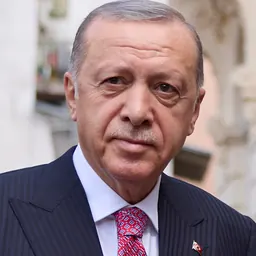
Erdem Gündüz is a Turkish dancer, actor, performance artist, choreographer, and teacher who, as a result of his actions during the 2013–14 protests in Turkey, has become "the face of the protest movement against the Turkish government." He became internationally known as "The Standing Man" in June 2013 when he stood quietly in Istanbul's Taksim Square as a protest against the conservative government of Recep Tayyip Erdoğan.
Gündüz is interested in the use of "improvisation, ritual, and public action as tools for investigating political realities and social movement."
Early life and education Gündüz was born in 1979 in Ankara,
From 1996 to 2002, he studied in the Electrical and Agriculture departments at the Aegean University in Izmir. In 2003 he transferred to the Yıldız Teknik Üniversitesi in Turkey, where he studied art, design, music, and dance, receiving a B.A. degree. In 2007, as a participant in an exchange program, he took a course at the John F. Kennedy Center for the Performing Arts in the U.S. A year later, he attended a course in “ImPulzTanz” at the Vienna International Dance Festival. In 2008 he completed his studies with a Master of Performing Arts at Mimar Sinan University in Istanbul.
Career Gündüz has exhibited art works at the Modern Dance Society and Aegean University in Izmir; at the Middle East Technical University in Ankara; at the Istanbul Contemporary Art Museum, Galata Art Space, and the BM Contemporary Art Center in Istanbul; at the Büyük Salon in İzmit; and at the International Festival of Choreographic Miniatures in Belgrade. He has participated in several group projects in Istanbul and Ankara, and has been involved in a number of "dance performance experiences" and "theater performance experiences" in Istanbul, Ankara, Sarajevo, Venice, and elsewhere. It was two days after police had "swept the square clear of protesters with teargas and water cannon." The Guardian noted that after being "driven from the square and the park", protesters "talked about the need to find new ways of getting their message across."
"Standing man" At around 6 p.m. on 17 June, Gündüz drove to Taksim Square, near Gezi Park, which had been sealed off owing to the widespread anti-government protests. He walked to the center of the square and stood there silently in protest against the crackdown on demonstrations in Gezi Park. He was wearing "a white shirt and dark pants, with his backpack in front of him." He also had several bottles of water at his feet. He was facing the Atatürk Cultural Center, which is decked in Turkish flags and at the top of which hangs a large portrait of the founder of modern Turkey, Mustafa Kemal Atatürk, who established Turkey as a secular state.
Gündüz planned to stand silently in the square for a long period – several days, according to some sources; a full month, according to others. The Huffington Post reported that his "plan was to stay standing still there for a month, breaking every 24 hours for three hours' rest, while a friend took his place."
"For this new protest to work," reported one source, "Gündüz's friends positioned themselves outside the square in a bid to prevent well-wishers trying to approach him. One of them, a young woman named Asma, explained, 'We want to protect him from any provocation...He has to be alone in the middle of the square, otherwise the police will use the pretext of a gathering to clear everyone away.'" Over time, "a human chain formed an immense circle around him. Some of the youths there began arguing over whether to join him or stay well clear, as Gündüz's friends wanted." Some sources maintain that "Gündüz slipped away into the crowd,"
Gündüz became known as "the standing man." The hashtags "standingman" and "duranadam" ("standing man" in Turkish) went viral on Twitter. Many observers have compared his action to that of Tank Man, the single anti-government protester who had blocked a line of tanks in Beijing's Tiananmen Square in 1989.
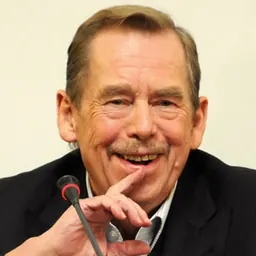
The Human Rights Foundation awarded Gündüz the 2014 Václav Havel Prize for Creative Dissent on 2 May. Gündüz' fellow 2014 laureates are the members of Russian punk protest group Pussy Riot.
Future Although he is aware of photographs of himself "with a bull's-eye on them," Gündüz "is not afraid," saying that even if Erdogan gives in to protesters, "a new government leader will come in and do similar things." Turkey's authoritarian system, he said, "must be eliminated to make room for more democracy and freedom." Although he intends to continue to agitate for change, however, he "isn't planning a repeat performance" of his standing-man act, explaining: "One does something like that once, and that's it."
Don’t just read it —
keep it.
Full-length biographies made to live with: read them, listen on the way to work, watch them tonight.
- E-book
- Audio
- Video
Instant download · yours to keep · every purchase keeps this site free
Important facts
People in Erdem Gündüz's life
Named in this biography and alive at the same time

Related people
Same field, nearest in time



Contemporaries
People whose lives overlapped Erdem Gündüz's




Frequently asked questions
Who is Erdem Gündüz?
Turkish dancer (born 1979)
When was Erdem Gündüz born?
Erdem Gündüz was born in 1979 in Ankara.
What is Erdem Gündüz's occupation?
Erdem Gündüz is a choreographer, artist and dancer.
What nationality is Erdem Gündüz?
Erdem Gündüz is Turkish.
Sources & further reading
Cite this page
APA: Biography.guide. (2026). Erdem Gündüz. https://biography.guide/erdem-gunduz/
MLA: "Erdem Gündüz." Biography.guide, https://biography.guide/erdem-gunduz/.
Chicago: "Erdem Gündüz." Biography.guide. https://biography.guide/erdem-gunduz/.
Data last updated: 2026-09-26 · Spot an error? Report a correction.
Page generated 2026-09-27 05:14 UTC