
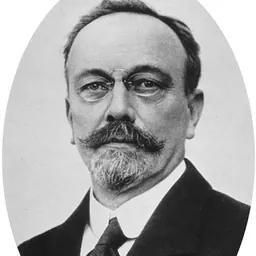
Enrique de la Mora y Palomar
Mexican architect distinguished with the National Prize for Architecture in 1947
About Enrique de la Mora y Palomar
Lived 1907 – 1978 (aged 70). Enrique de la Mora y Palomar was a Mexican architect.
Enrique de la Mora y Palomar (16 June 1907 – 9 May 1978) was a Mexican architect who designed prominent university buildings and Roman Catholic churches in which he experimented with hyperbolic-paraboloid roofs. He is generally regarded, along with the Spaniard Félix Candela, as one of the most famous structural expressionists in Mexico.
De la Mora was distinguished with the National Prize for Architecture in 1947 and some of his works, particularly his Faculty of Philosophy and Letters at the National Autonomous University of Mexico's Ciudad Universitaria, is now part of a UNESCO's World Heritage Site since 2007.
Early life and education In Guadalajara, Mexico Enrique de la Mora y Palomar, affectionately nicknamed "el pelon," was born to well - known architect Manuel de la Mora y del Castillo Negrete, De la Mora would go on to become one of Mexico's most renowned Modern architects.
Career Initially, Enrique de la Mora worked alongside his brother-in-law constructing several buildings before pursuing a solo career in architectural construction in 1938. He would go on to design and construct more than 70 Catholic sites as a self proclaimed artist and pioneer of Mexican ecclesiastical architecture during the Mexican Modernism Movement. Listed below are three of his most notable works that are still around today.
La Purísma Parish In 1940, De la Mora's career would skyrocket after the construction of his design for the Parish of the Immaculate Conception of Mary, or La Purísma Parish, was completed a year later in Monterrey, Mexico. Despite having the same Latin cross base that other Catholic parishes had, the entirely curved roof and walls had never been constructed for such churches before. He worked alongside Spanish - Mexican architect Félix Candela to create these parabolic roofs he is now accredited for, which are known as "shell structures" or cascarones, named after Mexican toys that are emptied egg shells filled with colorful confetti and used for several festivities. However, in order to create such dynamic roofs, one had to have a great understanding of their material. De la Mora knew how to use and manipulate steel and concrete to the point where only a steel frame was needed to carry the weight of the overlaying concrete above without it breaking under pressure. Thus began De la Mora's demand in giving several newer churches a sense of modernity that no other Mexican architect had done previously. Side view of the Chapel of San José del Altillo by Enrique de la Mora est. 1955
Chapel of San José del Altillo One of the churches he was commissioned to build soon after was the Chapel of Our Lady of Soledad, San José del Altillo, now known as the Chapel of Soledad or the Chapel of San José del Altillo, in Mexico City. The drafting of this parish was done in 1955, clearly carrying on De la Mora's dynamic construction of the concave roof and stone walls that hold Kitzia Hofmann's stained glass windows, a Modern Mexican stained glass artist who is known for her work in this chapel. Church of Our Lady of Guadalupe in Madrid by Enrique de la Mora est. circa 1965
Our Lady of Guadalupe Parish Originally meant to be built in Monterrey, Mexico, construction for the Sanctuary of Guadalupe, or Our Lady of Guadalupe Parish, was put on hold for several years due to long - distance communication between government officials in Mexico and in Spain. However, when De la Mora and his team were given the finances to travel to Madrid, Spain in order to begin construction, the mayor of Madrid, José Finat y Escrivá de Romaní, spoke against the project. He felt that the modern nature of the blueprints were rather unseemly, but eventually agreed to it due to the encouragement of his Generalissimo who saw it as a way to strengthen bonds between the Spanish and Mexican government. Therefore, the long - awaited construction of Our Lady of Guadalupe Parish finally began in February 1959 and was completed circa 1965. Within the church is a place called the Refuge for Pilgrims which cannot be seen from outside, but only upon entering the building can it be seen. The building then transforms into a body as its main entrance tunnels the viewer's line of sight towards the heart of this private space located down a set of stairs. Up until his death, De la Mora taught several first generations of students at UNAM as well as the Universidad Iberoamericana. This showed not only his dedication to architectural design, but his dedication in teaching it as well as he created engineering schools such as the Higher School of Engineering and Architecture of the Polytechnic and the Tecnológico de Monterrey built in 1945 which is still around today.
Selected works La Purísima (Monterrey, 1939) Master plan of the Monterrey Institute of Technology and Higher Education (Monterrey, 1945) Faculty of Philosophy and Letters of the National Autonomous University of Mexico, (Mexico City, 1947) Rectorate building of the Monterrey Institute of Technology and Higher Education (Monterrey, 1952) Mexican Stock Exchange (Mexico City, 1955) Nuestra Señora de Guadalupe (Madrid, 1965)
Don’t just read it —
keep it.
Full-length biographies made to live with: read them, listen on the way to work, watch them tonight.
- E-book
- Audio
- Video
Instant download · yours to keep · every purchase keeps this site free
Important facts
People in Enrique de la Mora y Palomar's life
Named in this biography and alive at the same time


Related people
Same field, nearest in time
Contemporaries
People whose lives overlapped Enrique de la Mora y Palomar's


Frequently asked questions
Who was Enrique de la Mora y Palomar?
Mexican architect distinguished with the National Prize for Architecture in 1947
When was Enrique de la Mora y Palomar born?
Enrique de la Mora y Palomar was born on 16 June 1907 in Guadalajara.
When did Enrique de la Mora y Palomar die?
Enrique de la Mora y Palomar died on 9 May 1978 in Mexico City.
What was Enrique de la Mora y Palomar's occupation?
Enrique de la Mora y Palomar was an architect.
What nationality was Enrique de la Mora y Palomar?
Enrique de la Mora y Palomar was Mexican.
Sources & further reading
· Wikipedia: Enrique de la Mora y Palomar
Cite this page
APA: Biography.guide. (2026). Enrique de la Mora y Palomar. https://biography.guide/enrique-de-la-mora-y-palomar/
MLA: "Enrique de la Mora y Palomar." Biography.guide, https://biography.guide/enrique-de-la-mora-y-palomar/.
Chicago: "Enrique de la Mora y Palomar." Biography.guide. https://biography.guide/enrique-de-la-mora-y-palomar/.
Data last updated: 2026-09-20 · Spot an error? Report a correction.
Page generated 2026-09-27 05:33 UTC