
About Empress Cao
Lived 1016 – 1079 (aged 62–63). Empress Cao was a Chinese politician.
Empress Cao (1016 – November 16, 1079) was a Chinese empress consort of the Song dynasty, married to Emperor Renzong of Song. She served as regent of China during the illness of Renzong's successor Emperor Yingzong, from 1063 until 1064.
Life Cao was born in modern Hebei Province. She was the granddaughter of Cao Bin, one of the founding generals of the Song Dynasty. She was a painter, calligrapher, and gardener, and proved to be a wise choice as empress. Unlike her predecessor, Empress Liu, who had bestowed favors upon her own family, Empress Cao refrained from seeking or allowing any special privileges for her relatives.
Empress In the second year of the Ming Dao era (1033), after the death of Empress Dowager Liu, Emperor Renzong deposed his first empress, Guo, under the pretext of her not bearing children, and she was confined to Chang Ning Palace. Emperor Renzong originally intended to appoint Chen, the daughter of a merchant as empress, but this proposal faced opposition from state officials and ministers. Consequently, eighteen-year-old Cao was summoned to the palace and was made empress in September of the following year.
Before marrying Emperor Renzong, Empress Cao had a brief previous marriage. She was known for her virtuous and gentle character, but perhaps due to her less attractive appearance or other reasons, she did not win the emperor's favor and remained somewhat distant from him. Nonetheless, she was wise and tolerant, showing no jealousy towards the emperor's favored concubines, such as Zhang Guifei, Miao Zhaorong, and Yu Jieyu. Empress Cao came from a distinguished military family and was very adept at managing her own affairs. She was well-versed in the classics and history, skilled in the semi-cursive script (a style of calligraphy), and personally led the palace women in planting grains and raising silkworms in the garden.
Empress Cao was respected by state officials, who did not oppose her to assist the emperor in governing the state during his illnesses and attended to state affairs by his side. In 1048, an uprising of the imperial guards took place in her personal palace against the Emperor, and Cao was credited in saving his life. The Emperor initially blamed Cao for the uprising because it had taken place in her palace. However, he accepted the result of the following investigation, which concluded that the rumor that Cao had been behind the uprising was slander.
Empress Cao had no children, and in 1036, the emperor adopted his four-year-old cousin, the future Emperor Yingzong, and appointed him heir to the throne. Cao became the foster mother of the Crown Prince, and she also selected her niece, the future Empress Gao (Song dynasty), to become her daughter-in-law.
Regency In 1063, her adoptive son, Emperor Yingzong, succeeded her spouse as Emperor. Shortly after his succession, however, he became severely ill, and the officials asked her to govern as regent during his illness. Empress Dowager Cao accepted and ruled China as regent for a little over a year. She was cautioned with the bad example of Empress Liu, who was said to have favored her relatives in politics and usurped Imperial rituals for herself, and Cao was careful not to do this during her regency. She gave audience to the councilors behind a lowered screen in a smaller hall rather than in the main throne hall, and she was not given Imperial prerogatives. When the Emperor recovered in 1064, the officials asked her to step down from regency and let him govern by himself, but she refused. Opponent prime minister Han Qi then removed the screen from the audience hall while the court was in session, which made it impossible for her to attend and forced her to retire as regent.
In Popular Fiction Empress Cao was portrayed by Jiang Shuying in Serenade of Peaceful Joy. Empress Cao was portrayed by Yang Qing in The Story of Minglan. She is known as the older sister of Cao Guojiu, the eighth of the Eight Immortals.
Don’t just read it —
keep it.
Full-length biographies made to live with: read them, listen on the way to work, watch them tonight.
- E-book
- Audio
- Video
Instant download · yours to keep · every purchase keeps this site free
Important facts
Family & relationships
People in Empress Cao's life
Named in this biography and alive at the same time
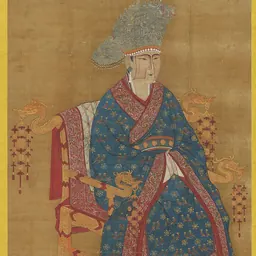
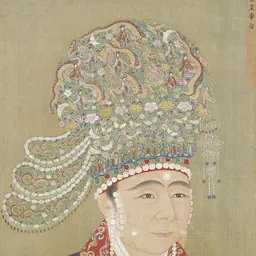
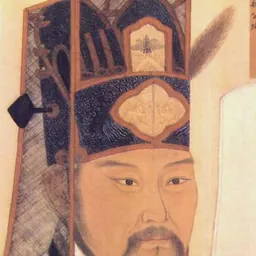
Related people
Same field, nearest in time



Contemporaries
People whose lives overlapped Empress Cao's




Frequently asked questions
Who was Empress Cao?
Chinese empress of Song dynasty (1016-1079); CBDB ID=4220
When was Empress Cao born?
Empress Cao was born in 1016 in Lingshou County.
When did Empress Cao die?
Empress Cao died in 1079.
What was Empress Cao's occupation?
Empress Cao was a politician.
What nationality was Empress Cao?
Empress Cao was Chinese.
Sources & further reading
· DBpedia: Empress Cao (Song dynasty)
Cite this page
APA: Biography.guide. (2026). Empress Cao. https://biography.guide/empress-cao-politician/
MLA: "Empress Cao." Biography.guide, https://biography.guide/empress-cao-politician/.
Chicago: "Empress Cao." Biography.guide. https://biography.guide/empress-cao-politician/.
Data last updated: 2026-09-26 · Spot an error? Report a correction.
Page generated 2026-09-27 05:16 UTC