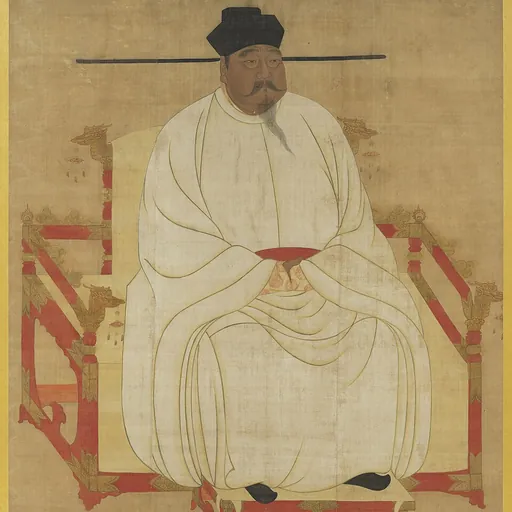
Emperor Taizu of Song
Founding emperor of the Song Dynasty (reigned 960-976)
About Emperor Taizu of Song
Lived 927 – 976 (aged 49). Emperor Taizu of Song was a Chinese military commander and ruler.
Emperor Taizu of Song (21 March 927 – 14 November 976), personal name Zhao Kuangyin, courtesy name Yuanlang, was the founding emperor of the Song dynasty of China. He reigned from 960 until his death in 976. Formerly a distinguished military general of the Later Zhou dynasty, Emperor Taizu came to power after staging a coup d'état and forcing Emperor Gong, the last Later Zhou ruler, to abdicate the throne in his favor.
During his reign, Emperor Taizu conquered the states of Southern Tang, Later Shu, Southern Han, and Jingnan, thus reunifying most of China proper. To strengthen his control, he lessened the power of military generals and relied on civilian officials in administration. He was succeeded by his younger brother, Zhao Kuangyi (Emperor Taizong).
Early life Born in Luoyang to military commander Zhao Hongyin, Zhao Kuangyin grew up excelling in mounted archery. Once, riding an untamed horse without a bridle, he knocked his forehead on the wall above the city gate and fell off, but recovered and chased the horse, eventually subduing it. In the mid-940s, he married Lady He on his father's arrangement. After wandering around for a few years, in 949 he joined the army of Guo Wei, a jiedushi (military governor) of the Later Han dynasty, and helped Guo quell Li Shouzhen's rebellion.
A few days later, when Zhao Kuangyin was drunk in his tent, all the troops had not slept the whole night; they got their weapons and started yelling. Zhao Pu and Zhang Kuangyi, who were guarding the tent, saw the situation and went into the tent to wake up Zhao Kuangyin. When Zhao Kuangyin came out, all the troops yelled, "The army is without a master, we are willing to make the general the new emperor." Allegedly, Zhao Kuangyin took the power reluctantly, only under the urging of his soldiers. The midnight mutiny of officers forcibly urged Zhao Kuangyin to the throne; but, when the officers presented him to the troops as their new commander-in-chief he refused the imperial nomination until they swore unconditional obedience to him as leader. News of the rebellion soon reached the court and chaos erupted. The only person who thought about a resistance was Han Tong, but he was killed by one of Zhao Kuangyin's generals when he reached home.
Upon entering the capital to take his seat on the throne, Zhao Kuangyin made an executive order prohibiting the troops from looting the city or otherwise violating the rights of the population.
This coup would allow Zhao Kuangyin to become emperor in 960. With the gates opened for him, he became emperor with no resistance. Before the chancellor Fan Zhi could say anything, one of Zhao Kuangyin's generals pointed a sword at him and said, "We are without masters. Today, we must have an emperor." After the officials looked at each other and knew it was hopeless to resist; they all bowed down. With the court under control, Zhao Kuangyin was officially proclaimed emperor. The new dynasty's name, Song, was inspired by the army Zhao Kuangyin commanded in Song Prefecture.
After the declaration, Zhao Kuangyin sent the dethroned young emperor Guo Zongxun with his mother to the Western Capital . He personally ordered the Zhao family to receive the Chai family into their family's care for generations. At a certain point during the feast, the new emperor made a speech to the military officers assembled there, which he began by expressing his deep gratitude to each and all of them for placing him on the throne, and that now that he had the power to do so, he wished to reward them to the utmost of his ability; then he went on to say that he thought the present company would all understand that he could not feel at ease on his new throne, with them continuing in command of their various armies of troops: and, he said, that if they duly considered the ramifications of the matter, neither would they. He then sincerely promised that they and their families would live in happiness and harmony, if they accepted his offer to retire with the stated benefits: eventually, none of the generals refused his terms, and thus began a period of relative internal peace within the realm for the duration of the Song dynasty which he thus founded, also better securing the military forces for involvement with the rival surrounding empires.
Many Song and later sources record the story of the "Taizu's Oath", which forbade his successors from killing scholar-officials. However, this story might be a later construct.
Emperor Taizu established a Reserve Treasury as a deposit treasury for the purpose of either attempting to purchase the Sixteen Prefectures or to recover them through funding military action. He launched a military expedition to recover them before his death, and his successor attempted twice more, leading to twenty-five years of sporadic fighting between the Song and the Khitan Liao. After his death, Taizu was interred at the Yongchang Mausoleum, near Gongyi.
After Emperor Taizong, the line of succession passed on to his son and descendants rather than those of Emperor Taizu. However, when Emperor Gaozong (1127–1161) failed to produce an heir, he selected a descendant of Emperor Taizu to be his adopted heir to succeed him in 1161. After 1161, all the subsequent Song emperors were descended from Emperor Taizu through his two sons, Zhao Dezhao and Zhao Defang.
Family
Zhao Kuangyin's family was of fairly modest origins and cannot be traced back with any certainty further than the Later Tang. His great great grandfather Zhao Tiao was an official who served in Zhuozhou in Hebei Province near where the family lived. His descendants Zhao Ting and Zhao Jing also served as local officials in Hebei Province. Zhao Jing's son Zhao Hongyin decided against a civil career and became a military officer instead under Zhuangzong of Later Tang: he knew that in times of disunity it would be a military career that would lead to success.
Empress Xiaohui, of the He clan (; 929–958) Zhao Dexiu, Prince of Teng , first son Zhao Dezhao, Prince Yi of Yan (; 951–979), second son Zhao Delin, Prince of Shu , third son Princess Xiansu (; d. 1008), first daughter Married Wang Chengyan in 970 Princess Xianjing (; d. 1009), second daughter Married Shi Baoji in 972 Empress Xiaoming, of the Wang clan (; 942–964) Zhao Defang, Prince Kanghui of Qin (; 959–981), fourth son Unnamed daughter Unnamed daughter Empress Xiaozhang, of the Song clan (; 952–995) Unknown Princess Xianhui (; d. 999) Married Wei Xianxin in 972 Princess Anhui Princess Xianhui Princess Xuanhui
In popular culture Religion The Great Ancestor of the Song sometimes appears as a door god in Chinese and Taoist temples in partnership with Yang Gun.
Literature The late 16th century novel by Xiong Damu called Records of the Two Songs, South and North is a historical novel about imperial China from roughly 926 to 1022. The first 50 chapters detail the fall of Later Tang and the rise and fall of Later Jin, Later Han and Later Zhou, with a focus on the legends of Zhao Kuangyin. The last 50 chapters focus on the Generals of the Yang Family legends. As a result, the book is in later publications usually split in two separate parts under various different names.
A 1797 novel written by Wu Xuan called Legends of the Flying Dragon proved to be very popular in his time. He expanded the stories on Zhao Kuangyin in Xiong Damu's book and added a wuxia twist to it. Another novel Emperor Taizu of Song Thrice Sets off for Southern Tang, Trapped in Shouzhou City was written by an "Antiquarian Master" in 1858.
While these stories mostly use historical figures as supporting characters, a number of fictional characters became famously associated with Zhao Kuangyin:
Zhao Jingniang , a beautiful teenage girl whom Zhao Kuangyin saved from kidnappers and protected during her journey home. She developed strong romantic feelings about Zhao Kuangyin, but he only regarded her as a younger sister. She eventually committed suicide when a misunderstanding occurred. Zheng En , courtesy name Ziming , the third sworn brother of Zhao Kuangyin and Chai Rong in the stories. He is portrayed as dark-skinned, strong and loyal, with a simple temperament. He was accidentally killed by a drunk Zhao Kuangyin.
Martial arts According to martial arts traditional lore, Emperor Taizu created a Shaolin-based fighting style known as Taizu Changquan (太祖長拳; literally "Taizu Long Fist"). It is the core style of the present-day Long Fist style. Whether he really did invent this style or if it even dates from this time is not actually known.
Films A Chinese 4D film tentatively titled Unifying the Country is planned to be directed by Academy Award–winning Danish director Bille August. The film is said to center on Zhao Kuangyin as well as Li Yu (last ruler of Southern Tang) and Qian Chu (last ruler of Wuyue).
Television series Military Control , a 1988 Hong Kong series starring Gordon Liu as Zhao Kuangyin. Zhao Kuangyin , a 1995 Chinese series starring Zhao Xiguang as Zhao Kuangyin. The Preordained Emperor , a 1998 Taiwanese series starring Lin You-hsing as Zhao Kuangyin. Zhao Kuangyin , a 2013 Chinese series starring Chen Jianbin as Zhao Kuangyin. A Change of Destiny is a 2007 TVB series in which Zhao Kuangyiin appears as a supporting character portrayed by Kwok Fung.
Three independent television series focused on the complex relationships between Zhao Kuangyin, Li Houzhu (Li Congjia) and the many women in their lives. They are: The Sword and the Song , a 1986 Singaporean series starring Lin Mingzhe as Zhao Kuangyin and Li Wenhai as Li Congjia Love, Sword, Mountain & River , a 1996 Taiwanese series starring Wu Hsing-kuo as Zhao Kuangyin and Chin Feng as Li Congjia Li Houzhu and Zhao Kuangyin , a 2006 Chinese series starring Huang Wen-hao as Zhao Kuangyin and Nicky Wu as Li Congjia
Don’t just read it —
keep it.
Full-length biographies made to live with: read them, listen on the way to work, watch them tonight.
- E-book
- Audio
- Video
Instant download · yours to keep · every purchase keeps this site free
Important facts
Family & relationships
People in Emperor Taizu of Song's life
Named in this biography and alive at the same time
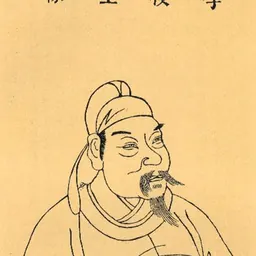
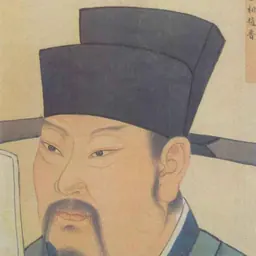



Related people
Same field, nearest in time



Contemporaries
People whose lives overlapped Emperor Taizu of Song's


Frequently asked questions
Who was Emperor Taizu of Song?
founding emperor of the Song Dynasty (reigned 960-976)
When was Emperor Taizu of Song born?
Emperor Taizu of Song was born on 21 March 927 in Later Tang.
When did Emperor Taizu of Song die?
Emperor Taizu of Song died on 14 November 976 in Kaifeng.
What was Emperor Taizu of Song's occupation?
Emperor Taizu of Song was a military commander and ruler.
What nationality was Emperor Taizu of Song?
Emperor Taizu of Song was Chinese.
Sources & further reading
· Wikipedia: Emperor Taizu of Song
· DBpedia: Emperor Taizu of Song
Cite this page
APA: Biography.guide. (2026). Emperor Taizu of Song. https://biography.guide/emperor-taizu-of-song/
MLA: "Emperor Taizu of Song." Biography.guide, https://biography.guide/emperor-taizu-of-song/.
Chicago: "Emperor Taizu of Song." Biography.guide. https://biography.guide/emperor-taizu-of-song/.
Data last updated: 2026-09-29 · Spot an error? Report a correction.
Portrait: Wikimedia Commons · author & licence
Page generated 2026-10-05 04:21 UTC