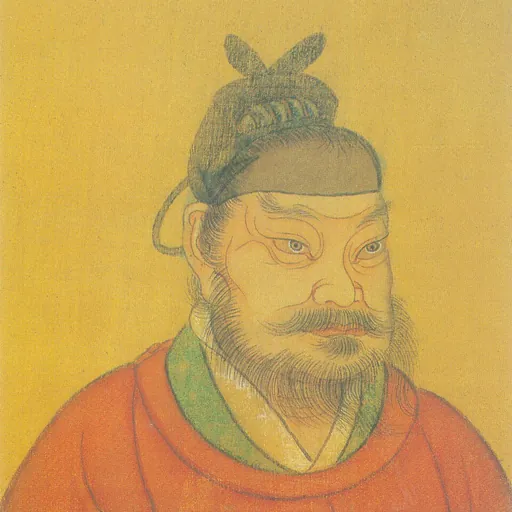
About Emperor Gaozu of Later Jin
Lived 892 – 942 (aged 50). Emperor Gaozu of Later Jin was a Chinese politician.
Background and early life The official history Old History of the Five Dynasties stated that his family was originally descended from Shi Que , an official of the Spring and Autumn period state Wey, through the Han prime minister Shi Fen , and further stated that Shi Fen's descendants fled west when Han fell, settling in what would eventually become Gan Prefecture (甘州, in modern Zhangye, Gansu), apparently in an attempt to try to link Shi with a Han Chinese ancestry despite the Shatuo origin. Under the Old History of the Five Dynasties account, his great-great-grandfather, whose name was given as Shi Jing , followed the Shatuo chieftain Zhuye Zhiyi in submitting to Tang, and was settled, along with the rest of the Shatuo people under Zhuye, in Tang territory. Shi Jingtang's father Nieliji , who was referred to by the Han Chinese name Shi Shaoyong , was said to be a successful general under Zhuye Zhiyi's grandson Li Keyong, who was an important late-Tang warlord, and Li Keyong's son Li Cunxu, who ruled the independent state of Jin after Tang's fall. Most likely, Shi Jingtang descended from the Shatuo sub-tribe Anqing (安慶), specifically, from the Shi clan (石) of ultimately Sogdian origin.
Shi Jingtang was born in 892, during the reign of Emperor Zhaozong of Tang, in Taiyuan. His mother was stated to be a Lady He, and it was not stated whether she was Shi Shaoyong's wife or concubine. Li Cunxu subsequently made his adoptive brother (Li Keyong's adoptive son) Li Siyuan, a major general, the prefect of Dai Prefecture (代州 in modern Shuozhou, Shanxi). While Li Siyuan served as the prefect of Dai, he became impressed with Shi Jingtang and gave his Empress Li to Shi in marriage. Shi subsequently served under Li Siyuan in campaigns, becoming one of the two prominent officers under Li Siyuan (along with Li Siyuan's adoptive son Li Congke) due to his battlefield accomplishments.
Service during Later Tang
During Li Cunxu's reign In 923, Li Cunxu declared himself emperor of a new state called the Later Tang. He subsequently carried out a campaign that destroyed Later Liang later in the year—a campaign in wherein Li Siyuan played a prominent role. Shi Jingtang and Li Congke both had battlefield accomplishments during the campaign, but Shi did not receive prominent honors as his contributions were not well-known. According to traditional accounts, it was because he did not like to brag about them. However, Li Siyuan was aware of his contributions. Before Li Siyuan's and Li Cunxu's armies could engage each other, however, Li Cunxu was killed in a mutiny at Luoyang itself. Li Siyuan subsequently entered the city and claimed the title of regent.
During Li Siyuan's reign Li Siyuan appeared to be initially hesitant to take the throne himself, as at that time, Li Cunxu's son Li Jiji the Prince of Wei, who had been the commander of the army that destroyed Former Shu, was returning from the Shu lands and heading toward Luoyang with his army, and he initially signaled support for Li Jiji. However, after apparently concluding that he would not be tolerated if Li Jiji became emperor, he sent Shi Jingtang and Li Congke to take up defensive positions at Shan Prefecture (陝州, in modern Sanmenxia, Henan) and Hezhong Municipality (河中, in modern Yuncheng, Shanxi) respectively, to block Li Jiji. Li Jiji's own soldiers began to desert, and he committed suicide. Li Jiji's subordinate Ren Huan took over command of the remaining army and rendezvoused with Shi, signaling support for Li Siyuan. With Li Jiji dead, Li Siyuan claimed the throne.
In 930, the two main military governors of the Shu lands, both commissioned by Li Cunxu before his death—Meng Zhixiang the military governor of Xichuan Circuit (西川 headquartered in modern Chengdu, Sichuan) and Dong Zhang the military governor of Dongchuan Circuit (東川 headquartered in modern Mianyang, Sichuan)—fearing that Li Siyuan's powerful chief of staff An Chonghui was intending to act against them, rebelled together. Li Siyuan sent Shi to command the army against the two circuits—a commission that Shi accepted despite his misgivings about the campaign. Shi quickly advanced to Jianmen Pass, but, after capturing it, could not advance further easily against the Dongchuan and Xichuan armies. When Li Siyuan subsequently sent An to the front to monitor the campaign, Shi took the opportunity to write to Li Siyuan, explaining his misgivings from the campaign, and Li Siyuan began to be convinced. Li Siyuan subsequently forced An into retirement and then killed An, and then recalled Shi's army (although Shi already began to retreat before receiving the retreat orders). Li Siyuan subsequently again made him the deputy commander of the imperial guards (by this point, serving as the deputy to another biological son of Li Siyuan's, Li Congrong the Prince of Qin). He was also given the military governorship of Heyang Circuit (河陽, headquartered in modern Jiaozuo, Henan).
Li Siyuan became deathly ill in late 933. Li Congrong, believing that Li Siyuan's chiefs of staff Zhu Hongzhao and Feng Yun would try to divert the succession away from him, decided to try to forcibly take power, but his army was defeated by the imperial guards, and he was killed. In the aftermaths, Li Siyuan summoned Li Conghou back from Tianxiong (where Li Conghou was serving as military governor), but died before Li Conghou arrived at Luoyang. Li Conghou subsequently arrived and took the throne.
After Shi's return to Hedong, there were repeated incursions of Later Tang's northern circuits by Later Tang's northern rival Khitan Empire. Both Shi and Zhao Dejun repeatedly requested reinforcements, and they were allowed to amass troops and supplies at their circuits. As Shi was still apprehensive that Li Congke might be suspicious of him, Shi maintained an information network at Luoyang to keep himself informed of the emperor's actions—the network included two of Shi's own sons, who served in the imperial guards (whose names were variously recorded, and one of whom might have been a brother whom he adopted as a son), and the servants of Empress Dowager Cao. and in the Zizhi Tongjian as Shi Chongyin and Shi Chongyi .
Fan rebelled in summer 937. Shi mobilized his army against Fan, with the main armies under Yang Guangyuan and Shi's brother-in-law Du Chongwei. The central Later Jin realm was, for a time, thrown into disarray, after Fan was able to persuade another Later Jin general, Zhang Congbin , into rebelling at Luoyang, and Zhang was even able to kill Shi's son Shi Chongxin and Shi Chongyi , during his revolt. Yang's soldiers also tried to persuade him to rebel against Later Jin as well, offering to support him as emperor, but Yang refused their overture. Du was soon thereafter able to defeat Zhang, who drowned as he was retreating, ending his part of the rebellion. Fan, believing that he was nearing defeat, offered to surrender. Shi initially refused to accept his surrender. Yang could not capture Guangjin quickly, however. In fall 938, Shi agreed to accept Fan's surrender, and Fan subsequently did, ending the rebellion.
Meanwhile, An Chongrong the military governor of Chengde, who had viewed Shi's submissive attitude toward Liao as a sign of weakness, was himself considering rebelling against Later Jin. He entered into an alliance with An Congjin the military governor of Shannan East Circuit (山南東道, headquartered in modern Xiangyang, Hubei), who was similarly considering to rebel. He also continuously provoked Liao by intercepting its emissaries and killing them. In summer 941, he issued a declaration in which he called on Shi to renounce the peace agreement with Liao and attack it to recapture the territories and peoples that Liao had previously captured, but was not yet openly breaking with Shi. In response, Shi, under Sang Weihan's advice, headed to Guangjin—since then renamed back to Yedu—to prepare for a potential campaign against An Chongrong. Anticipating that An Congjin might rebel when he left Daliang, Shi, under the advice of He Ning, left his nephew Shi Chonggui, whom Shi had previously adopted as his son, in charge of Daliang with authority to immediately commission generals to act against An Congjin.
In winter 941, hearing that Shi Jingtang had left Daliang for Yedu, An Congjin rebelled. Shi Chonggui immediately, under authority previously given to him by Shi Jingtang, commissioned the general Gao Xingzhou to assume overall command against An Congjin. Upon hearing of An Congjin's rebellion, An Chongrong also rebelled, and Shi sent Du Chongwei against him. Gao quickly defeated An Congjin's advance army, forcing An Congjin into returning to Shannan East's capital Xiang Prefecture to try to defend it. Meanwhile, Du engaged An Chongrong, and An Chongrong was initially successful in the engagement. At this time, though, An Chongrong's officer Zhao Yanzhi tried to surrender to the imperial forces—and while the imperial forces killed him, Zhao's attempted surrender caused a general panic in An Chongrong's army, causing a collapse and forcing An Chongrong to flee back to Chengde's capital Zhen Prefecture . Shi Chongyin (adopted), listed as the third son in the Wudai Huyao. Born Jingtang's younger brother (though possibly not biologically related) and died young. The syllable Chong was added to his name to put him in the same generation as Shi Jingtang's other sons. He is also referred to as Shi Chongyun due to naming taboos and is sometimes confused with Shi Chongyi possibly due to both posthumously receiving the title of Prince of Tan. Shi Chongxin , listed as the fourth son in the Wudai Huyao. Born 918, killed by Zhang Congbin 937, posthumously created the Prince of Yi (created 942) and then the Prince of Chu (created 943) Shi Chongyi ( or ), listed as the second son in the Wudai Huyao. Born 919, killed by Zhang Congbin 937, posthumously created the Prince of Shou and Prince of Tan. Shi Suyi , born no later than 924, created the Princess of Chang'an in 937, married to Yang Chengzuo in 939. Died May 941, posthumously created the Princess of Qin that month, then Princess of Liang in September 941. Her three daughters were also created Princesses in May 942. Shi Chongjin , listed as the fifth son in the Wudai Huyao, posthumously created the Prince of Kui (created 942) Shi Chonggao , listed as the sixth son in the Wudai Huyao, name posthumously bestowed, né Fengliu , posthumously created the Prince of Chen (created 942) Shi Chongrui , listed as the seventh son in the Wudai Huyao. He was military governor of Xuzhou but not made a Prince.
Ancestry
Don’t just read it —
keep it.
Full-length biographies made to live with: read them, listen on the way to work, watch them tonight.
- E-book
- Audio
- Video
Instant download · yours to keep · every purchase keeps this site free
Important facts
Family & relationships
People in Emperor Gaozu of Later Jin's life
Named in this biography and alive at the same time


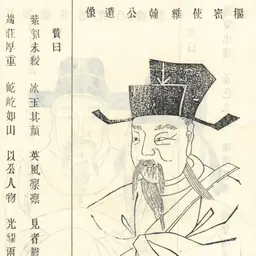
Related people
Same field, nearest in time
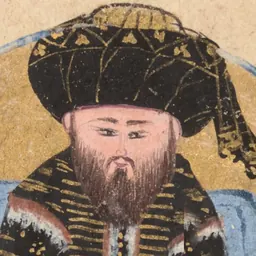
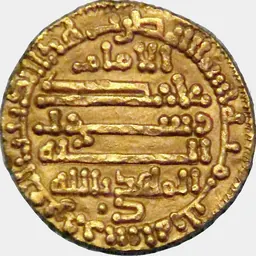
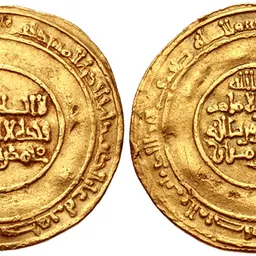
Contemporaries
People whose lives overlapped Emperor Gaozu of Later Jin's
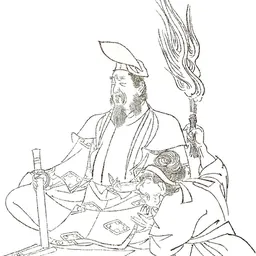
Frequently asked questions
Who was Emperor Gaozu of Later Jin?
Later Jin emperor (892-942)
When was Emperor Gaozu of Later Jin born?
Emperor Gaozu of Later Jin was born on 30 March 892 in Taiyuan.
When did Emperor Gaozu of Later Jin die?
Emperor Gaozu of Later Jin died on 28 July 942 in Ye.
What was Emperor Gaozu of Later Jin's occupation?
Emperor Gaozu of Later Jin was a politician.
What nationality was Emperor Gaozu of Later Jin?
Emperor Gaozu of Later Jin was Chinese.
Sources & further reading
· Wikipedia: Emperor Gaozu of Later Jin
Cite this page
APA: Biography.guide. (2026). Emperor Gaozu of Later Jin. https://biography.guide/emperor-gaozu-of-later-jin/
MLA: "Emperor Gaozu of Later Jin." Biography.guide, https://biography.guide/emperor-gaozu-of-later-jin/.
Chicago: "Emperor Gaozu of Later Jin." Biography.guide. https://biography.guide/emperor-gaozu-of-later-jin/.
Data last updated: 2026-09-26 · Spot an error? Report a correction.
Portrait: Wikimedia Commons · author & licence
Page generated 2026-10-05 03:55 UTC