
About Emmett Matthew Hall
Lived 1898 – 1995 (aged 97). Emmett Matthew Hall was a Canadian lawyer and judge.
Emmett Matthew Hall, (November 29, 1898 – November 12, 1995) was a Canadian lawyer, civil liberties advocate, Supreme Court of Canada judge and public policy advocate. He is considered one of the fathers of the Canadian system of Medicare, along with his fellow Saskatchewanian, Tommy Douglas.
Early life Hall was born in Saint-Colomban, Quebec, the fourth of eleven children of James Hall and Alice Shea. His parents were descendants of generations of impoverished farmers of Irish descent in the Saint-Colomban area. Seeking a better life, his family moved to Saskatoon, Saskatchewan in 1910, when Hall was age 12, to take over a dairy farm. The Halls were Roman Catholics, and Emmett served as an altar boy at Saint Paul's Cathedral in Saskatoon.
In 1922, Hall married Isabel Parker, a legal stenographer from Humboldt, Saskatchewan. They had two children, John Hall, who became a professor of medicine at Harvard Medical School, and Marian Wedge, who like her father, entered the legal profession and was appointed to the Saskatchewan Court of Queen's Bench. His clients were farmers who were being sued by the owner of some free-range horses. The horses had eaten a large amount of grain which had spilled from the farmers' grain bins. One of the horses died from over-eating, and others were sickened. The Supreme Court ruled that Hall's clients had taken reasonable steps to store their grain from spillage and dismissed the action against them. The case was the first of Hall's six appearances in the Supreme Court. Hall was successful in five of those cases, losing only one case. In one of his successful cases, the Supreme Court paid him the ultimate accolade for an appellate lawyer: the Court did not find it necessary to call on him in oral argument and ruled in his favour based solely on Hall's written arguments.
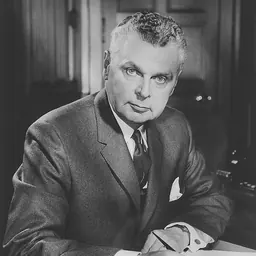
Judicial career In 1957, Hall was appointed Chief Justice of the Court of Queen's Bench for Saskatchewan by his old law school classmate, John Diefenbaker, who had just won a minority government. He was elevated to the Saskatchewan Court of Appeal in 1961, when he was appointed Chief Justice of Saskatchewan. The next year, Diefenbaker appointed him to the Supreme Court of Canada. Hall served on the high court until his retirement in 1973.
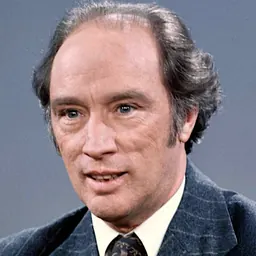
One of Hall's most influential judgments was Calder v. British Columbia (Attorney General), dealing with aboriginal title. Hall wrote compelling reasons arguing that aboriginal title existed in British Columbia under the common law. The Supreme Court divided on the issue, 3-3, so his opinion was not implemented. However, his judgment is credited with persuading Prime Minister Pierre Trudeau to open land-claim negotiations with First Nations. Hall's judgment also contributed to the entrenchment of aboriginal rights in the Constitution in 1982.
Public policy advocate
Royal Commission on Health Services In 1961, while Chief Justice of the Queen's Bench, Hall was appointed by the Diefenbaker government to chair a royal commission on the national health system. The question of health care was a major issue at the time. In the 1960 Saskatchewan general election, the CCF government of Tommy Douglas had run on a platform of implementing a universal health care plan. The issue was extremely controversial. When the Saskatchewan government enacted the Saskatchewan Medical Care Insurance Bill in the fall of 1961, it triggered a strike by the doctors in Saskatchewan, which led to some changes to the provincial plan. The federal government's choice of Hall to lead the commission reassured the medical community, which had pressed for an inquiry to look at alternatives to the universal medicare system proposed by the Saskatchewan government. and took some time to reach a decision. Eventually, the federal government implemented the medicare system which was at the core of Hall's recommendations, on a cost-share basis with the provinces. The new system came into force in July, 1968. Gruending wrote that Hall was a study in contradictions. A member of the Establishment, he was more interested in justice than in privilege. Despite reaching the elite heights of his profession, he never forgot his own humble origins or the needs of the ordinary people that he encountered during his long life. That was also reflected in his work on the Supreme Court, where he defended civil liberties and protected minority rights. Hall believed that Canadian society ought to embrace ethnic diversity, alleviate poverty, and redress the shameful treatment of Aboriginal peoples.
On his retirement from the Supreme Court in 1974, Hall was made a Companion of the Order of Canada, "for a lifetime of service to the law and for his contributions to the improvement of health services and education."
At the age of 81, as he was wrapping up his second inquiry into health care, he was asked by a reporter when he would stop his activities. "When they bury me," Hall replied. He remained active well into his 90s. During the federal election of 1993, he strongly criticised Preston Manning, the leader of the Reform Party of Canada, for proposing user fees for health care and the complete withdrawal of the federal government from the medicare system.
Hall suffered a stroke in late 1993, shortly after celebrating his 95th birthday at a public dinner in his honour. The stroke confined him to a wheelchair.
Hall died on November 12, 1995, just short of his 97th birthday.
Don’t just read it —
keep it.
Full-length biographies made to live with: read them, listen on the way to work, watch them tonight.
- E-book
- Audio
- Video
Instant download · yours to keep · every purchase keeps this site free
Important facts
People in Emmett Matthew Hall's life
Named in this biography and alive at the same time





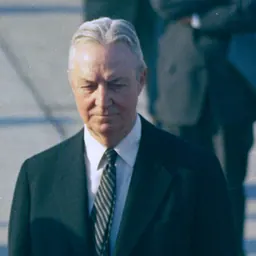
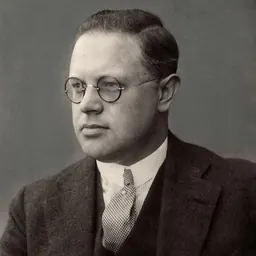
Related people
Same field, nearest in time



Contemporaries
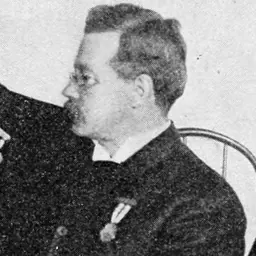
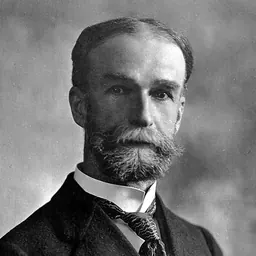
People whose lives overlapped Emmett Matthew Hall's



Frequently asked questions
Who was Emmett Matthew Hall?
Canadian jurist and civil liberties advocate (1898-1995)
When was Emmett Matthew Hall born?
Emmett Matthew Hall was born on 9 November 1898 in Saint-Colomban.
When did Emmett Matthew Hall die?
Emmett Matthew Hall died on 12 November 1995 in Saskatoon.
What was Emmett Matthew Hall's occupation?
Emmett Matthew Hall was a lawyer and judge.
What nationality was Emmett Matthew Hall?
Emmett Matthew Hall was Canadian.
Sources & further reading
· Wikipedia: Emmett Matthew Hall
· DBpedia: Emmett Matthew Hall
Cite this page
APA: Biography.guide. (2026). Emmett Matthew Hall. https://biography.guide/emmett-matthew-hall/
MLA: "Emmett Matthew Hall." Biography.guide, https://biography.guide/emmett-matthew-hall/.
Chicago: "Emmett Matthew Hall." Biography.guide. https://biography.guide/emmett-matthew-hall/.
Data last updated: 2026-09-20 · Spot an error? Report a correction.
Page generated 2026-09-27 05:02 UTC