
Emmanuelle Charpentier
French microbiologist and biochemist (born 1968)
About Emmanuelle Charpentier
Born 1968. Emmanuelle Charpentier is a French microbiologist, biochemist, geneticist, immunologist, university teacher and scientist, known for CRISPR.
Early life and education Charpentier's paternal grandfather, surnamed Sinanian, was an Armenian who escaped to France during the Armenian Genocide and met his wife in Marseille. Charpentier was born in 1968 in Juvisy-sur-Orge in France and studied biochemistry, microbiology, and genetics at the Pierre and Marie Curie University (which became the Faculty of Science of Sorbonne University) in Paris. She was a graduate student at the Institut Pasteur from 1992 to 1995 and was awarded a research doctorate. Charpentier's PhD work investigated molecular mechanisms involved in antibiotic resistance.
Career and research
Charpentier worked as a university teaching assistant at Pierre and Marie Curie University from 1993 to 1995 and as a postdoctoral fellow at the Institut Pasteur from 1995 to 1996. She moved to the US and worked as a postdoctoral fellow at Rockefeller University in New York from 1996 to 1997. During this time, Charpentier worked in the lab of microbiologist Elaine Tuomanen. Tuomanen's lab investigated how the pathogen Streptococcus pneumoniae utilizes mobile genetic elements to alter its genome. Charpentier also helped to demonstrate how S. pneumoniae develops vancomycin resistance.
Charpentier was an assistant research scientist at the New York University Medical Center from 1997 to 1999. She worked in the lab of Pamela Cowin, a skin-cell biologist interested in mammalian gene manipulation. Charpentier published a paper exploring the regulation of hair growth in mice. She held the position of Research Associate at the St. Jude Children's Research Hospital and at the Skirball Institute of Biomolecular Medicine in New York from 1999 to 2002. From 2004 to 2006, she was lab head and an assistant professor at the Department of Microbiology and Immunobiology. In 2006, she became a privatdozentin (Microbiology) and received her habilitation at the Centre of Molecular Biology. From 2006 to 2009 she worked as lab head and associate professor at the Max F. Perutz Laboratories. She moved to Germany to act as department head and W3 Professor at the Helmholtz Centre for Infection Research in Braunschweig and the Hannover Medical School from 2013 until 2015. In 2014, she became an Alexander von Humboldt Professor. In 2018, she became the founding and acting director of the Max Planck Unit for the Science of Pathogens.
CRISPR/Cas9 Charpentier is best known for her Nobel-winning work of deciphering the molecular mechanisms of a bacterial immune system, called CRISPR/Cas9, and repurposing it into a tool for genome editing. In particular, she uncovered a novel mechanism for the maturation of a non-coding RNA which is pivotal in the function of CRISPR/Cas9, demonstrating that a small RNA called tracrRNA is essential for the maturation of crRNA.
In 2011, Charpentier met Jennifer Doudna at a research conference in San Juan, Puerto Rico, and they began a collaboration. Researchers worldwide have employed this method successfully to edit the DNA sequences of plants, animals, and laboratory cell lines. Since its discovery, CRISPR has revolutionized genetics by allowing scientists to edit genes to probe their role in health and disease and to develop genetic therapies with the hope that it will prove safer and more effective than the first generation of gene therapies.
Awards
In 2015, Time magazine designated Charpentier one of the Time 100 most influential people in the world (together with Jennifer Doudna).
Charpentier's awards are:
Nobel Prize in Chemistry, the Breakthrough Prize in Life Sciences, the Louis-Jeantet Prize for Medicine, the Gruber Foundation International Prize in Genetics, the Leibniz Prize, the Tang Prize, the Japan Prize, and the Kavli Prize in Nanoscience. She has won the BBVA Foundation Frontiers of Knowledge Award jointly with Jennifer Doudna and Francisco Mojica.
2009 – Theodor Körner Prize for Science and Culture 2011 – The Fernström Prize for young and promising scientists 2014 – Alexander von Humboldt Professorship 2014 – The Göran Gustafsson Prize for Molecular Biology (Royal Swedish Academy of Sciences) 2014 – Dr. Paul Janssen Award for Biomedical Research (shared with Jennifer Doudna) 2014 – The Jacob Heskel Gabbay Award (shared with Feng Zhang and Jennifer Doudna) 2015 – Time 100: Pioneers (shared with Jennifer Doudna) 2015 – The Breakthrough Prize in Life Sciences (shared with Jennifer Doudna) 2015 – Louis-Jeantet Prize for Medicine 2015 – The Ernst Jung Prize in Medicine 2015 – Princess of Asturias Awards (shared with Jennifer Doudna) 2015 – Gruber Foundation International Prize in Genetics (shared with Jennifer Doudna) 2015 – , from German National Academy of Science, Leopoldina 2015 – Massry Prize 2015 – Hansen Family Award 2016 – Otto Warburg Medal 2016 – L'Oréal-UNESCO "For Women in Science" Award 2016 – Leibniz Prize from the German Research Foundation 2016 – Canada Gairdner International Award (shared with Jennifer Doudna and Feng Zhang) 2016 – Warren Alpert Foundation Prize 2016 – Paul Ehrlich and Ludwig Darmstaedter Prize (jointly with Jennifer Doudna) 2016 – Tang Prize (shared with Jennifer Doudna and Feng Zhang) 2016 – HFSP Nakasone Award (jointly with Jennifer Doudna) 2016 – Knight (Chevalier) French National Order of the Legion of Honour 2016 – Meyenburg Prize 2016 – Wilhelm Exner Medal 2016 – John Scott Award 2017 – BBVA Foundation Frontiers of Knowledge Award (jointly with Jennifer Doudna and Francisco Mojica) 2017 – Japan Prize (jointly with Jennifer Doudna) 2017 – Albany Medical Center Prize (jointly with Jennifer Doudna, Luciano Marraffini, Francisco Mojica, and Feng Zhang) 2017 – Pour le Mérite 2018 – Kavli Prize in Nanoscience (jointly with Jennifer Doudna and Virginijus Šikšnys) 2018 – Austrian Decoration for Science and Art 2018 – Bijvoet Medal of the Bijvoet Center for Biomolecular Research of Utrecht University 2018 – Harvey Prize (jointly with Jennifer Doudna and Feng Zhang) 2019 – Scheele Award of the Swedish Pharmaceutical Society 2019 – Knight Commander's Cross of the Order of Merit of the Federal Republic of Germany 2020 – Wolf Prize in Medicine (jointly with Jennifer Doudna) 2020 – Nobel Prize in Chemistry (jointly with Jennifer Doudna)
Honorary doctorate degrees 2016 – École Polytechnique Fédérale de Lausanne 2016 – KU, (Catholic University) Leuven, Belgium 2016 – New York University (NYU) 2017 – Faculty of Medicine, Umeå University, Sweden 2017 – University of Western Ontario, London, Canada 2017 – Hong Kong University of Science and Technology 2018 – Université catholique de Louvain, Belgium 2018 – University of Cambridge 2018 – University of Manchester 2019 – McGill University, Canada 2024 – University of Saskatchewan, Canada 2024 – University of Perugia, Perugia, Italy 2026 – University of Ottawa, Ottawa, Canada
Memberships 2014 – European Molecular Biology Organisation 2015 – National Academy of Sciences Leopoldina 2016 – Berlin-Brandenburg Academy of Sciences 2016 – Austrian Academy of Sciences 2016 – Royal Swedish Academy of Sciences 2017 – U.S. National Academy of Sciences, Foreign Associate 2017 – National Academy of Technologies of France 2017 – French Académie des sciences 2018 – European Academy of Sciences and Arts 2021 – Pontifical Academy of Sciences 2024 – Foreign Member of the Royal Society
In popular culture In 2019, Charpentier was a featured character in the play STEM FEMMES by Philadelphia theater company Applied Mechanics.
In 2021, Walter Isaacson detailed the story of Jennifer Doudna and her collaboration with Charpentier leading to the discovery of CRISPR/CAS-9, in the biography The Code Breaker: Jennifer Doudna, Gene Editing, and the Future of the Human Race.
Don’t just read it —
keep it.
Full-length biographies made to live with: read them, listen on the way to work, watch them tonight.
- E-book
- Audio
- Video
Instant download · yours to keep · every purchase keeps this site free
Important facts
more
Emmanuelle Petitfrère, E. M. Petitfrère, E. Petitfrère, Charpentier, Emmanuelle Marie, Charpentier EPeople in Emmanuelle Charpentier's life
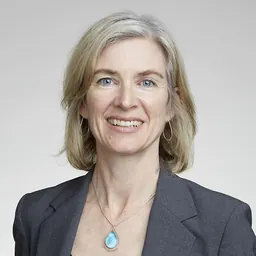
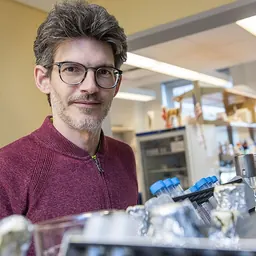
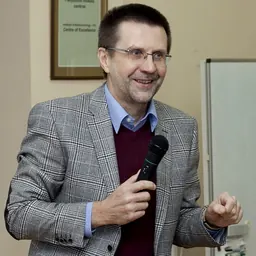
Named in this biography and alive at the same time





Related people
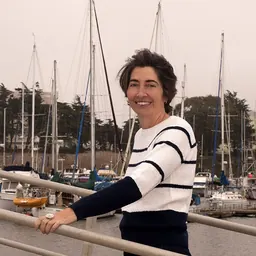
Same field, nearest in time


Contemporaries
People whose lives overlapped Emmanuelle Charpentier's


Frequently asked questions
Who is Emmanuelle Charpentier?
French microbiologist and biochemist (born 1968)
When was Emmanuelle Charpentier born?
Emmanuelle Charpentier was born on 11 December 1968 in Juvisy-sur-Orge.
What is Emmanuelle Charpentier's occupation?
Emmanuelle Charpentier is a microbiologist, biochemist, geneticist, immunologist, university teacher and scientist.
What is Emmanuelle Charpentier known for?
Emmanuelle Charpentier is known for CRISPR.
What nationality is Emmanuelle Charpentier?
Emmanuelle Charpentier is French.
Sources & further reading
· Wikipedia: Emmanuelle Charpentier
· DBpedia: Emmanuelle Charpentier
Cite this page
APA: Biography.guide. (2026). Emmanuelle Charpentier. https://biography.guide/emmanuelle-charpentier/
MLA: "Emmanuelle Charpentier." Biography.guide, https://biography.guide/emmanuelle-charpentier/.
Chicago: "Emmanuelle Charpentier." Biography.guide. https://biography.guide/emmanuelle-charpentier/.
Data last updated: 2026-09-20 · Spot an error? Report a correction.
Page generated 2026-09-27 05:28 UTC