
About Emma Griffin
Born 1972. Emma Griffin is a British historian and university teacher.
Emma Griffin is professor of modern British history at Queen Mary University of London with particular interests in the Industrial Revolution and in social and gender history. She was the President of the Royal Historical Society 2020-2024 and she is the author of five books. Her second book, Blood Sport, was awarded the Lord Aberdare Prize for Literary History. She has been editor of the journal History and co-editor of The Historical Journal. She was part of the Living with Machines research project – a multi-disciplinary digital history project based at The Alan Turing Institute and the British Library, which sought to rethink the impact of technology on the lives of ordinary people during the Industrial Revolution.
Education and academic positions Griffin was educated at the University of London (where she studied history) and the University of Cambridge, having been a member of Trinity College. She held a British Academy postdoctoral fellowship and visiting positions at the University of Paris and Sheffield University before joining the University of East Anglia as a junior lecturer in 2005. She left UEA in 2023 and is now Professor of modern British History at Queen Mary, University of London. Griffin was the editor of History: The Journal of the Historical Association from 2010 to 2018. She has also edited Cultural and Social History served as one of the Literary Directors of the Royal Historical Society, and has been a co-editor of The Historical Journal.
Professional career Griffin is a widely published historian of modern Britain, best known for her work on the lives of ordinary people in Britain during the Industrial Revolution. She has published five books and several articles in high impact journals, including Past & Present, The American Historical Review and The English Historical Review. She has performed active citizenship for the profession through her extensive editorial work for learned journals and service to learned societies, most notably the Royal Historical Society, of which she was President 2020-2024. She had made regular appearances on radio and television.
Earlier work Griffin's early work grew out of her 2000 Cambridge University PhD looking at popular recreation in Britain during the long eighteenth century. This resulted in two books: England’s Revelry: A History of Popular Sports and Pastimes, 1660–1800 (Oxford University Press, 2005) and Blood Sport: A History of Hunting in Britain (Yale University Press, 2007)
Liberty’s Dawn: A People’s History of the Industrial Revolution Source:
In the 2010s, Griffin's work moved away from popular culture and started to focus on the British Industrial Revolution. In 2010, she published A Short History of the British Industrial Revolution (Palgrave, 2010), in which she argued that the British Industrial Revolution occurred later than has commonly been claimed. Griffin argued that many of the great inventions of the Industrial Revolution were quite traditional in nature, and it was the development of the steam engine and the application of coal to industrial processes that marked the switch towards industrialisation proper. She dated this development to the 1830s, several decades later than many earlier attempts to date the Industrial Revolution.
In 2013, she published Liberty's Dawn: A People's History of the Industrial Revolution (Yale University Press, 2013), in which she turned attention away from the causes and timing of the Industrial Revolution to focus on the impact of industrialisation on the lives and standards of living of ordinary people. She argued against the pessimistic interpretation of the impact of industrialisation on standards of living. She subsequently developed this argument in an article for Past & Present. In this she made the observation that writing about the social consequences of the Industrial Revolution has become increasingly dominated by the field of Economic history. She argued that social and cultural approaches offer a valuable perspective that ought to be included. She took a family perspective and used working-class autobiographies as her evidence. In this way, she argued that traditional economic history methods are not sensitive enough to pick up the reality and complexity of living standards at the individual level.
Broadcasting Griffin has appeared regularly on BBC radio and television as a contributor, writer and presenter. She is represented by agents at Knight Ayton and the Wylie Agency.
Awards and decorations 2001: Thirlwall Prize and Seeley Medal 2005 Lord Aberdare Prize for Sport History for England's Revelry 2007 Lord Aberdare Prize for Literary History for Blood Sport 2012 AHRC/BBC New Generation Thinkers Award
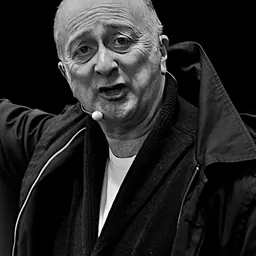
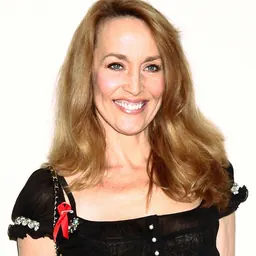
Radio and television 2019: BBC Radio 4: The Motherhood Myth, writer and presenter 2018: BBC Radio 4: Mind the Gender Pay Gap, writer and presenter. 2018: BBC Radio 4: In our Time (The Workhouse). 2018: BBC Radio 3: Freethinking: What happened to the working class? 2017: BBC Radio 3: A Reflection on Worrying, writer and presenter 2017: BBC Radio 4: Clocking On, writer and presenter 2015: BBC Radio 4: Voices of the Industrial Revolution: Women's stories, writer and presenter 2015: BBC 1: Who do you Think You Are (Jerry Hall), contributor 2015: BBC Radio 4: In Our Time (The American Civil War and Britain) 2014: More 4: The Real Mill with Tony Robinson, consultant and co-presenter 2014: BBC Radio 4: Voices of the Industrial Revolution, writer and presenter 2012: BBC Radio 4: Out Foxed, writer and presenter.
Selected publications England's Revelry: A History of Popular Sports and Pastimes, 1660–1800 (Oxford University Press, 2005) Blood Sport: A History of Hunting in Britain (Yale University Press, 2007) A Short History of the British Industrial Revolution (Palgrave, 2010) Liberty's Dawn: A People's History of the Industrial Revolution (Yale University Press, 2013) Bread Winner: An Intimate History of the Victorian Economy (Yale University Press, 2020)
Don’t just read it —
keep it.
Full-length biographies made to live with: read them, listen on the way to work, watch them tonight.
- E-book
- Audio
- Video
Instant download · yours to keep · every purchase keeps this site free
Important facts
People in Emma Griffin's life
Named in this biography and alive at the same time

Related people
Same field, nearest in time


Contemporaries
People whose lives overlapped Emma Griffin's


Frequently asked questions
Who is Emma Griffin?
historian
When was Emma Griffin born?
Emma Griffin was born in 1972.
What is Emma Griffin's occupation?
Emma Griffin is a historian and university teacher.
What nationality is Emma Griffin?
Emma Griffin is British.
Sources & further reading
Cite this page
APA: Biography.guide. (2026). Emma Griffin. https://biography.guide/emma-griffin/
MLA: "Emma Griffin." Biography.guide, https://biography.guide/emma-griffin/.
Chicago: "Emma Griffin." Biography.guide. https://biography.guide/emma-griffin/.
Data last updated: 2026-09-24 · Spot an error? Report a correction.
Portrait: Wikimedia Commons · author & licence
Page generated 2026-09-27 05:09 UTC