
Emma Dabiri
Irish television and radio presenter, writer and researcher
About Emma Dabiri
Born 1979. Emma Dabiri is an Irish writer, academic, television presenter, radio personality, presenter and fashion model.
Biography Dabiri was born in Dublin, Ireland, to an Irish mother and a Nigerian Yoruba father. After spending her early years in Atlanta, Georgia, in the United States, her family returned to Dublin when Dabiri was five years old. She says that her experience of growing up isolated and as the target of frequent racism informed her perspective. After leaving school, she moved to London to study African Studies at the School of Oriental and African Studies (SOAS), her academic career leading to broadcast work, including co-presenting BBC Four's Britain's Lost Masterpieces, Channel 4 documentaries such as Is Love Racist?, and a radio show about Afrofuturism, among others.
Dabiri is a frequent contributor to print and online media, including The Guardian, Irish Times, Dublin Inquirer, Vice, and others. She has also published in academic journals. Dabiri's outspokenness on issues of race and racism has caused her to have to deal with extreme trolling and racist abuse online. She says of this that "it's just words" and the racism she grew up with fortified her to deal with it. She is the author of three books: Don't Touch My Hair (2019), What White People Can Do Next: From Allyship to Coalition (2021), and Disobedient Bodies: Reclaim Your Unruly Beauty (2023).
Dabiri holds a Western Marxist's critique of capitalism, and in What White People Can Do Next, she dedicates a chapter to "Interrogate Capitalism", building upon the ideas of Herbert Marcuse, Angela Davis, and Frantz Fanon. Western Marxism places greater emphasis on the study of the cultural trends of capitalist society. Dabiri summarizes: "In fact, in many ways race and capitalism are siblings", and while "capitalism exists, racism will continue". She is married and has two children. and Question Time.
Don't Touch My Hair (2019) In her 2019 book Don't Touch My Hair, Dabiri combines memoir with social commentary and philosophy. She moves beyond the personal to examine African hair in wider contexts, with the book travelling across geographical space and through time to take in pre-colonial Africa up to modern-day Western society. She writes that African hair represents a complex visual language.
Dabiri explores the erasure, stigmatisation and appropriation of Black hair. She uses a historical and cultural approach to investigate the global history of racism towards Black hair, while taking readers on her own journey of self-acceptance.
Dabiri explores the criminalisation of dreadlocks and the natural hair movement.
A review by Charlie Brinkhurst-Cuff in The Guardian described Don't Touch My Hair as "The first title of its kind, with fresh ideas and a vivid sense of purpose, Dabiri's book is groundbreaking."
The book was released in the US in 2020 under the title Twisted: The Tangled History of Black Hair Culture.
What White People Can Do Next: From Allyship to Coalition (2021) TIME magazine described Dabiri's 2021 book What White People Can Do Next: From Allyship to Coalition as
Disobedient Bodies: Reclaim Your Unruly Beauty (2023) In Disobedient Bodies, Dabiri explores the world of modern beauty and how it has been used as a tool of oppression by patriarchy. Drawing on philosophies like the Cartesian idea of the separation of mind and body, attributing mind to male and body to female characteristics, she argues that the current political and social system is designed to keep people feeling insecure at all times. She suggests ways to embrace the unruliness and disobedience of the body, and says that beauty exists not as a superficial feature, but rather as a physical and spiritual harmony.
In a review of Disobedient Bodies, The Irish Times author Anna Carey writes: "This call to joyful disobedience is further proof that Dabiri is one of our most important and exciting thinkers and writers."
Dabiri released the book as an accompaniment to an exhibition, The Cult of Beauty, at the Wellcome Collection in autumn 2023.
Don’t just read it —
keep it.
Full-length biographies made to live with: read them, listen on the way to work, watch them tonight.
- E-book
- Audio
- Video
Instant download · yours to keep · every purchase keeps this site free
Important facts
People in Emma Dabiri's life
Named in this biography and alive at the same time

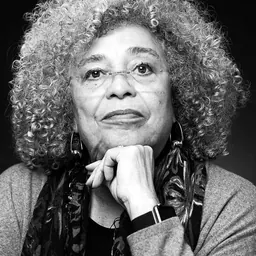
Related people
Same field, nearest in time
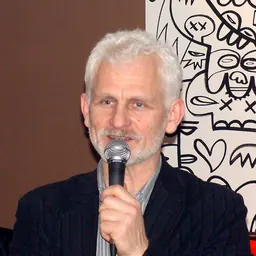





Contemporaries
People whose lives overlapped Emma Dabiri's






Frequently asked questions
Who is Emma Dabiri?
Irish television and radio presenter, writer and researcher
When was Emma Dabiri born?
Emma Dabiri was born on 25 March 1979 in Dublin.
What is Emma Dabiri's occupation?
Emma Dabiri is a writer, academic, television presenter, radio personality, presenter and fashion model.
What nationality is Emma Dabiri?
Emma Dabiri is Irish.
Sources & further reading
Cite this page
APA: Biography.guide. (2026). Emma Dabiri. https://biography.guide/emma-dabiri/
MLA: "Emma Dabiri." Biography.guide, https://biography.guide/emma-dabiri/.
Chicago: "Emma Dabiri." Biography.guide. https://biography.guide/emma-dabiri/.
Data last updated: 2026-09-20 · Spot an error? Report a correction.
Page generated 2026-09-27 05:21 UTC