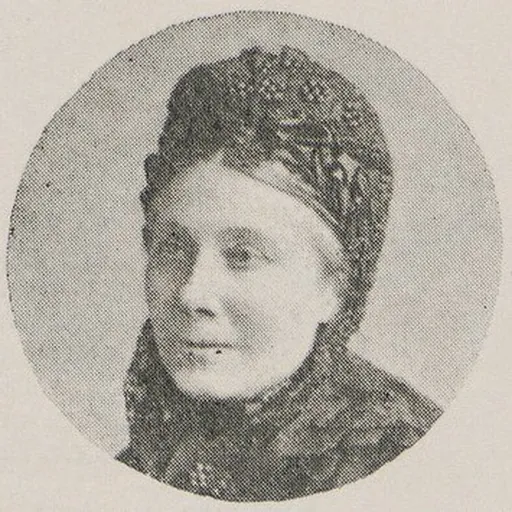
Emma Cons
British social reformer, educationalist and theatre manager
About Emma Cons
Lived 1838 – 1912 (aged 74). Emma Cons was a British businessperson, social reformer and singer.
Emma Cons (4 March 1838 – 24 July 1912) was a British social reformer, strongly committed to women's suffrage. She also campaigned for educational opportunities for the working class, including cheap tickets to Shakespearean drama at the Old Vic Theatre, which she opened in 1880, later managed by her niece, Lilian Baylis.
Early life Born in St. Pancras, London, she trained as an artist and joined the Ladies' Co-operative Art Guild in London, run by Caroline Hill, mother of the future housing reformer and founder of the National Trust, Octavia Hill. As Cons's father Frederick Cons was suffering from ill health, she needed to work and the Guild helped her get work as an illuminator as well as restoring manuscripts for John Ruskin. Cons also tried working as a watch engraver, and as a stained glass designer, but experienced harassment from men who resented a woman working amongst them.
From 1864, Cons worked for Octavia Hill as a rent collector, starting work at Barrett's Court, Oxford Street. Later Cons moved to South London, and in 1879 she established the South London Dwellings Company around Surrey Lodge, Lambeth, near to Waterloo station.
Political career In 1889, Cons became the first female alderman on the London County Council (LCC), working alongside the first elected women members Jane Cobden (elected for Bow and Bromley) and Lady Sandhurst (elected for Brixton). The elections were challenged by anti-suffragists, but as Cons had not been elected, she had been asked by the LCC Progressives to become an alderman, and it was difficult to challenge her position.
When she voted, however, she became liable for a fine: De Souza v. Cobden, which reached the Court of Appeal in 1891, ruled Cobden and Cons could legally be members of the council but could not vote. After this, Cons' commitment to the cause of women's suffrage was energetic, and she served on the Committee for the Return of Women as Councillors, became Vice-President of the Women's Local Government Society, and Vice President of the Women's Liberal Federation.
Educationalist Cons also helped found Swanley Horticultural College (which amalgamated with Wye College later part of Imperial College London, a part of University of London before closure in 2009), in 1892, the first such college for women, and she founded Morley College for working men and women, aided by money donated by Bristol based millionaire manufacturer and philanthropist, Samuel Morley.
Cons also founded the Working Girls Home, a hostel in Drury Lane, London, and she established various crèches and clinics for women including what was described as 'the Home for Feeble-Minded girls' at Bodmin.
Cultural heritage
In 1880, Emma Cons, re-opened what is now the Old Vic Theatre in Lambeth, south London, as the Royal Victoria Coffee and Music Hall. It was "a cheap and decent place of amusement on strict temperance lines". Through this initiative, she brought the plays of William Shakespeare and also opera to working class people.
In 1882, Samuel Morley began to take an interest in the affairs of the theatre, and in 1884 he joined the executive committee. He contributed a large amount of money to the scheme, and his business advice was of value. Morley College developed from the lectures given at the Old Vic.
In 1896, Cons devoted her autumn holiday in Cyprus to trying to help refugee Armenians, who had fled from persecution in Turkey. In 1908, Cons became the first woman to speak at the Institute of Directors, on behalf of the South London Dwellings Company.
Personal life Emma Cons died on 24 July 1912, of a cerebral haemorrhage, at Chippen's Bank, Hever, Kent, home of her friend, Ethel Everest. She is memorialised on the Cons family grave on the western side of Highgate Cemetery which also contains two members of the Baylis family.
Her niece, Lilian Baylis (1874–1937), assisted in running the Old Vic. Her sister, Ellen Cons (1840–1920), was also closely associated with many philanthropic schemes, and was one of the governors of the Old Vic.
This was unveiled in 1929 by the Duchess of York (later Queen Elizabeth, The Queen Mother).
Another round blue plaque was put up by the Greater London Council, on the street wall of 136 Seymour Place, Marylebone, where she lived and worked. Today, the building is WLM Seymour Place.
Don’t just read it —
keep it.
Full-length biographies made to live with: read them, listen on the way to work, watch them tonight.
- E-book
- Audio
- Video
Instant download · yours to keep · every purchase keeps this site free
Important facts
People in Emma Cons's life
Named in this biography and alive at the same time

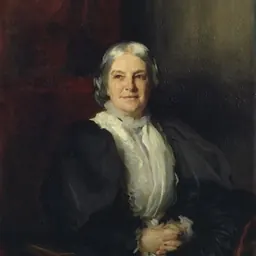




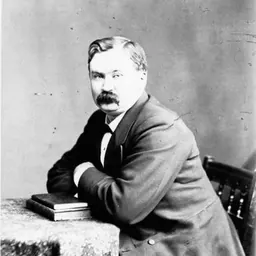

Related people
Same field, nearest in time
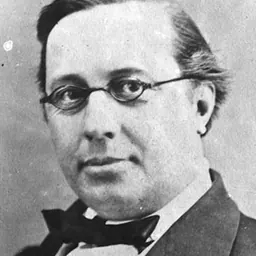


Contemporaries
People whose lives overlapped Emma Cons's
Frequently asked questions
Who was Emma Cons?
British social reformer, educationalist and theatre manager
When was Emma Cons born?
Emma Cons was born on 4 March 1838 in London.
When did Emma Cons die?
Emma Cons died on 24 July 1912 in Hever.
What was Emma Cons's occupation?
Emma Cons was a businessperson, social reformer and singer.
What nationality was Emma Cons?
Emma Cons was British.
Sources & further reading
Cite this page
APA: Biography.guide. (2026). Emma Cons. https://biography.guide/emma-cons/
MLA: "Emma Cons." Biography.guide, https://biography.guide/emma-cons/.
Chicago: "Emma Cons." Biography.guide. https://biography.guide/emma-cons/.
Data last updated: 2026-09-20 · Spot an error? Report a correction.
Portrait: Wikimedia Commons · author & licence
Page generated 2026-09-27 04:57 UTC