
Emilio Terry
Cuban artist, interior designer, artist and landscape artist
About Emilio Terry
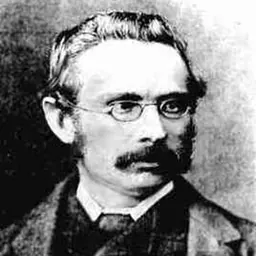
Lived 1890 – 1969 (aged 78–79). Emilio Terry was a French and Cuban architect, painter and draftsperson.
Emilio Rene Terry y Sánchez (1890–1969), known as Emilio Terry was a French architect, artist, interior decorator and landscape designer of Cuban-Irish ancestry. Creating furniture, tapestries and objets d'art, he was influenced by the château de Chenonceau, acquired by his family, and he created a style that was at once classical and baroque, which he called the "Louis XVII style".
Life Terry was born in Paris on 13 September 1890 to Francisco Terry y Dorticós, son of a prominent Cuban family, Spanish and Irish in origin, that made its fortune in the sugar plantations. His mother, a great beauty, was the former Antonia Sánchez. His paternal grandfather was sugar baron Tomás Terry, a Venezuelan-born Irishman known as the "Cuban Croesus", and his paternal grandmother was Teresa Dorticós y Gómez de Leys, a daughter of Andrés Dorticós y Casson, the millionaire Governor of Cienfuegos, Cuba. One of his uncles, Antonio Terry, married the American soprano Sybil Sanderson.
After 1897 Francisco Terry moved his family to New York City, where Antonia and her daughter, Natividad (later Countess Stanislas de Castellane), were painted in 1897 by the Swiss-born American artist Adolfo Müller-Ury. The family later moved to France, where Francisco Terry's brother José-Emilio—his son's namesake—had purchased Château de Chenonceaux in 1891. The château was sold in 1896 to Francisco Terry.
Emilio Terry owned a villa on the Côte d'Azur and a Paris apartment at 2, place du Palais-Bourbon. He bought the Paris residence from Boni de Castellane in 1914. Boni records in his Mémoires : "I didn't have much money. […] M. Terry, brother of my sister in law Stanislas […], fell in love with my apartment, and […] and asked me to give over the lease to him. […] I sold my furniture to this noble Cuban. »
On 24 June 1934, Terry bought from his brother-in-law Stanislas de Castellane the historic château de Rochecotte, near Langeais (Indre-et-Loire), famous for having belonged to Dorothée de Courlande, duchesse of Dino and received Talleyrand on frequent visits. For 35 years, Emilio Terry restored this château and decorated it in the right period style. He bequeathed Rochecotte to his great-nephew Count Henri de Castellane, but the family sold the estate in the early 1980s. It is now a country house hotel.
He was a close friend of Julien Green who disclosed in his diaries that he was homosexual.
Works At once neoclassical and baroque, Emilio Terry designed houses, furniture, tapestries, objets d'art, gardens, and the interior decor of apartments and châteaux. He launched an architectural style which he named the "style Louis XVII", an imaginary style freely inspired by historical examples such as Palladio or Claude Nicolas Ledoux.
In 1933, Terry realised a model of a double-spiral house, called "en colimaçon" ("snail-style"), which illustrated one of his theories, that the art of architecture expressed a "dream to be realised" ("rêve à réaliser"). A 1936 portrait of Emilio Terry by Salvador Dalí shows this and other models in the foreground. Expressions of the "style Louis XVII" can be found in the work of the landscape artist Achille Duchêne and the designer Madeleine Castaing (in the latter case an amicable rivalry arose between her and Terry in the 1950s, with them both claiming to be the author of a certain motifs
Among his clients, Emilio Terry worked for the Greek shipping magnate Stavros Niarchos as well as Rainier III of Monaco (for whom he decorated an apartment intended for princess Grace
In film Groussay appeared in Marc Allégret's film Le Bal du Comte d'Orgel, with Jean-Claude Brialy, and the bibliothèque de Groussay was the setting for Frédéric Mitterrand's television broadcast Plaisir de France.
Don’t just read it —
keep it.
Full-length biographies made to live with: read them, listen on the way to work, watch them tonight.
- E-book
- Audio
- Video
Instant download · yours to keep · every purchase keeps this site free
Important facts
People in Emilio Terry's life
Named in this biography and alive at the same time




Related people
Same field, nearest in time


Contemporaries
People whose lives overlapped Emilio Terry's



Frequently asked questions
Who was Emilio Terry?
Cuban artist, interior designer, artist and landscape artist (1890-1969)
When was Emilio Terry born?
Emilio Terry was born in 1890 in Paris.
When did Emilio Terry die?
Emilio Terry died in 1969 in Paris.
What was Emilio Terry's occupation?
Emilio Terry was an architect, painter and draftsperson.
What nationality was Emilio Terry?
Emilio Terry was French and Cuban.
Sources & further reading
Cite this page
APA: Biography.guide. (2026). Emilio Terry. https://biography.guide/emilio-terry/
MLA: "Emilio Terry." Biography.guide, https://biography.guide/emilio-terry/.
Chicago: "Emilio Terry." Biography.guide. https://biography.guide/emilio-terry/.
Data last updated: 2026-09-20 · Spot an error? Report a correction.
Page generated 2026-09-27 05:09 UTC