
About Julien Green
Lived 1900 – 1998 (aged 97). Julien Green was an American writer, biographer, autobiographer and playwright.
Julien Green (originally "Julian Hartridge Green", 6 September 1900 – 13 August 1998), often Julian Green, was an American writer who lived most of his life in France and wrote primarily in French, although he also wrote some works in English. Over a long and prolific career, he authored novels and essays, several plays, and a biography of Francis of Assisi, produced a four-volume autobiography, and for decades maintained a daily journal that he edited and published in nineteen volumes. The posthumous publication of the unexpurgated journals revealed aspects of his personality and sexuality that had been omitted from the published editions, revealed details about many of his prominent contemporaries, and documented the gay subculture of 20th-century France.
When elected to membership in the Académie française in 1971, he was the first non-French national to join its ranks. He was the recipient of many awards and one of the few writers to have his collected works published in Gallimard's Pleiade library during his lifetime.
Early years Julian Hartridge Green was born to American parents in Paris on 6 September 1900. He was the namesake of an ancestor on his mother's side, Julian Hartridge (1829–1879), who served as member of the House of Representatives of the Confederate States of America and then as a Democratic Representative from Georgia to the US Congress for four years; Julien's parents settled in Paris in 1893. One account spécifiés there were eight children, one of whom died shortly after being born.
In 1917, still only 16, he volunteered as an ambulance driver in the American Field Service. When his age was discovered his enlistment was annulled. He immediately signed up for a six-month term of service with an ambulance unit of the American Red Cross. In 1918 he enlisted in the French Army and served as a second lieutenant in an artillery unit until 1919. After the war, he spent three years from 1919 to 1922 studying at the University of Virginia at the invitation of his mother's brother Walter Hartridge. While there he wrote his first fiction, a short story in English.
First works He returned to France in 1922. After briefly exploring a career as a painter, His first published work in French was the Pamphlet contre les catholiques de France, which appeared under the pseudonym Théophile Delaporte. He launched his career as a novelist with Mont-Cinère in 1926. It impressed Jacques Maritain with its "grandeur", marked by "that uninterrupted contact with the soul" found in great writers. Green had already committed his second novel to another publisher, but Maritain was "enthusiastic" to publish his third, Adrienne Mesurat, a few months later, seeing in it "an interior power, a rectitude, and a profundity that are admirable". Their relationship gave Green a powerful critic and supporter, a correspondent and friend until Maritain's death in 1973. About this time his French publishers identified him as "Julien", using the French spelling of his first name. His US publishers and the New York Times used "Julian",
His attachment to Catholicism weakened during the 1920s, though he asserted it again after a "mystical experience" in 1934.
He visited the US again in the early 1930s, beginning and abandoning work on a novel set in the 19th-century American South. He stayed at first with a cousin in Baltimore. He gave talks at Mills College and Goucher College, and he contributed articles to Harper's Magazine, Commonweal, and The Atlantic Monthly. He also translated two works by Charles Péguy into English: The Mystery of the Charity of Joan of Arc and Basic Verities, Men and Saints.
His 1960 novel Chaque homme dans sa nuit, set largely in New York, appeared that same year in a translation by Green's sister Anne Green. Henri Peyre wrote of it with enthusiasm: "Strange and tense, it is nevertheless compelling, as Dostoevsky's fiction is", though he noted Green achieved this "in spite of an uncertain design and its disregard for all ordinary realism".
Between 1963 and 1974 he published four volumes of memoirs covering the first two decades of his life, the years before he began to keep the daily journals that he had been publishing since 1938. In the third volume, Terre lointaine (1966), he described how he became aware of his homosexuality while at the University of Virginia, experienced his first crush, and gained second-hand experience from a similarly inclined fellow student. In the fourth volume, Jeunesse (1974), he depicted himself in college: "No one was ever so petrified by a Medusa's head as I was by what struck me as a perfect young [man's] face." He portrayed himself throughout his life as a chaste homosexual whose relationship with his lifelong companion was "platonic". Numerous Catholic prelates expressed their admiration for this "model of righteousness".
In 1975, the Pleiade library began republishing several volumes of Green's work, an honor rarely accorded a living writer.
In March 1983, his first work for the stage, Sud, premiered to mixed reviews, though the public supported it, as did some writers. Set during the American Civil War, a young officer's life is transformed when he encounters a handsome teenage boy. Its 19 short chapters offered remembrances; it was less a travel guide than "a reflection and an exercise in introspection".
Between 1987 and 1993 he published a trilogy of novels set in the 19th-century American South, a project he had long postponed. His longevity and work in different genres complicated his image in the US. By the time his autobiography began to appear in English in 1993, an American reviewer could write: "Julian Green may be the one most difficult for American readers to place. He's English, isn't he? At least, his books often turn up in the mustier corners of British secondhand bookstores. Or perhaps he's French. That's the rumor anyway. Much acclaimed in Paris, and probably long dead. But wait, here's a novel published only last year and set in the antebellum South?" Of growing up bi-lingual Green wrote: "as a child I could not bring myself to believe that English was a real language". His tombstone names him "Julian", using the original English spelling rather than the French "Julien" by which he was known.
Jourdan also tried to restrict the publication of some of Green's work, protecting his reputation with a new "prudishness" even more than Green had in censoring his own journals for publication. After Éric Jourdan's death in 2015, Jourdan's executor Tristan Gervais de Lafond, a jurist of some distinction, supported the publication of the unexpurgated text of Green's journals and the first volume appeared in September 2019. The publishing program respected Green's restriction that sensitive material not appear until fifty years had passed. Included were "hundreds of pages, with countless pornographic and vulgar passages crossed out", with as much as half the material published for the first time, sexual matters as well as assessments of colleagues and literary figures, as well as racist and anti-semitic statements. It transformed Green's public image: his homosexuality was never a secret but Green had always indicated it was "under control" or channeled into platonic relationships. The full text records such a variety of sexual encounters that it documents gay life in the years between the world wars.
One reviewer wrote: "We knew he was homosexual; we didn't know to what extent." Another noted that Green's crude descriptions shocked less than the quality of the sex: not satisfying but "angry" and "haughty". In the Catholic Herald, Benjamin Ivry advised Green's admirers that Green's "candor" might surprise, but the battle Green fought between the sensual and the spiritual was unchanged: "Chastity remains a cherished virtue, even if Green is unable to attain it." whom he first met in November 1924. Green documented their sex life together in his journals. Though Green had described it as platonic in other writings and his own version of his journals, their relationship was intimate and physical. They lived as a couple for most of the inter-war years; theirs was an open relationship and each had multiple sex partners, whom they occasionally shared. They frequented the popular gay clubs of Paris. They traveled together throughout Europe, Tunisia, and the US in the 1920s and 1930s, and spent months together in London in 1936 and 1937.
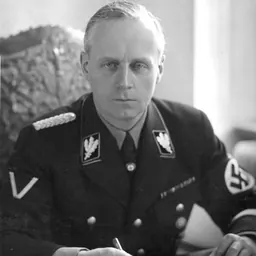
When France fell to the Nazis in 1940, Saint-Jean was deputy chief of staff to the French minister of information and his writing had made him a personal enemy of German foreign minister Joachim von Ribbentrop. Green arranged for him to gain entry to Portugal and then transfer to the US.
In his later years, Green adopted as his son Éric Jourdan, a gay novelist, who acted as the executor of Green's estate until his own death in 2015. The third and final volume, entitled Dixie in both languages, continued the action to the autumn of 1862 and was published in both French and English versions in 1995.
Selected works Journals Journal, 1938–2006; edited by Green On est si sérieux quand on a 19 ans (1919–1924), Fayard, 1993. I, Les Années faciles (1926-1934), Plon, 1938. II, Derniers beaux jours (1935-1939), Plon, 1939. III, Devant la porte sombre (1940-1943), Plon, 1946. IV, L'Œil de l'ouragan (1943-1945), Plon, 1949. V, Le Revenant (1946-1950), Plon, 1951. VI, Le Miroir intérieur (1950-1954), Plon, 1955. VII, Le Bel aujourd'hui (1955-1958), Plon, 1958. VIII, Vers l'invisible (1958-1967), Plon, 1967. IX, Ce qui reste de jour (1966-1972), Plon, 1972. X, La Bouteille à la mer (1972-1976), Plon, 1976. XI, La Terre est si belle… (1976-1978), Le Seuil, 1982. XII, La Lumière du monde (1978-1981), Le Seuil, 1983. XIII, L'Arc-en-ciel (1981-1984), Le Seuil, 1988. XIV, L'Expatrié (1984-1990), Le Seuil, 1990. XV, L'Avenir n'est à personne (1990-1992), Fayard, 1993. XVI, Pourquoi suis-je moi ? (1993-1996), Fayard, 1996. XVII, En avant par-dessus les tombes (1996-1997), Fayard, 2001. XVIII, Le Grand large du soir (1997-1998), Flammarion, 2006.
English translations of selected entries Personal Record 1928–1939, translated by Jocelyn Godefroi, Hamish Hamilton, 1940 Diary 1928–1957, translated by Anne Green, Collins Harvill, 1964, includes some entries found in the Godefroi translation)
Journal intégral (unexpurgated text) Journal intégral, 1919–1940, Robert Laffont, collection Bouquins, 2019, 1376 p. Toute ma vie, journal intégral 2 1940–1945, Robert Laffont, collection Bouquins, 2021, 1408 p. Toute ma vie, journal intégral 3 1946–1950, Robert Laffont, collection Bouquins, 2021, 1056 p. Toute ma vie, journal intégral 4 1951–1958, Robert Laffont, collection Bouquins, 2025, 1177 p.
Autobiographical Memories of Happy Days (1942), written and first published in English Souvenirs des jours heureux, Flammarion, Paris (2007) Memories of Evil Days, edited by Jean-Pierre J. Piriou, University Press of Virginia (1976) Autobiography: I: Partir avant le jour (1900–1916), Grasset, Paris, 1963 translated as The Green Paradise, Marion Boyars (1993) II: Mille Chemins ouverts (1916–1919), Grasset, Paris, 1964 translated as The War at Sixteen, Marion Boyars (1993) III: Terre lointaine (1919–1922), Grasset, Paris, 1966 translated as Love in America, Marion Boyars (1994) IV: Jeunesse, (1922–1929), Plon, Paris, 1974 translated as Restless Youth, Marion Boyars (1996) Jeunes années, 1985; reissue of the four volumes of the autobiography
Novels Mont-Cinère (Avarice House, 1926) Suite anglaise (1927) Le voyageur sur la terre (1927) Adrienne Mesurat (The Closed Garden, 1927) Léviathan (The Dark Journey, 1929) L'autre sommeil (The Other Sleep, 1930) Épaves (The Strange River, 1932) Le visionnaire (The Dreamer, 1934) Minuit (Midnight, 1936) Varouna (Then Shall the Dust Return, 1940) Si j'étais vous... (If I Were You, 1947) Moïra (Moira, 1950) Le malfaiteur (The Transgressor, 1956) Chaque homme dans sa nuit (Each Man in His Darkness, 1960; Each in His Darkness 1961) L'autre (The Other One, 1971) Qui sommes-nous? (1972) La Nuit des fantômes (1976) Le Mauvais lieu (1977) Dans la gueule du temps (1979) Histoires de vertige (1984) Ce qu'il faut d'amour à l'homme (1978), a spiritual autobiography Une grande amitié (1979) (1962 film), starring Louis Jourdan and Lilli Palmer, for which Green wrote the dialogue; (1965 film); Adrienne Mésurat (1969, German television film); Mont-Cinère (1970, television film), with a screenplay by Robert de Saint-Jean; (1971, television film), starring Patrick Dewaere.
The stage play South was adapted for a British television production in 1959, starring Peter Wyngarde. It is the earliest known television drama dealing with homosexuality. An opera by Kenton Cole based on Sud premiered in Marseille in 1965 and received "hostile" reviews when staged at the Opéra de Paris in 1972. Ned Rorem wrote songs to paragraphs he translated from L’Autre Sommeil.
Don’t just read it —
keep it.
Full-length biographies made to live with: read them, listen on the way to work, watch them tonight.
- E-book
- Audio
- Video
Instant download · yours to keep · every purchase keeps this site free
Important facts
Family & relationships
People in Julien Green's life
Named in this biography and alive at the same time



Related people
Same field, nearest in time




Contemporaries
People whose lives overlapped Julien Green's





Frequently asked questions
Who was Julien Green?
American author (1900–1998)
When was Julien Green born?
Julien Green was born on 6 September 1900 in Paris, 17th arrondissement of Paris.
When did Julien Green die?
Julien Green died on 13 August 1998 in Paris, 7th arrondissement of Paris.
What was Julien Green's occupation?
Julien Green was a writer, biographer, autobiographer and playwright.
What nationality was Julien Green?
Julien Green was American.
Sources & further reading
Cite this page
APA: Biography.guide. (2026). Julien Green. https://biography.guide/julien-green/
MLA: "Julien Green." Biography.guide, https://biography.guide/julien-green/.
Chicago: "Julien Green." Biography.guide. https://biography.guide/julien-green/.
Data last updated: 2026-09-20 · Spot an error? Report a correction.
Page generated 2026-09-27 05:28 UTC