
Emílio Mallet
Military officer, war hero and nobleman Brazilian and French
About Emílio Mallet
Lived 1801 – 1886 (aged 84). Emílio Mallet was a Brazilian military personnel.
Émile Louis Mallet, Baron of Itapevi (10 June 1801 – 2 January 1886), was a French-Brazilian Marshal. He is the patron of artillery in the Brazilian Army, the Day of the Artillery being celebrated on his birthday.
Biography Early life Émile Mallet was born in Dunkirk, France, in 1801, to Jean Antoine Mallet and Julie-Marie-Joseph Mallet. Jean Antoine had come to the Americas as a young man, becoming a landowner in the French West Indies. In 1804, he lost his holdings in Hispaniola due to the Haitian Revolution; with the French wars with the United Kingdom, he lost investments he had in merchant ships.
A man of great physical bearing, at 2.01 m tall and weighing 120 kg, Émile Mallet came to Brazil with his family at age 17 in 1818, initially living in Rio de Janeiro. In the city, he was invited to join the Imperial Brazilian Army by Emperor Pedro I; he enrolled into the Imperial Royal Military Academy in 1823, where he joined the Artillery officer course. Previously, while in France, Mallet had concluded one year of studies in mathematics in the prestigious Saint-Cyr military academy, but he dropped out to accompany his family.
As a Second Lieutenant, Mallet commanded a battery of horse artillery in the Cisplatine War (the 1st Battery, 1st Mounted Artillery Corps), which lasted between 1825 and 1828. His first action was in the Battle of Ituzaingó, where he was promoted to captain, having commanded other gun crews after their officers were wounded. After the war's end, he married Joaquina Castorina de Medeiros Mallet in Bagé in Southern Brazil; she was the daughter of a wealthy landowner, and a close relative of Manuel Luís Osório, a friend and companion to Mallet and, in the future, also a Marshal in the Army.
Mallet was dismissed from service in 1831, due to not being natively Brazilian, and took up farming in Bagé. In 1837, however, as the Ragamuffin War raged, he was called back to service under General , as commander of a horse-drawn gun battery. he would remain in the Army until the Uruguayan War and the Paraguayan War started, fighting in both conflicts to their conclusion. In the conflict versus Uruguay, he commanded all the artillery in the key Siege of Paysandu. In the last conflict, initially in command of the 1st Horse Artillery Regiment, he had a key role in the victories of Paso de Patria, Estero Bellaco and Tuyutí.
Specifically in Tuyutí, the largest field battle in South American history, his guns were called "revolver cannons", Thanks to his performance in the battle, he was promoted to Colonel. Afterwards, as commander of the 1st Artillery Brigade, he continued to support allied forces in maneuvers such as the Passage of Humaitá and the Pikysyry maneuver, and battles such as Angostura, Ytororó, Avay, Lomas Valentinas, Piribebuy and Campo Grande. In Piribebuy, the killing of prisoners after the battle only stopped due to his orders.
During the final phase of the conflict, the Campaign of the Hills, Mallet was commander-in-chief for the Army's artillery, and promoted to Brigadier. After the war's end, he commanded troops in the border with Uruguay, and then was, briefly, commander of arms in Pernambuco, once again being sent to the southern border. In 1884 he was still promoted to Lieutenant General, and, in 1885, to Marshal; he had been ennobled as Baron of Itapevi in 1878. He died in 1886, in Rio de Janeiro, at 84 years old. His body lies in a mausoleum which is maintained by the "Mallet Regiment", as the is called, in Santa Maria in Rio Grande do Sul.
Honors and legacy
In March 1932 the Army created the Mallet Medal, which is granted to the officer cadets in the Agulhas Negras Military Academy who excel in the firing drills in the artillery officer course.
In Paraná, the city of Mallet owes its name to him; he is also mentioned in the city's hymn. In Curitiba, the state's capital, there is a Marechal Mallet street.
In São Paulo, in the neighborhood of Vila Zelina, there is a street named Marechal Mallet, and in the district of Guaianases there is a school named after him; in the state of São Paulo, in the city of Praia Grande, there is an Avenue Marechal Mallet, in the same neighborhood where is and where the 6th Coastal Motorized Artillery Group was based until 2004; nowadays the is based there. In Campinas, the Marechal Mallet State School is of great regional importance.
In Fortaleza, capital of Ceará, there is a square named after him.
His battle sword is in a museum in São Gabriel, where he lived for many years. One of the main thoroughfares of the city is named General Mallet. Also in Rio Grande do Sul, his dress sword is in a museum dedicated to him in Santa Maria. In Caxias do Sul, there is a General Mallet street; in Santana do Livramento, there is a Marechal Mallet avenue.
Dates of rank
Don’t just read it —
keep it.
Full-length biographies made to live with: read them, listen on the way to work, watch them tonight.
- E-book
- Audio
- Video
Instant download · yours to keep · every purchase keeps this site free
Important facts
People in Emílio Mallet's life
Named in this biography and alive at the same time

Related people
Same field, nearest in time
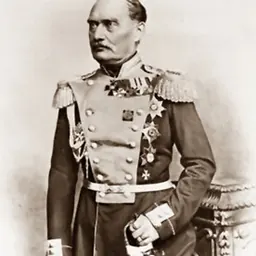
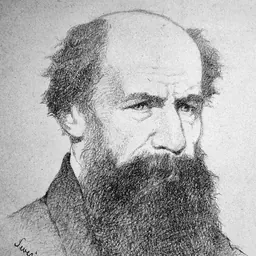

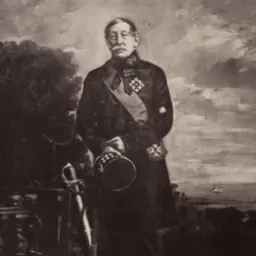

Contemporaries
People whose lives overlapped Emílio Mallet's






Frequently asked questions
Who was Emílio Mallet?
military officer, war hero and nobleman Brazilian and French
When was Emílio Mallet born?
Emílio Mallet was born on 10 June 1801 in Dunkirk.
When did Emílio Mallet die?
Emílio Mallet died on 2 January 1886.
What was Emílio Mallet's occupation?
Emílio Mallet was a military personnel.
What nationality was Emílio Mallet?
Emílio Mallet was Brazilian.
Sources & further reading
· DBpedia: Émile Mallet, Baron of Itapevi
Cite this page
APA: Biography.guide. (2026). Emílio Mallet. https://biography.guide/emilio-mallet/
MLA: "Emílio Mallet." Biography.guide, https://biography.guide/emilio-mallet/.
Chicago: "Emílio Mallet." Biography.guide. https://biography.guide/emilio-mallet/.
Data last updated: 2026-09-25 · Spot an error? Report a correction.
Page generated 2026-09-27 05:13 UTC